Why accessibility matters
Accessible parking makes it possible for everyone to reach your business, church or school. Properly built spaces also help avoid complaints and legal problems for owners.
Requirements come from federal standards and local rules.
Good accessible parking is part of being a good neighbor. It also helps the many visitors with temporary injuries, older customers and parents with strollers, who benefit from level routes and wider spaces. A thoughtful layout shows that your organization welcomes everyone and avoids complaints and costly corrections later.
Stalls and access aisles
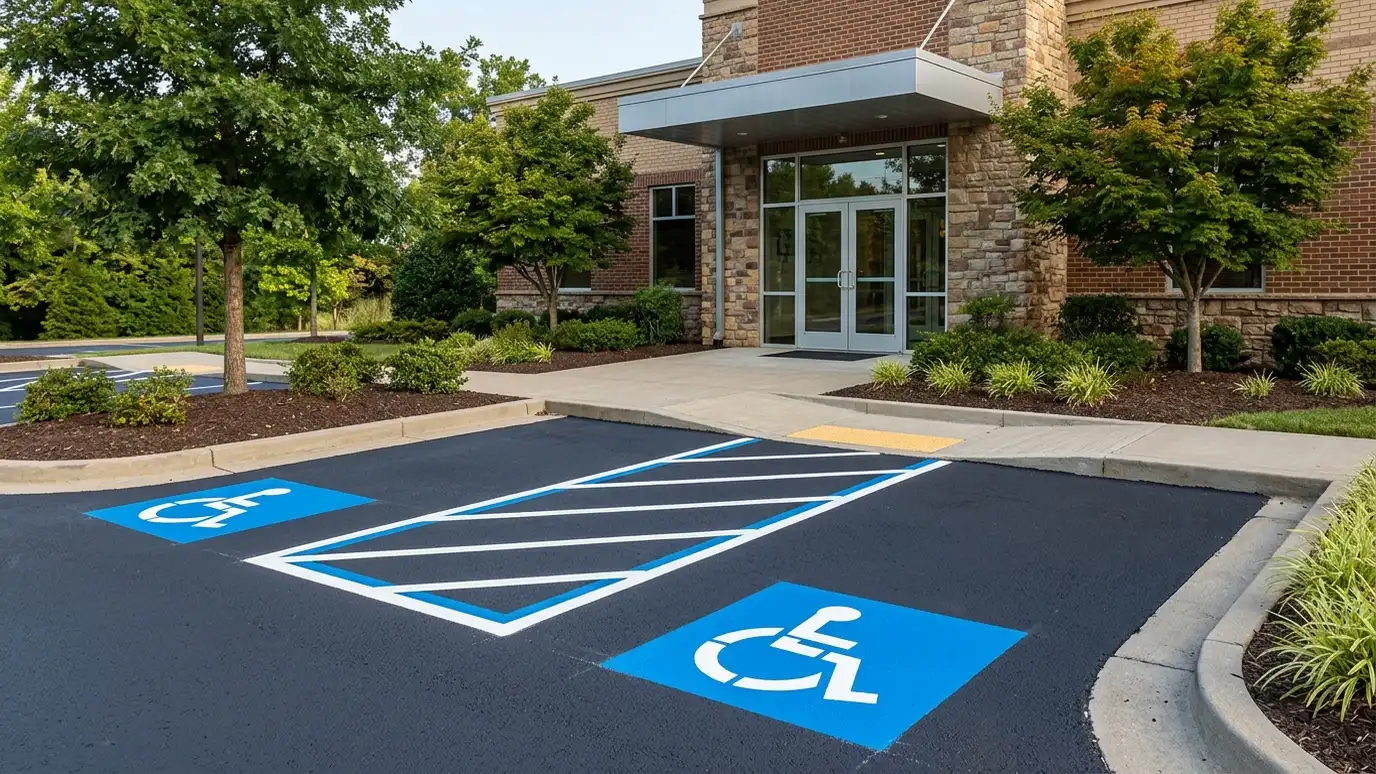
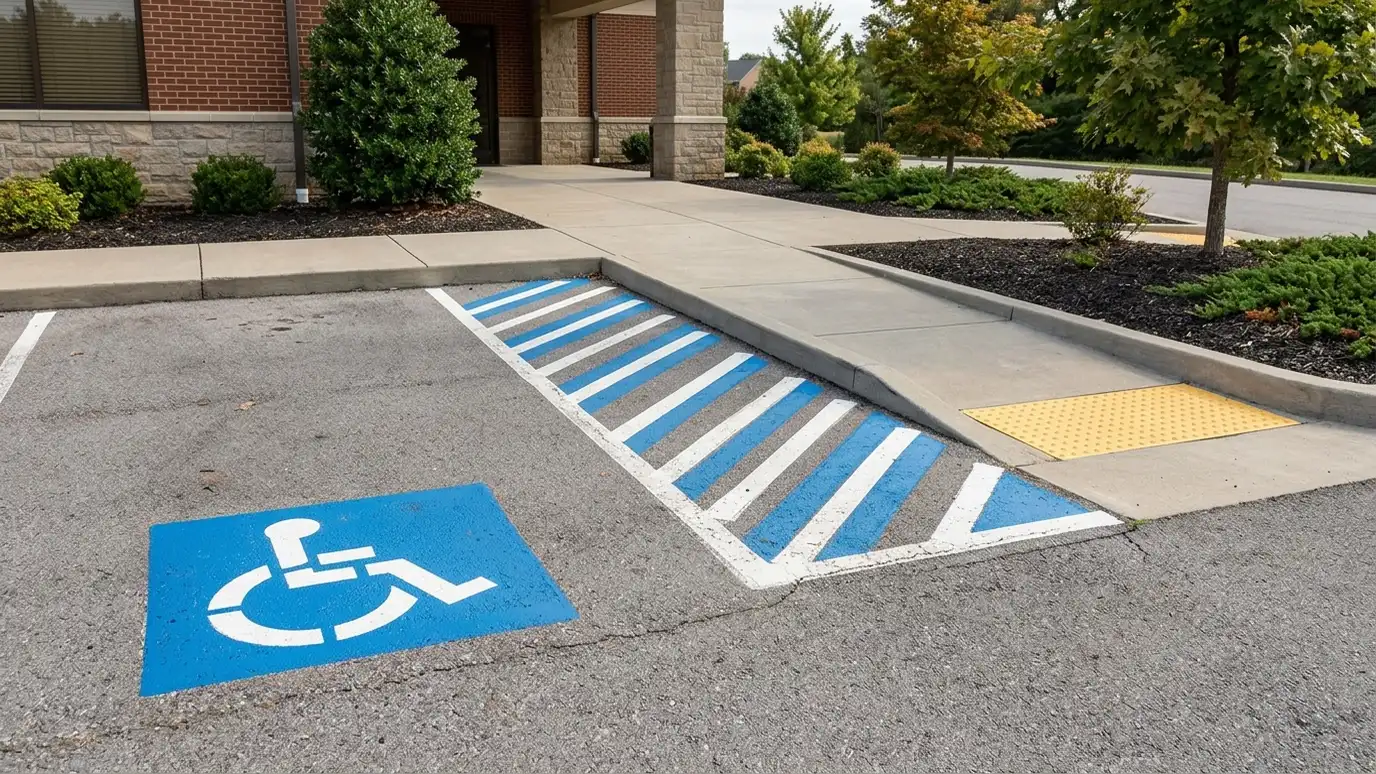
Accessible stalls are wider than standard ones and sit beside an access aisle, which gives room for ramps and wheelchairs. Van-accessible spaces need extra width.
The number of accessible spaces depends on total spaces in the lot.
The width of the stall and the access aisle give room for a wheelchair lift or a ramp to deploy. An aisle must stay clear of parked cars and stored items, so it is marked and kept open. Keep access aisles free of carts, bins and snow piles, because blocked aisles defeat the purpose of the markings.
Signs and markings
Each accessible space needs a sign mounted at a proper height. Surface symbols and blue paint are common, and access aisles are marked with cross-hatching.
Signs and paint must be maintained so they remain visible.
Signs must be placed where drivers can see them, including where snow or a bush might hide them. Check yours at least once a year and replace any that are faded, bent or blocked. Inspect your signs after storms and mowing season, since damage is common and easy to fix when it is caught early.
Routes, ramps and slopes
Accessible spaces connect to the entrance by a smooth, level route. Ramps and curb cuts need specific slopes and landings. Cracked or heaved pavement can break compliance.
We build and repair ramps to the specifications provided.
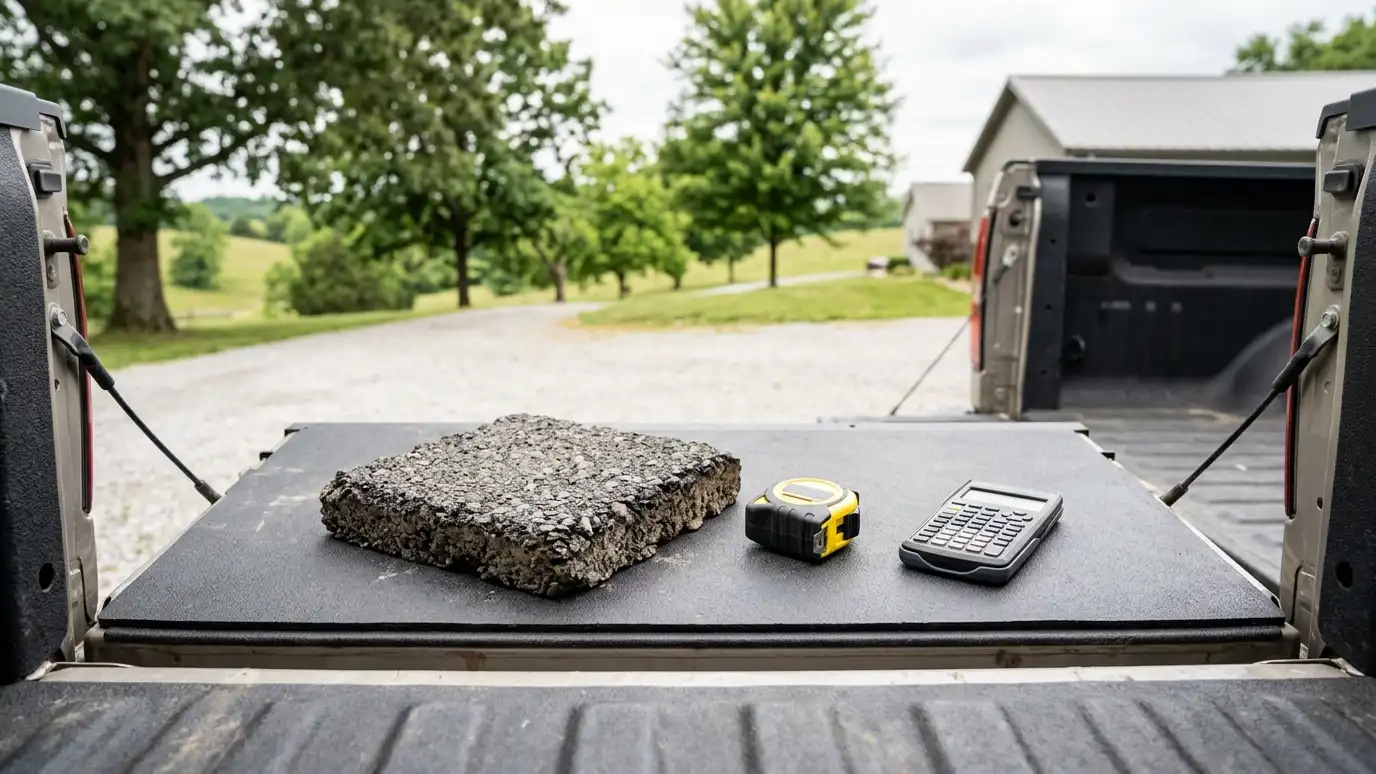
Slopes near accessible spaces are limited so that a wheelchair does not roll away. A contractor can check the grade of an existing space before restriping and tell you if grading is needed first. If an existing slope is too steep, a small regrade or a new ramp may be the simplest fix, and a contractor can price the options.
Standard stalls and aisles
Standard stalls are around nine feet wide and eighteen feet long, with aisle widths set by the parking angle. Fire lanes, crosswalks and stop bars add safety.
Layouts that look tight often waste no space but frustrate drivers.
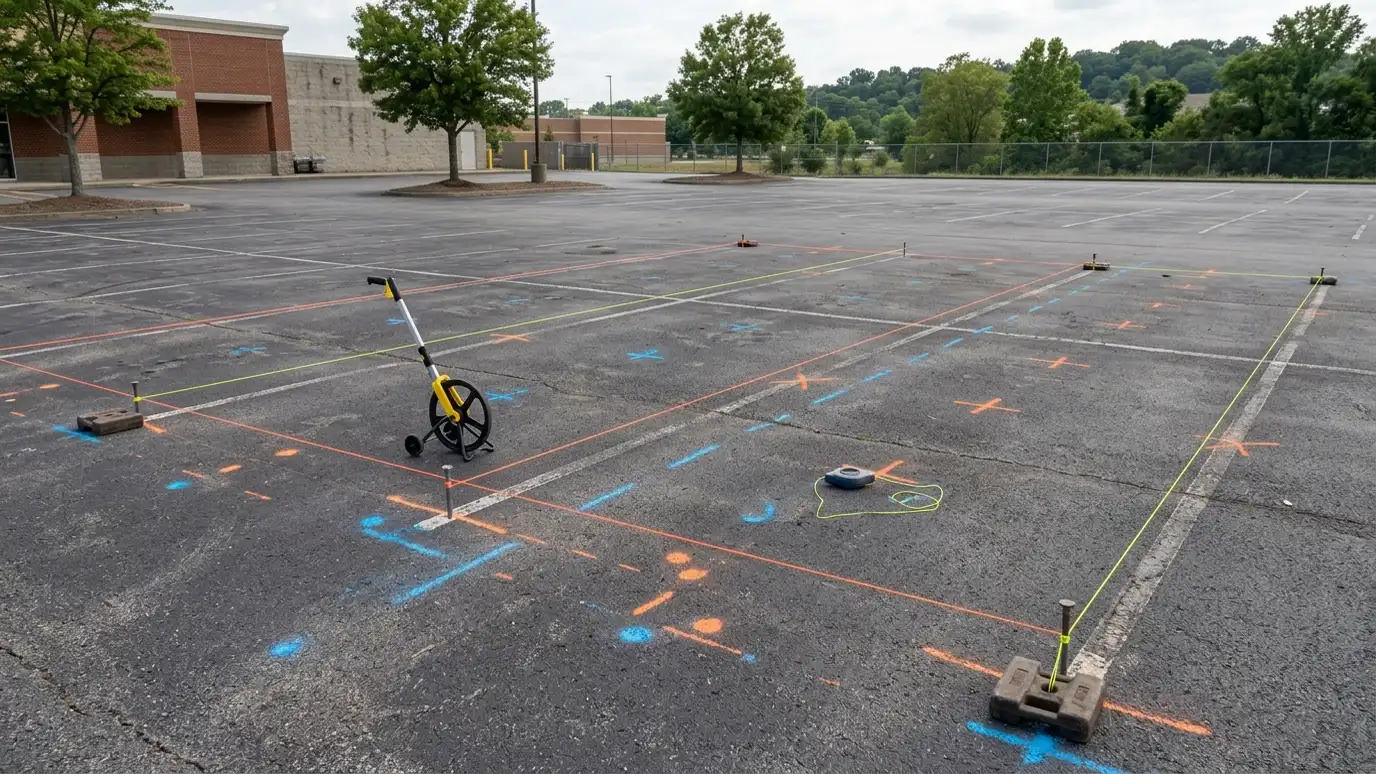
Layout details for standard stalls depend on the angle of parking and local rules. Share your site plan and we can propose a layout, then confirm it with your local reviewer when required. We can measure an existing lot and sketch what a refresh could look like, with stall counts and aisle widths for review.
Maintenance and restriping
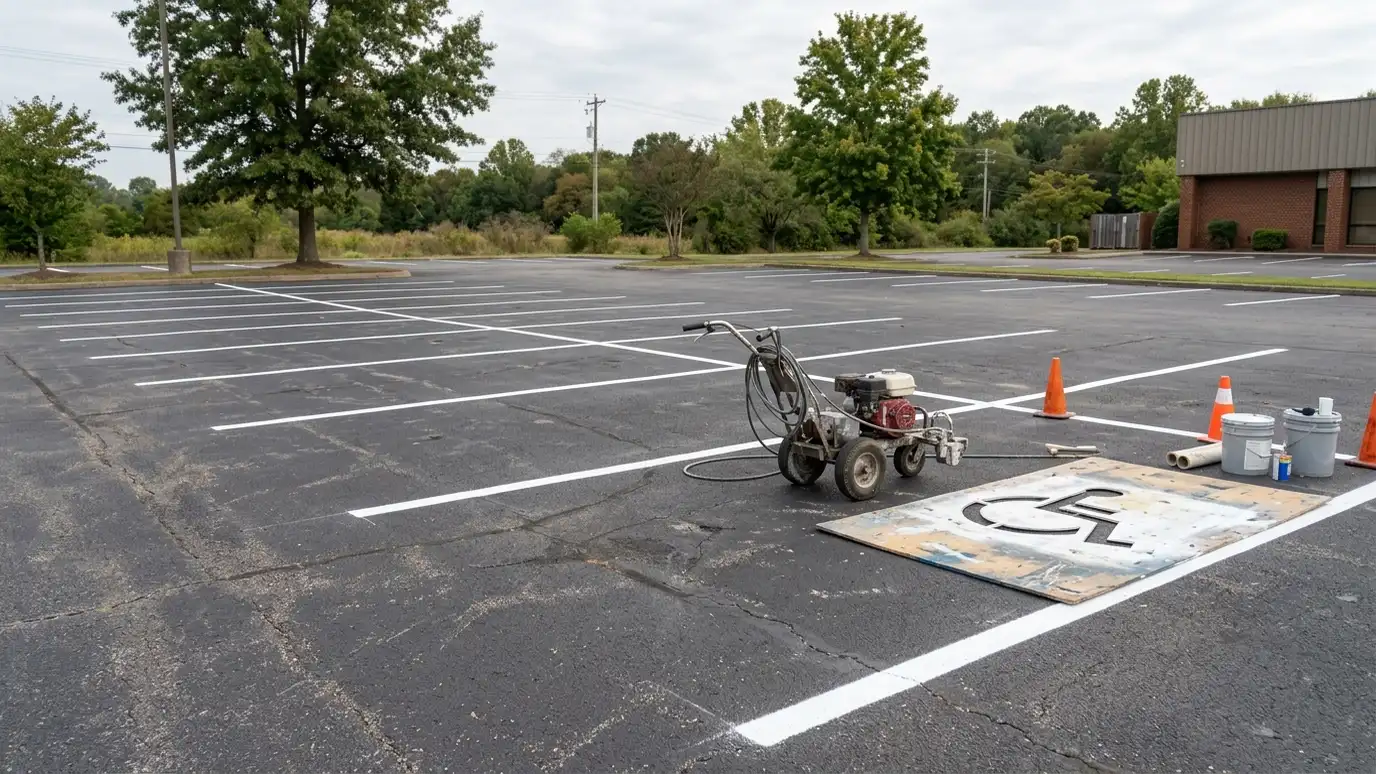
Traffic and weather fade paint. Restripe every one to three years, or after sealcoating and repaving. Check signs after storms and snow removal.
Keep a schedule so you are never surprised by an inspection.
Plan restriping after any resurfacing or sealcoating, since fresh pavement hides old lines. Using durable paint and a clear stencil process keeps symbols and numbers crisp for a long time.
Who to ask
We are paving and striping contractors, not code authorities. For specific compliance questions, check with your local building department or an accessibility consultant.
We will build to the plans and requirements you provide.
For questions about the exact number or placement of spaces, ask your local building or zoning office or a qualified design professional. We will gladly lay out and paint what the plans call for. Keep a copy of your striping plan with your property records so the next restriping matches the last one.
Keep accessible stalls, aisles, signs and routes in good repair and confirm requirements with your local authority.