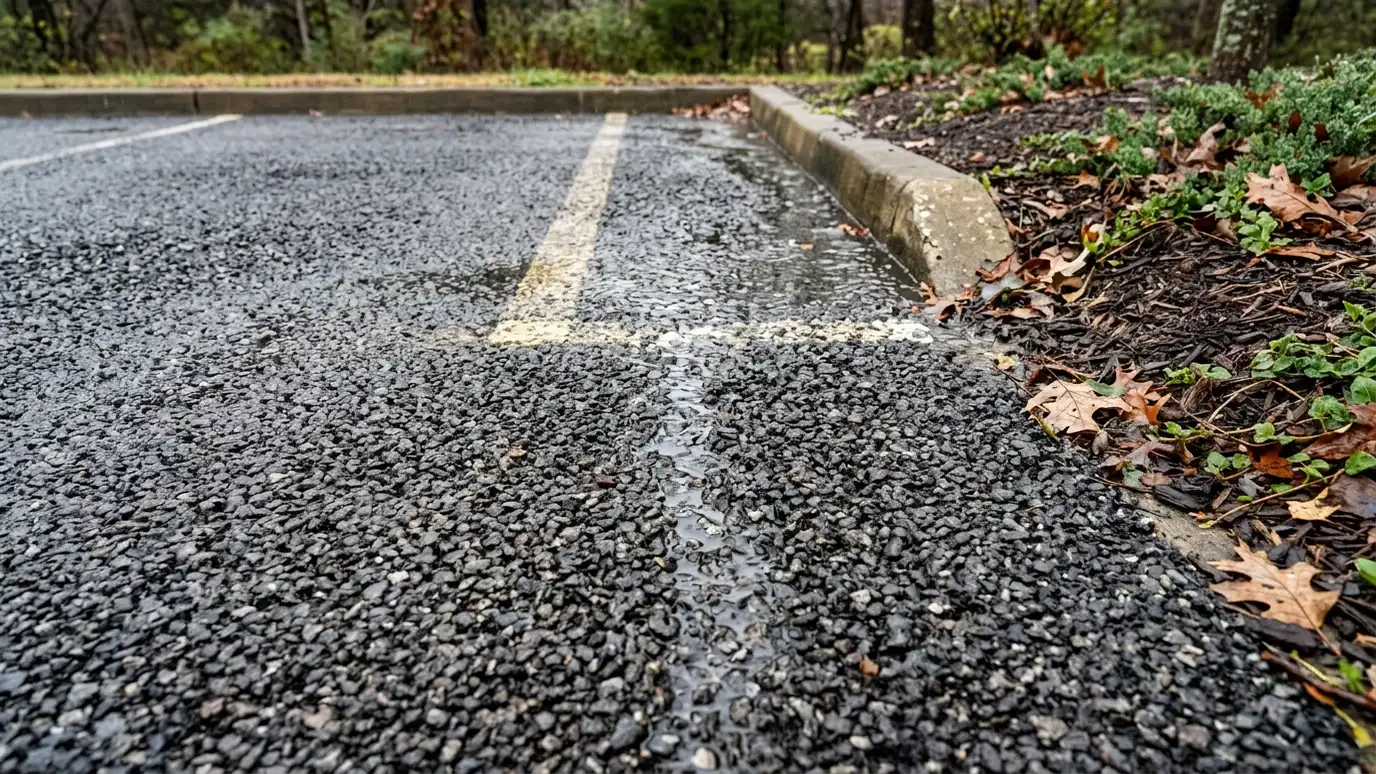
Porous asphalt over a stone reservoir that lets rain soak through the surface, which cuts runoff and helps meet stormwater requirements.
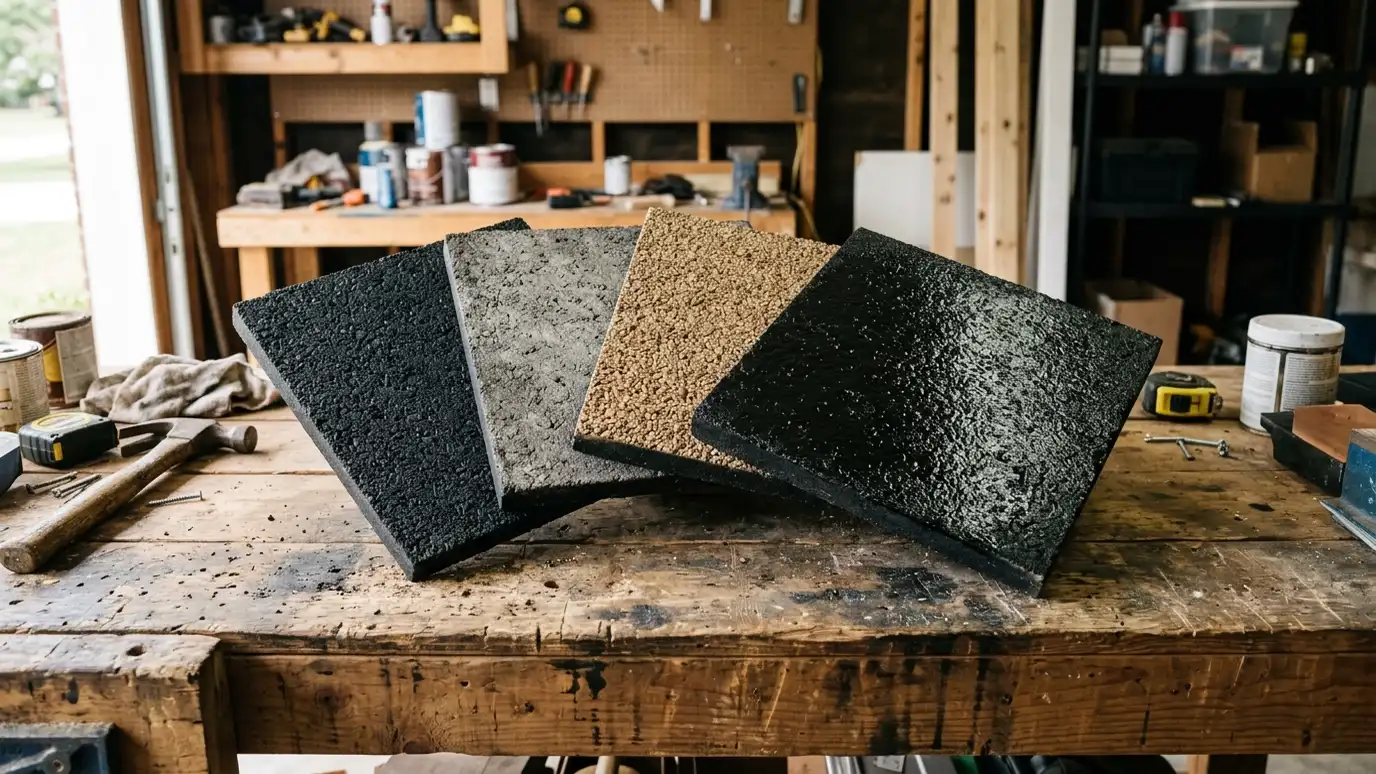
Traditional pavement sheds rain, sending it into storm drains and creeks. Permeable asphalt does the opposite. Its mix leaves out most of the fine particles, leaving tiny connected voids that let water pass straight through to a bed of clean stone below. From there, the water slowly soaks into the soil or flows to an outlet. The result is less runoff, fewer puddles, less ice and often a smaller stormwater system. Cities and builders use permeable pavement to meet runoff rules on parking lots and driveways.
Building it right takes specific methods. We evaluate the soil’s ability to absorb water, excavate to the right depth and lay geotextile fabric and open-graded stone in layers. The porous asphalt is placed and rolled with care so the surface stays open. Afterward, the surface needs gentle care, including sweeping or vacuuming to keep the pores clear, and no sealcoating. We explain how permeable pavement performs in Tennessee clay soils and where it makes sense.
Water passes through the open mix into a stone reservoir below, then soaks into the ground or drains to an outlet.
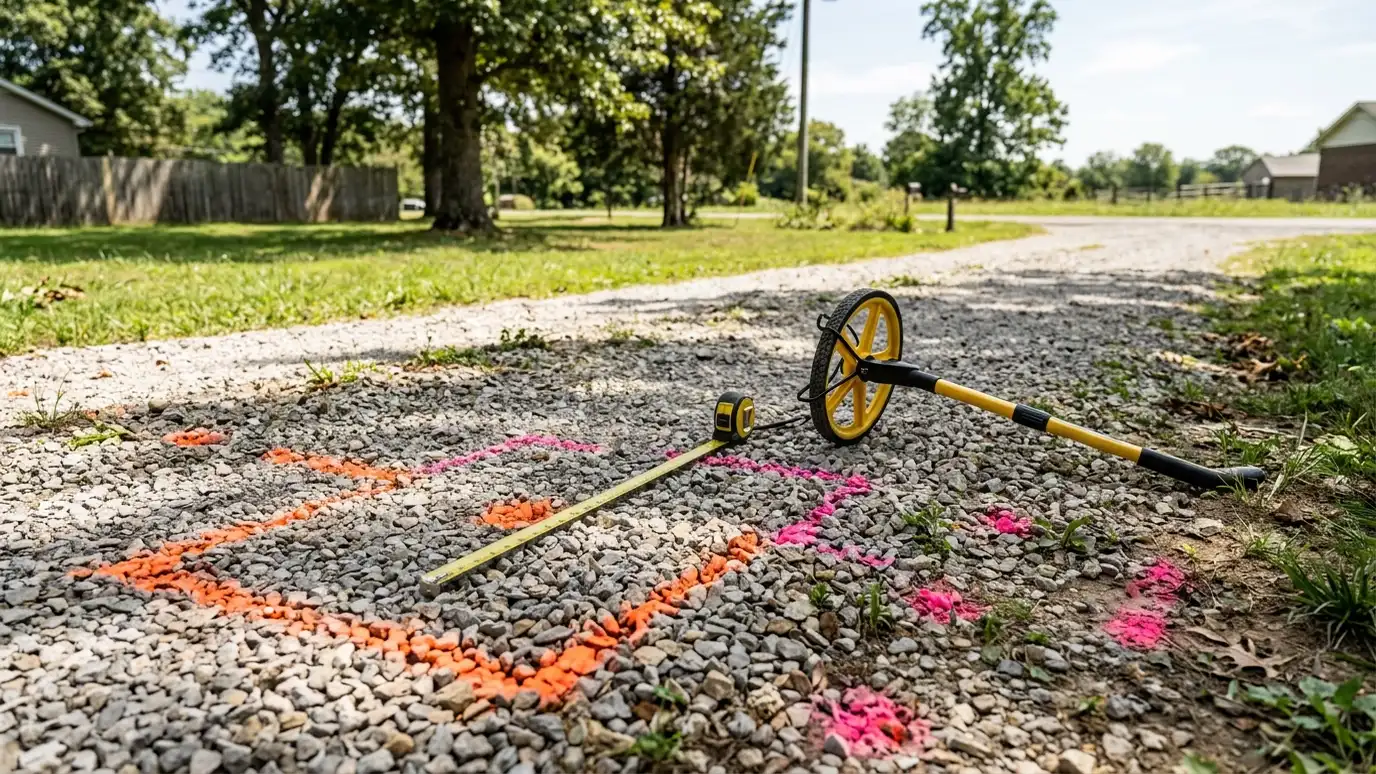
Permeable pavement works best where soils can absorb water. We test and design the reservoir to suit the site.
Fabric, open-graded stone and porous asphalt are placed in order, with careful rolling that keeps the surface open.
Sweeping keeps pores clear. Sealcoat and sand must be avoided, since they clog the surface.
Drag the handle to compare.
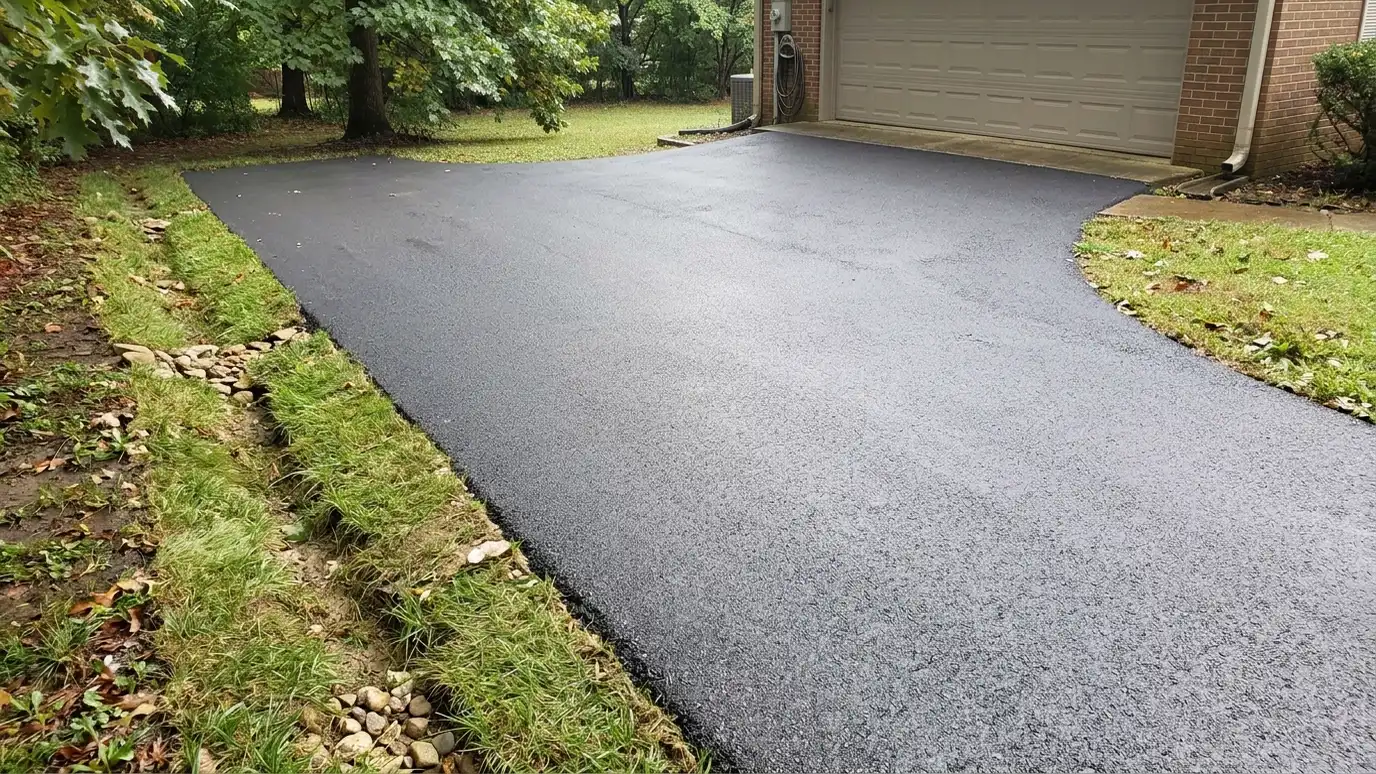
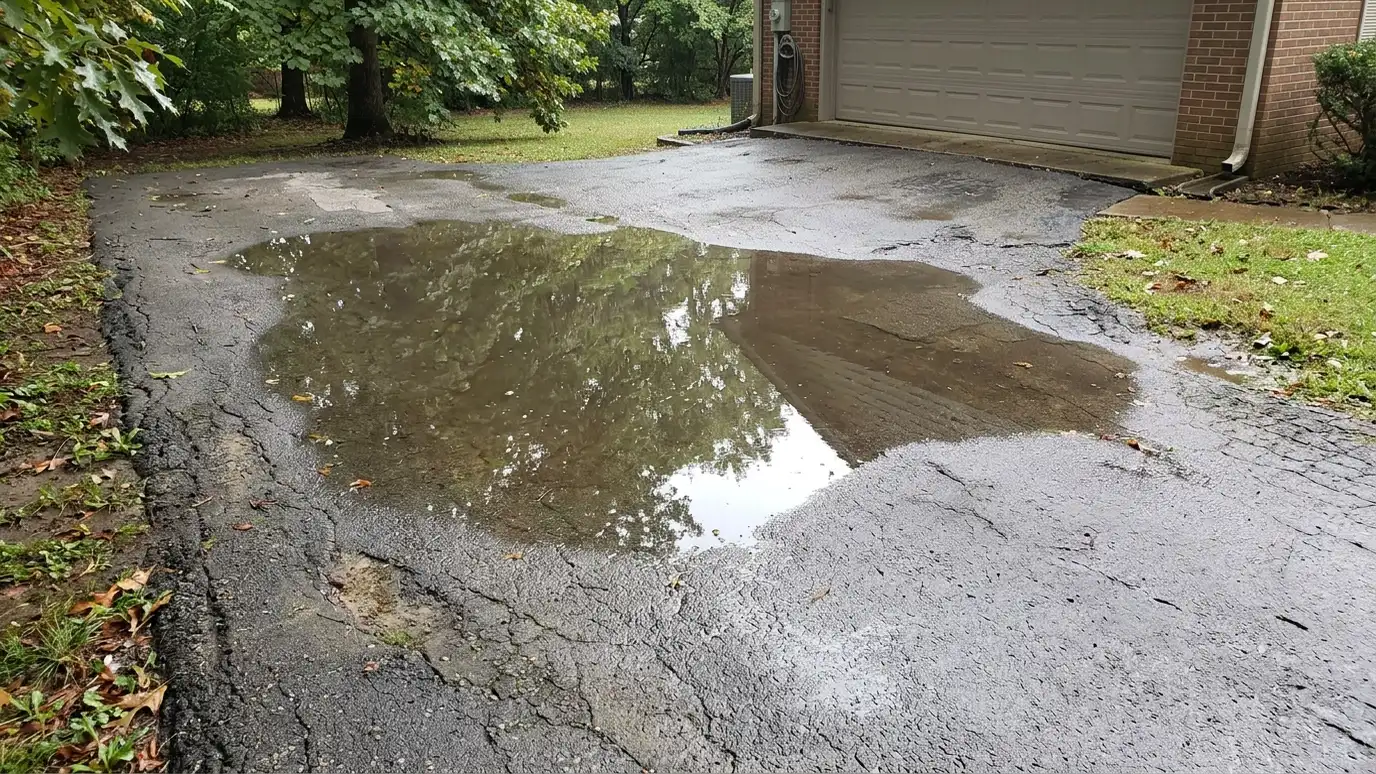 BeforeAfter
Less runoff.
Safer surface.
Helpful for permits.
Designed per soil.
Right for the site.
Keep pores open.
Every topic has its own page with what to expect and how we approach it.
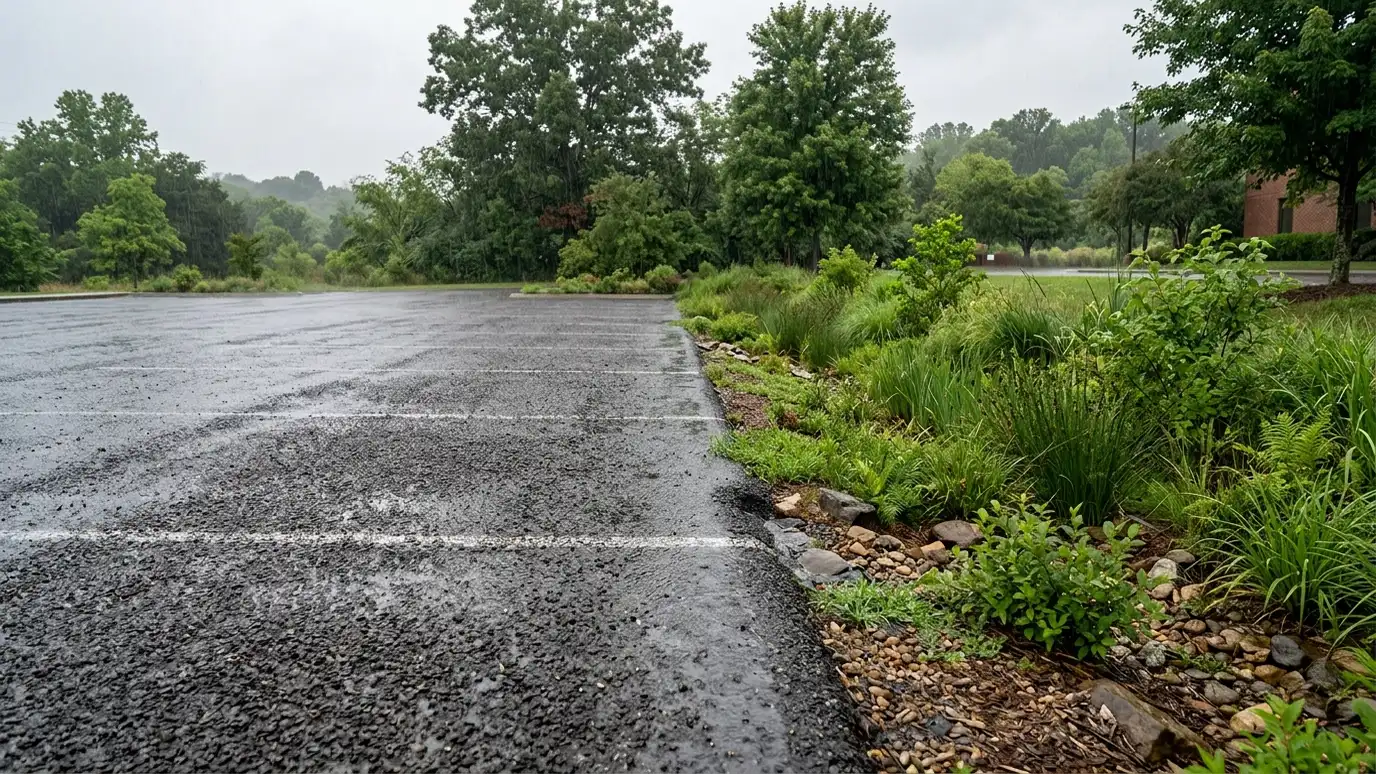 Asphalt finishPermeable AsphaltAn open-textured surface that lets rain pass through, with a slightly rougher, coarser look than standard asphalt.Learn more
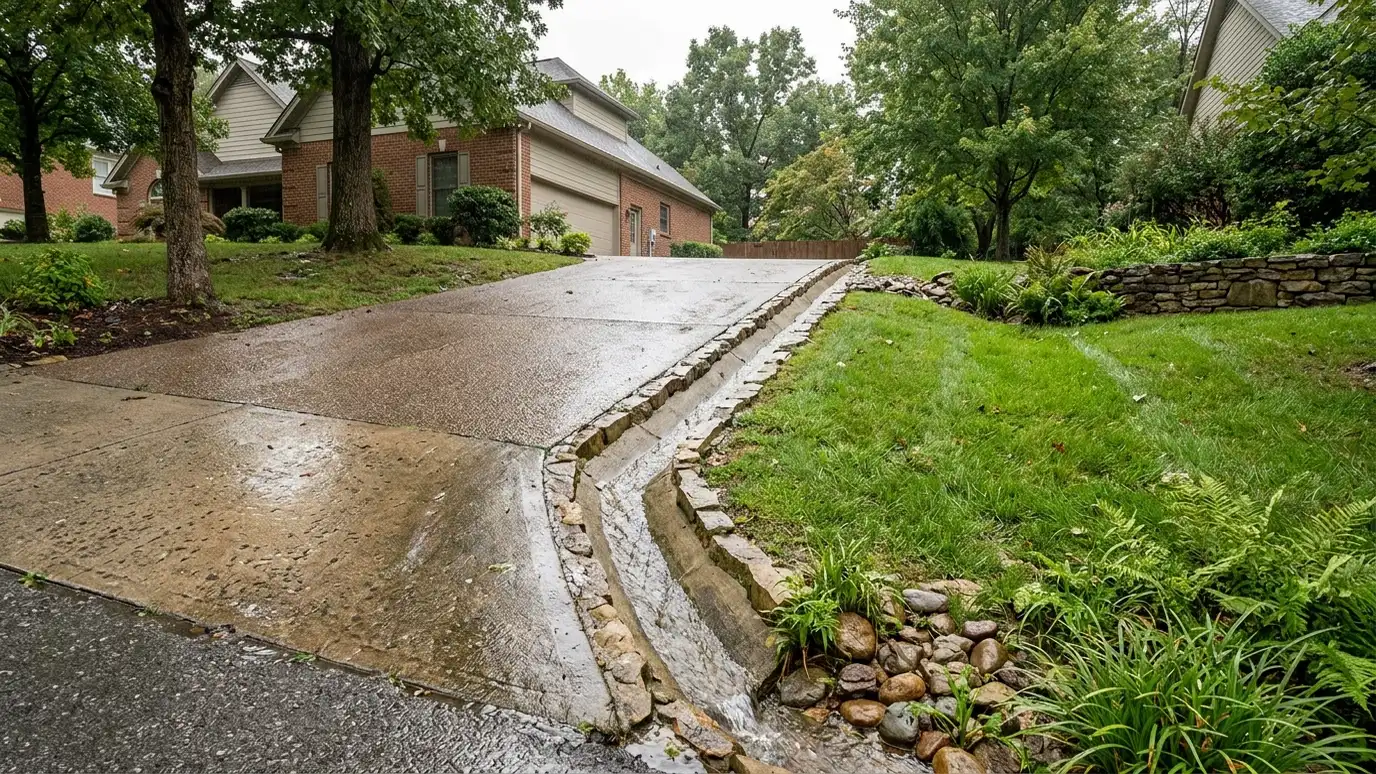 Topic guideDrainage and SlopeHow much slope a driveway needs, where water should go and how to solve puddles, runoff and washouts.Learn more
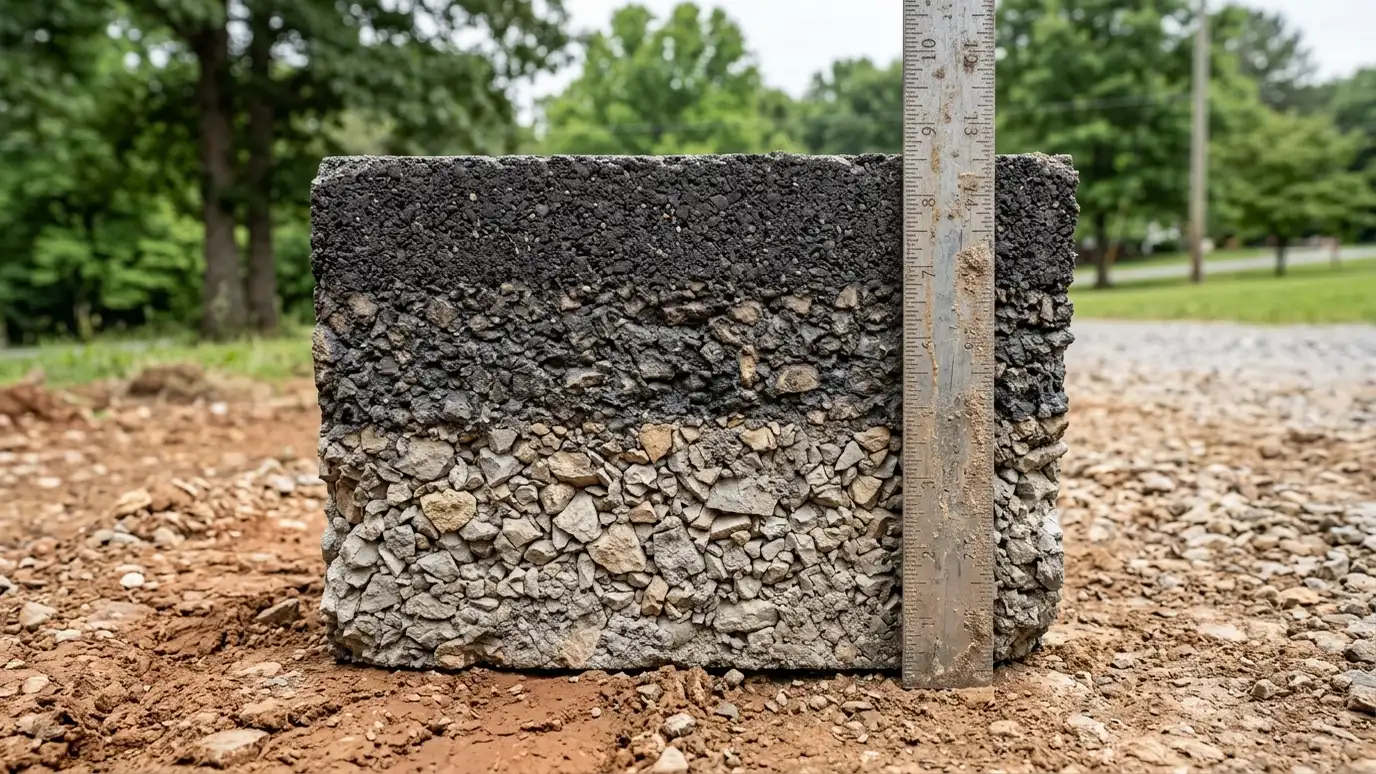 Topic guideThickness and LayersHow many inches of asphalt and stone a driveway, lot or truck court really needs, and what each…Learn more
Pick a job, set the size and add extras to see a ballpark planning range for your asphalt project.
You tell us about your pavement and what you want to change, from a repair to a whole new lot, and we set a visit that fits your day.
We visit, measure, check slope, drainage and the existing base and talk through thickness, edges, borders and finishes.
We plan the layout and drainage and give you an itemized written estimate with options, so you can compare it with any other bid.
We remove old pavement, grade, correct drainage and build a compacted stone base.
Hot mix is placed and compacted, edges are finished and striping, borders or sealing are completed.
We walk the finished pavement with you, explain curing and care and leave the site clean.
It can, with a deeper reservoir and an outlet. We test first.
It can if it is not cared for. Regular sweeping helps.
No. Sealcoat would block the pores.
It supports normal traffic when built correctly, but it needs careful design.
Usually yes at first, though it may reduce drainage costs.
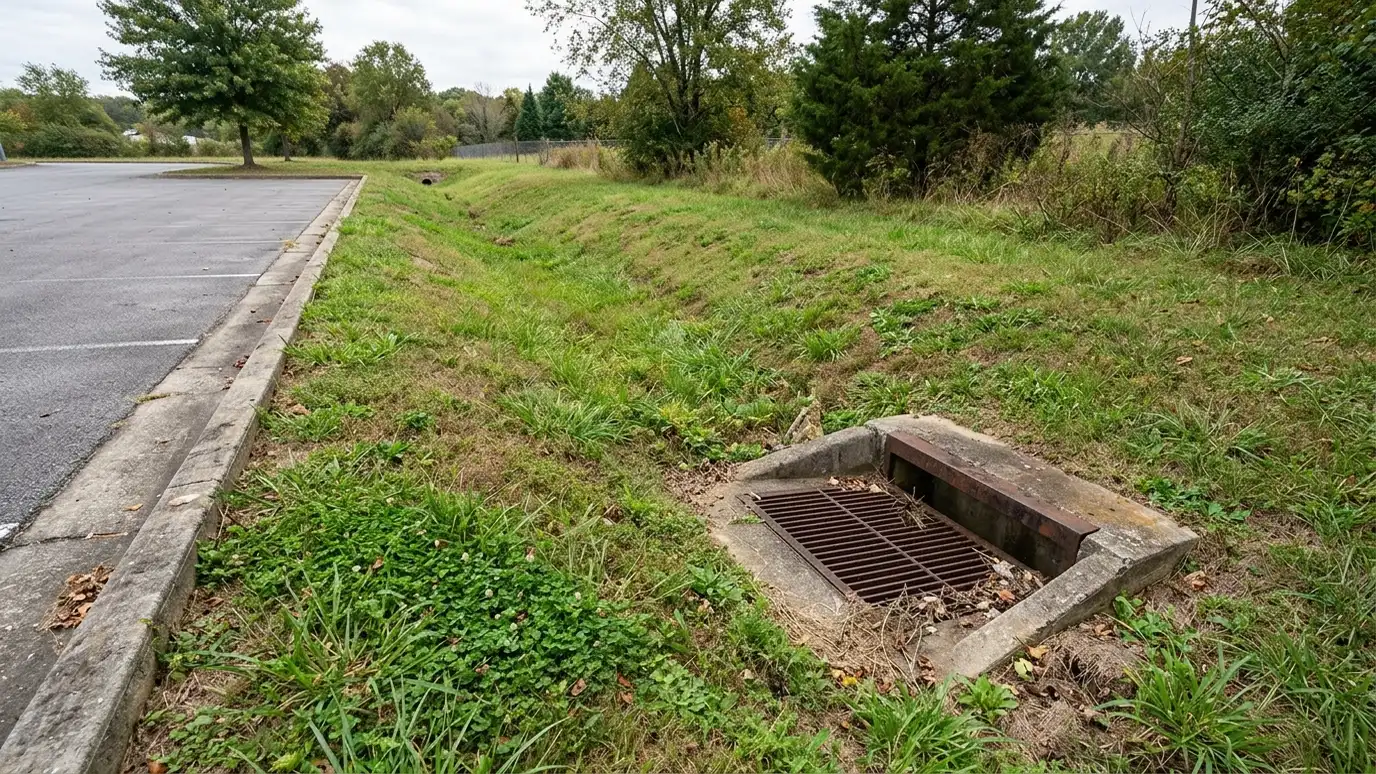 Drainage Swales and Catch BasinsGrassy swales, catch basins, pipes and trench drains that carry stormwater off driveways and lots before it damages…Explore
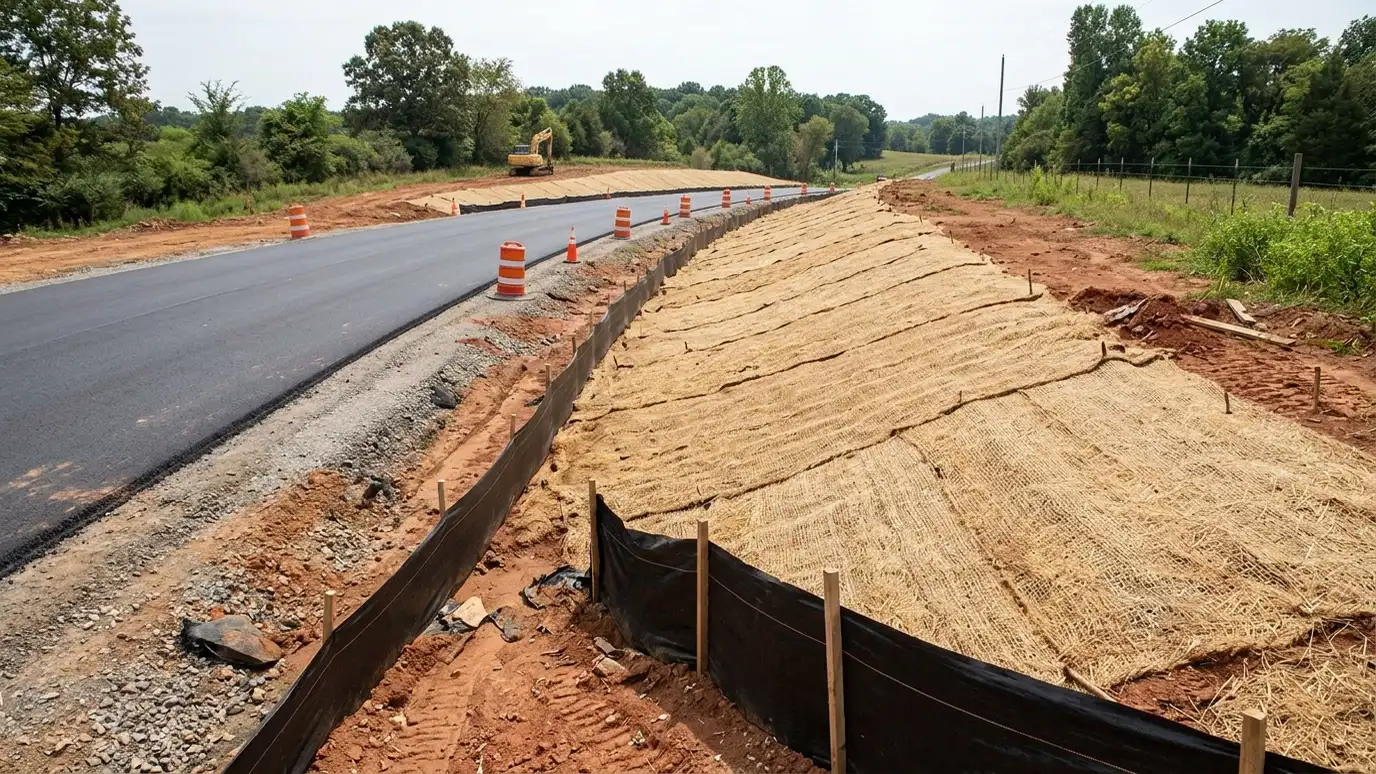 Erosion Control and Site StabilizationSilt fence, stone, seed and straw, matting and slope work that keeps soil in place during and after…Explore
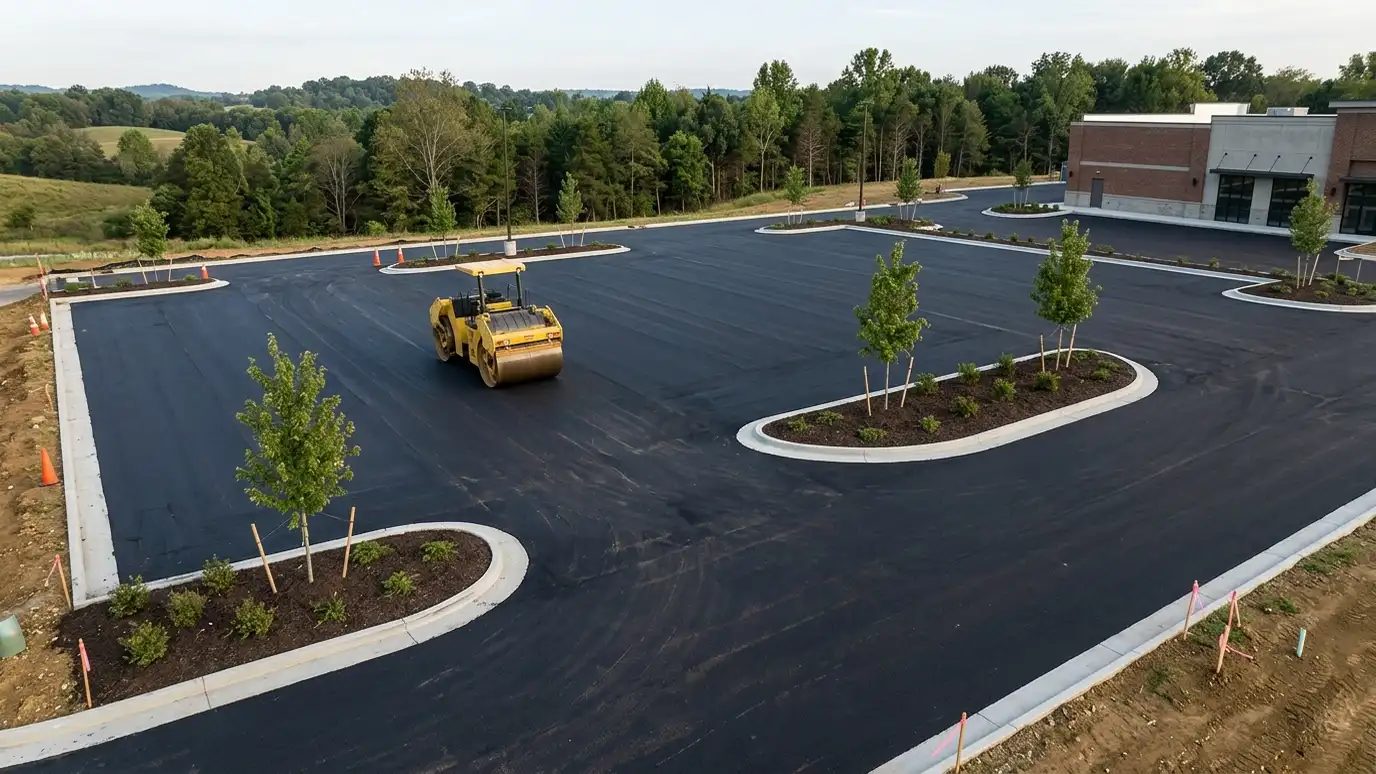 Parking Lot ConstructionNew parking lots built for traffic: engineered base, drainage, curbs, heavy-duty asphalt and layout that works for customers…Explore
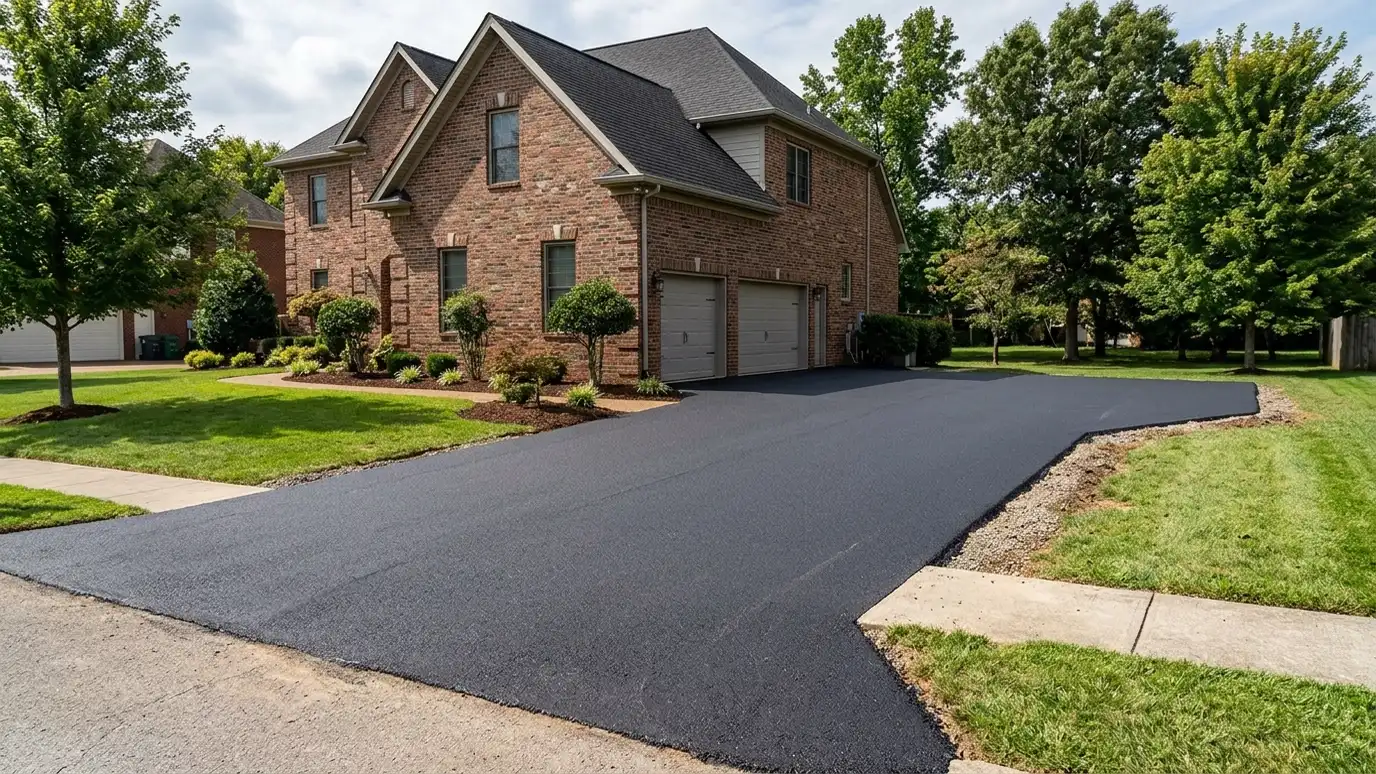 Driveway InstallationNew asphalt driveways built right from the ground up: graded, drained, stone-based and paved in smooth, dense hot…Explore
Tell us about your project and we will call you back to set up a visit.
Or call (615) 357-7797 to talk now.