Diagnosing the web of interconnected cracks that signal a failing base and repairing the section properly, not just sealing the surface.
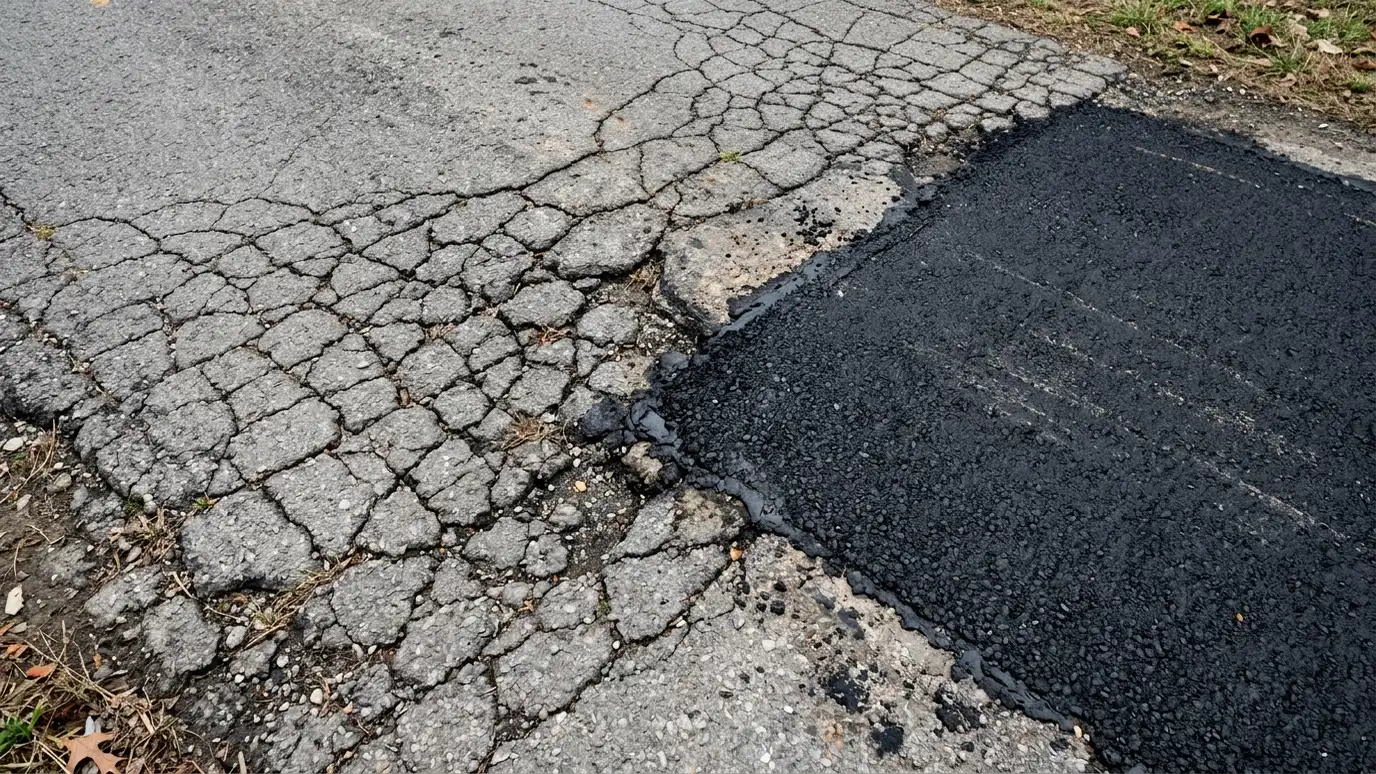
Alligator cracking, also called fatigue cracking, looks like the scales of a reptile: a web of small interlocking cracks across the surface. It is the clearest sign that the base or soil beneath the asphalt is failing, and it spreads fast once water gets in. Sealing the cracks or sealcoating over them hides the pattern for a short time, but the pavement keeps moving. In Nashville’s clay soils and wet seasons, fatigue cracking is one of the most common lot and driveway problems.
We start by finding out why it formed. We look at drainage, soil, base thickness and traffic, because each points to a different cure. Small areas can be cut out and rebuilt with new base and asphalt. Larger areas call for deeper repairs or a base stabilization before paving. We also fix the drainage that let the damage start. We explain honestly whether a section can be saved or whether replacing a larger area is wiser.
A web of cracks means the pavement is flexing over a weak base. The cracks are the symptom, not the problem itself.
Water, soft clay, thin pavement or heavy traffic each cause fatigue cracking. We check them to choose the right repair.
Affected sections are removed, the base is rebuilt and new asphalt is paved, which stops the pattern at the source.
We correct drainage that let the damage start, so the repair does not fail the same way.
Drag the handle to compare.
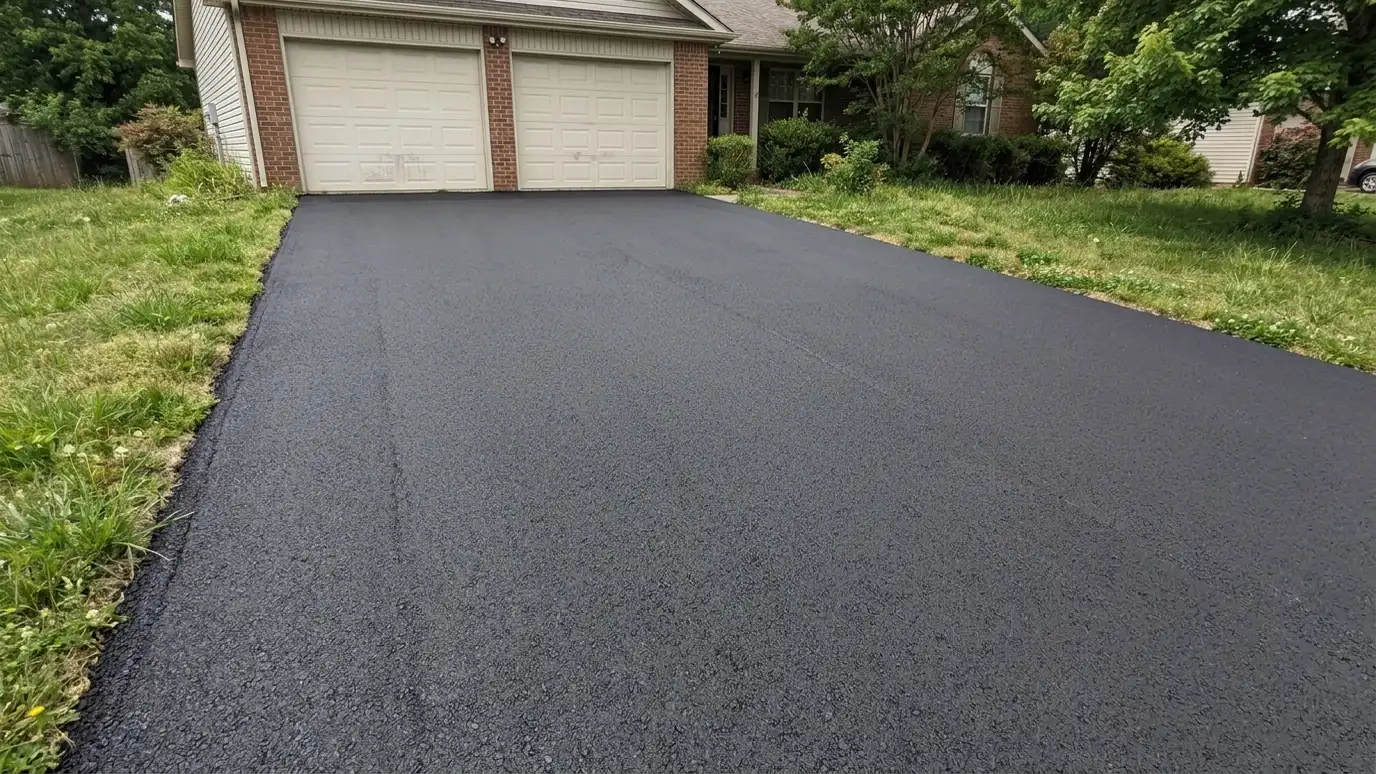
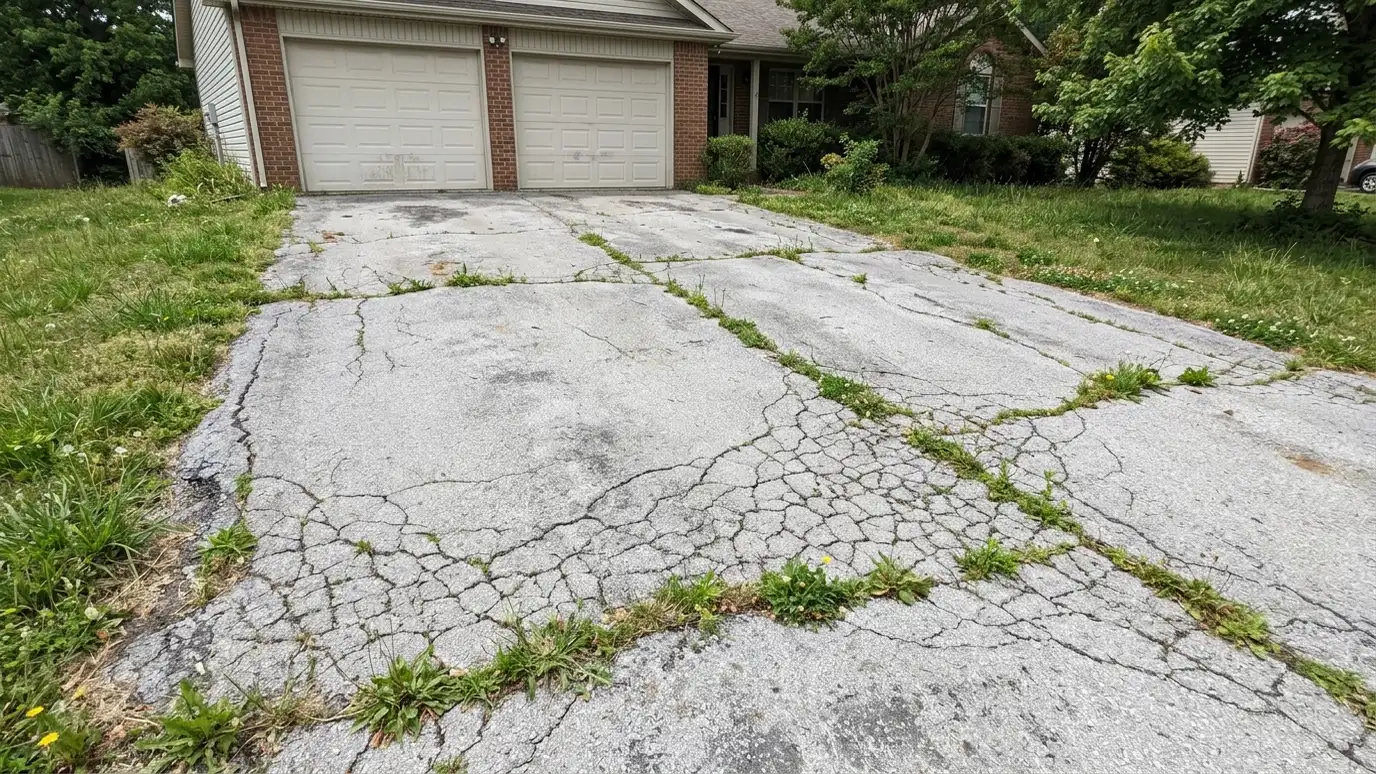 BeforeAfter
Fatigue cracking.
Water or base.
Cut out and rebuild.
Stops recurrence.
Save or replace.
Rebuilt right.
Every topic has its own page with what to expect and how we approach it.
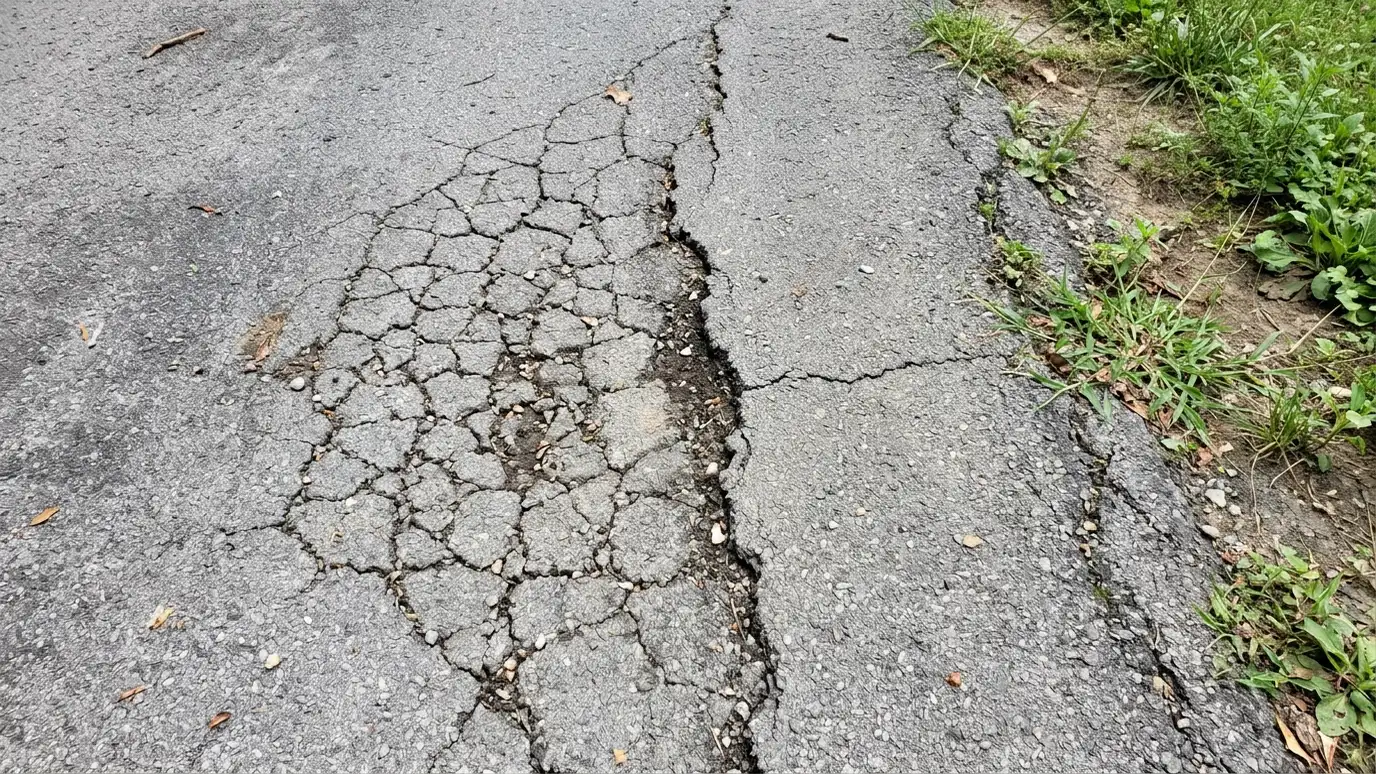 Topic guideCrack Types GuideHairline, linear, alligator, block, edge and slippage cracks explained: what causes each, how serious it is and how…Learn more
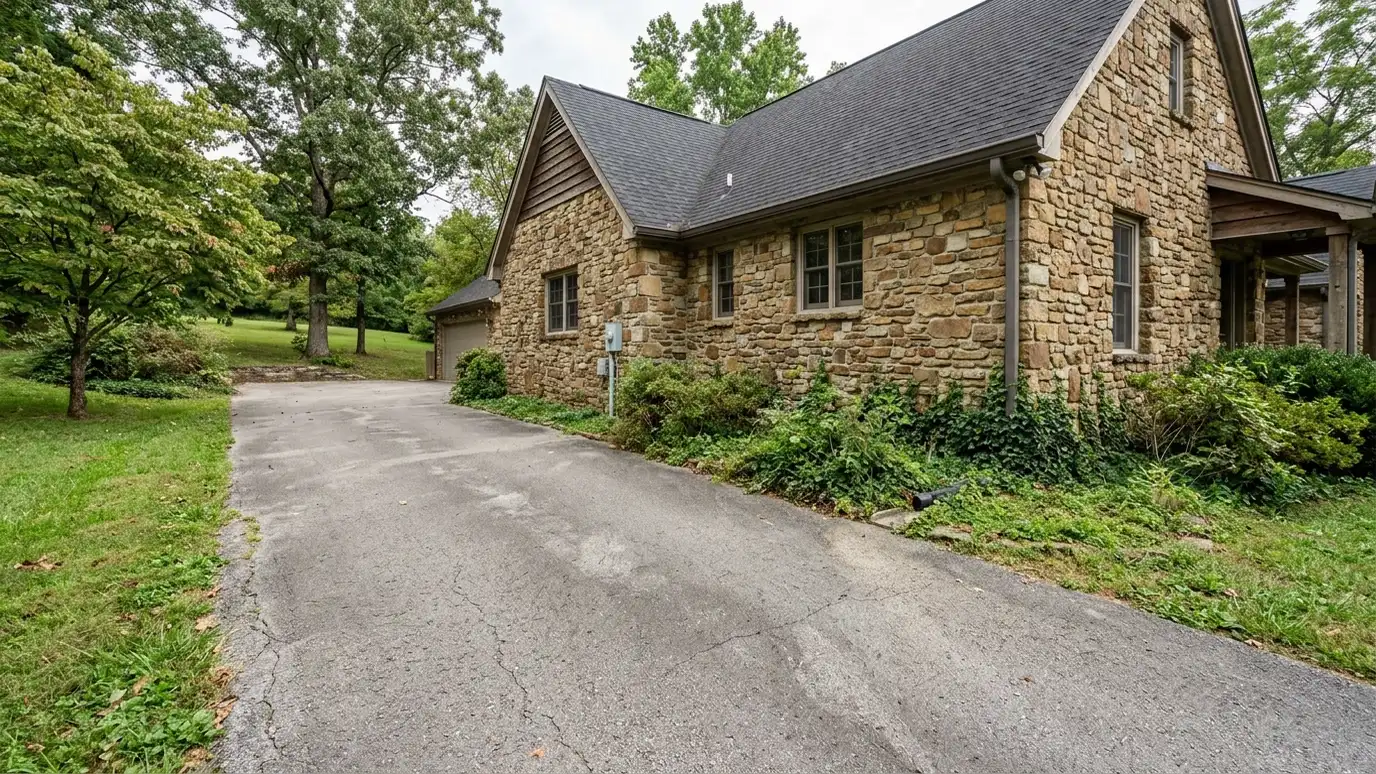 Asphalt finishAged Gray AsphaltWhat sun-faded gray asphalt tells you about its age, and what to do about it: sealcoat, repair or…Learn more
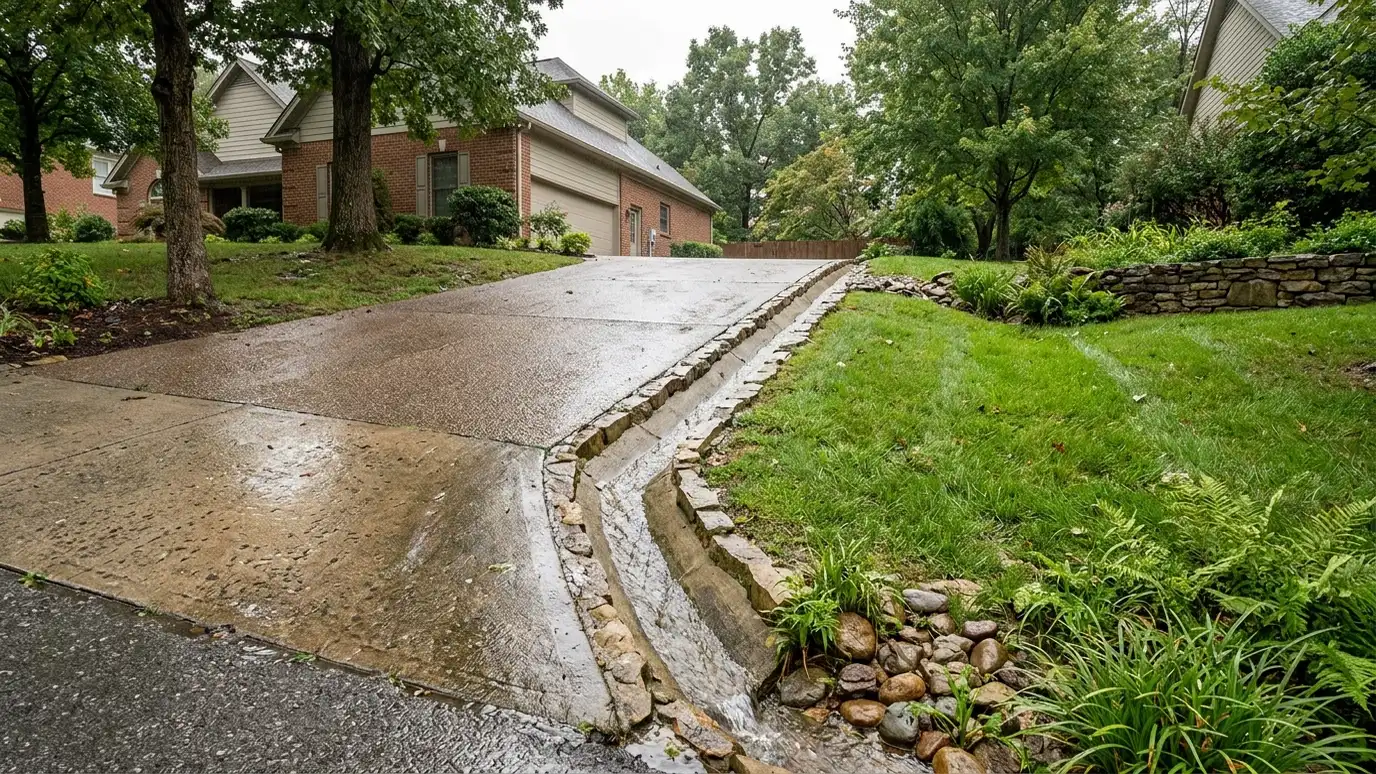 Topic guideDrainage and SlopeHow much slope a driveway needs, where water should go and how to solve puddles, runoff and washouts.Learn more
Tick what you see on your pavement and get a priority list and a plain recommendation: maintain, repair, resurface or replace.
You tell us about your pavement and what you want to change, from a repair to a whole new lot, and we set a visit that fits your day.
We visit, measure, check slope, drainage and the existing base and talk through thickness, edges, borders and finishes.
We plan the layout and drainage and give you an itemized written estimate with options, so you can compare it with any other bid.
We remove old pavement, grade, correct drainage and build a compacted stone base.
Hot mix is placed and compacted, edges are finished and striping, borders or sealing are completed.
We walk the finished pavement with you, explain curing and care and leave the site clean.
Sealing slows water, but it does not fix the weak base, so the pattern usually returns.
Often drainage, soft soil, or pavement that was too thin for the traffic.
Once water gets in, it can spread quickly, especially after winter.
Yes. Cutting out and rebuilding a small area can stop it.
When most of the pavement shows the pattern, replacement is usually the better value.
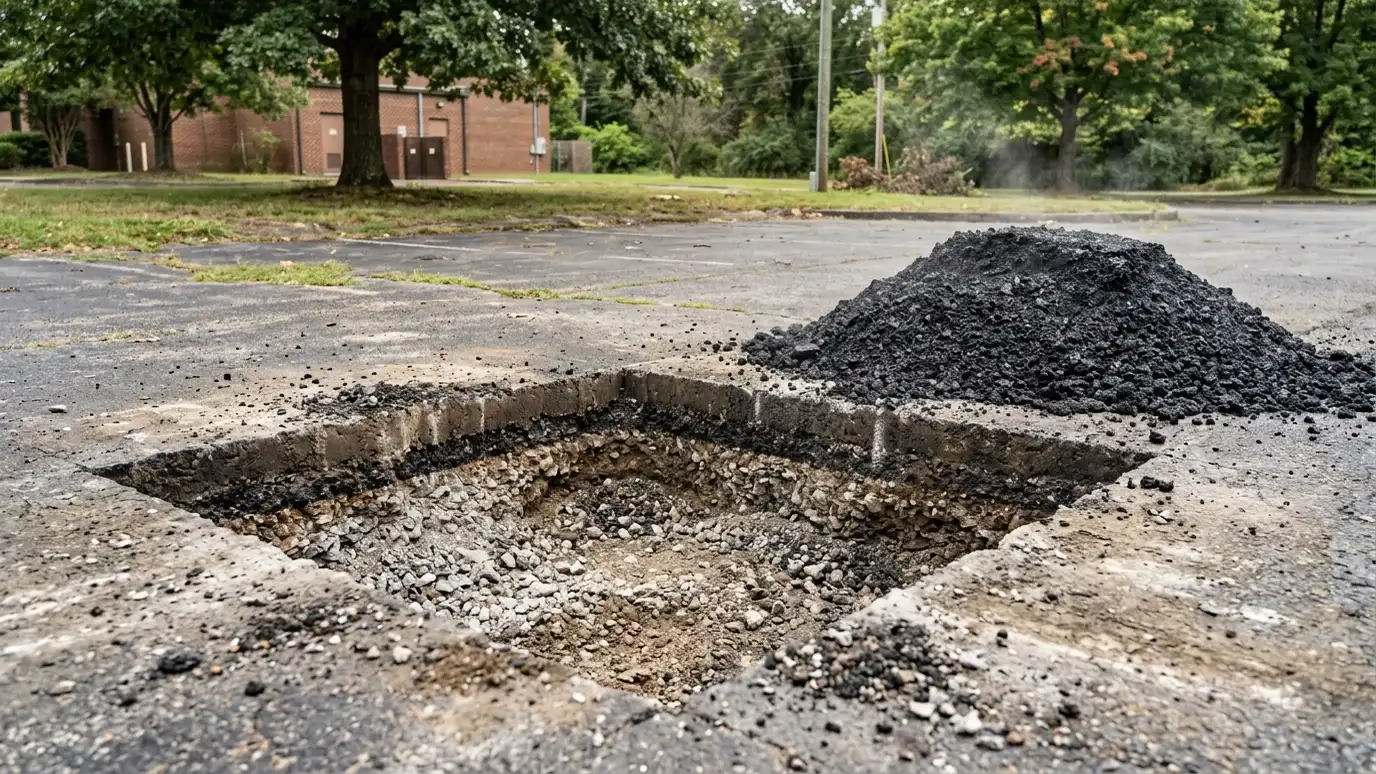 Full-Depth RepairRemoving failed asphalt and base completely and rebuilding the whole section, for areas where the foundation has given…Explore
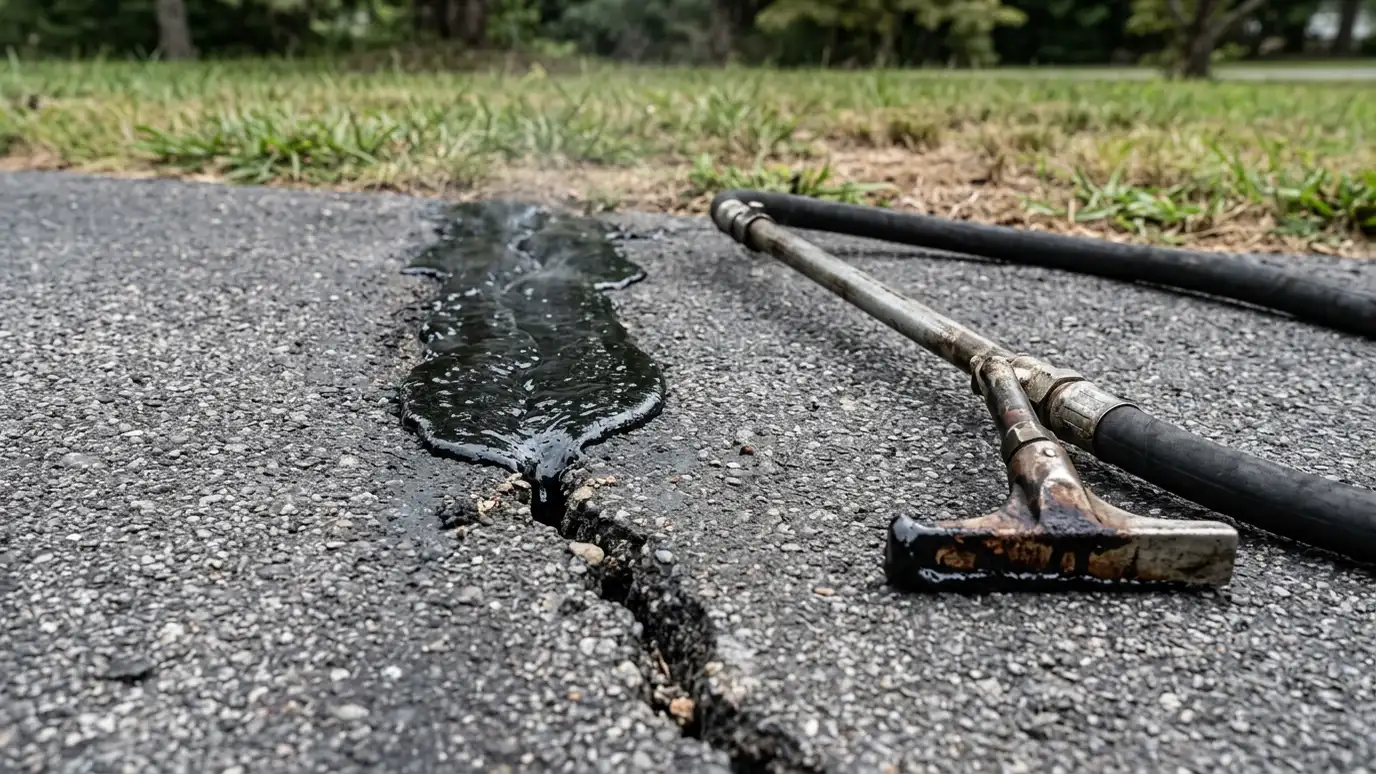 Crack SealingHot rubberized sealant that fills and seals cracks before water gets in and turns a hairline into a…Explore
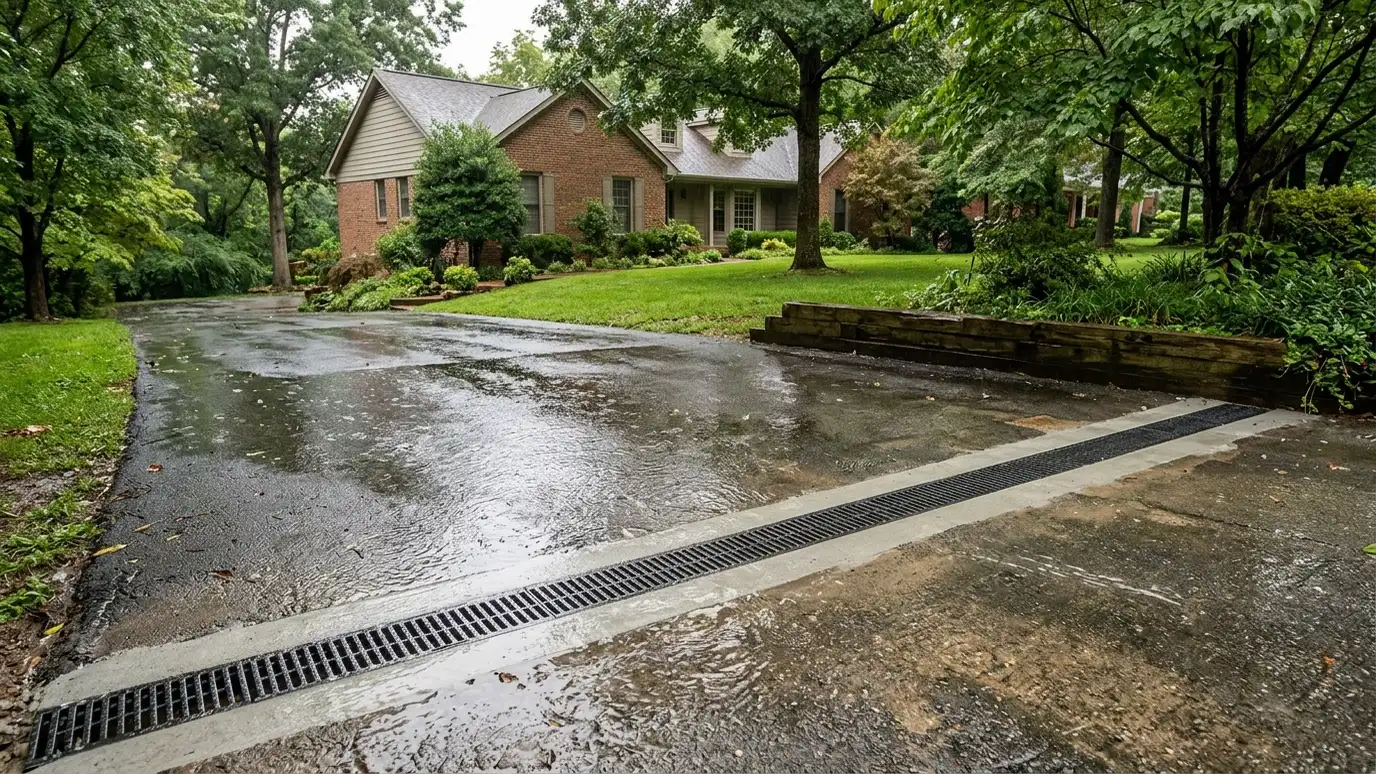 Drainage and Pooling FixesFixing standing water, birdbaths and runoff damage with regrading, drains, swales and surface repair that sends water away.Explore
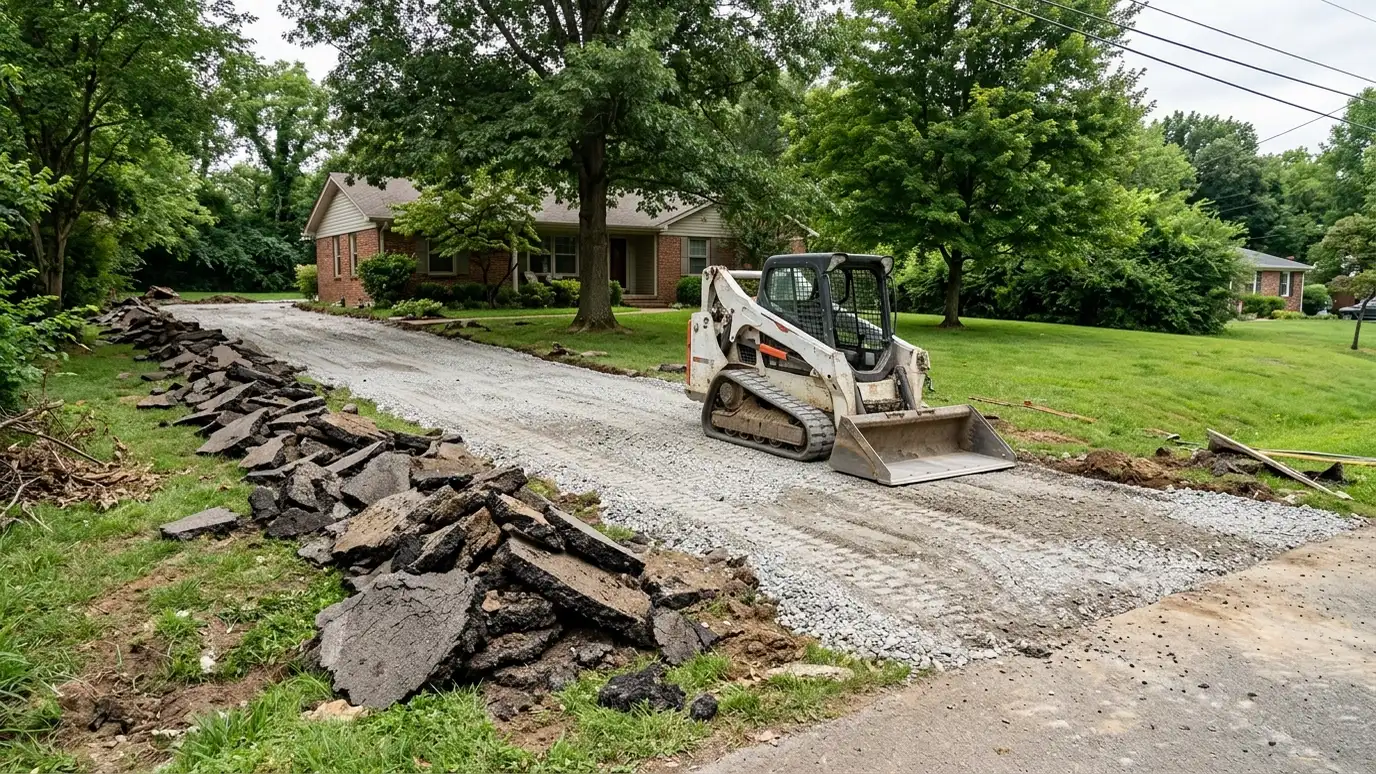 Driveway ReplacementRemoving a failing driveway down to a sound base or to the soil, correcting what went wrong and…Explore
Tell us about your project and we will call you back to set up a visit.
Or call (615) 357-7797 to talk now.