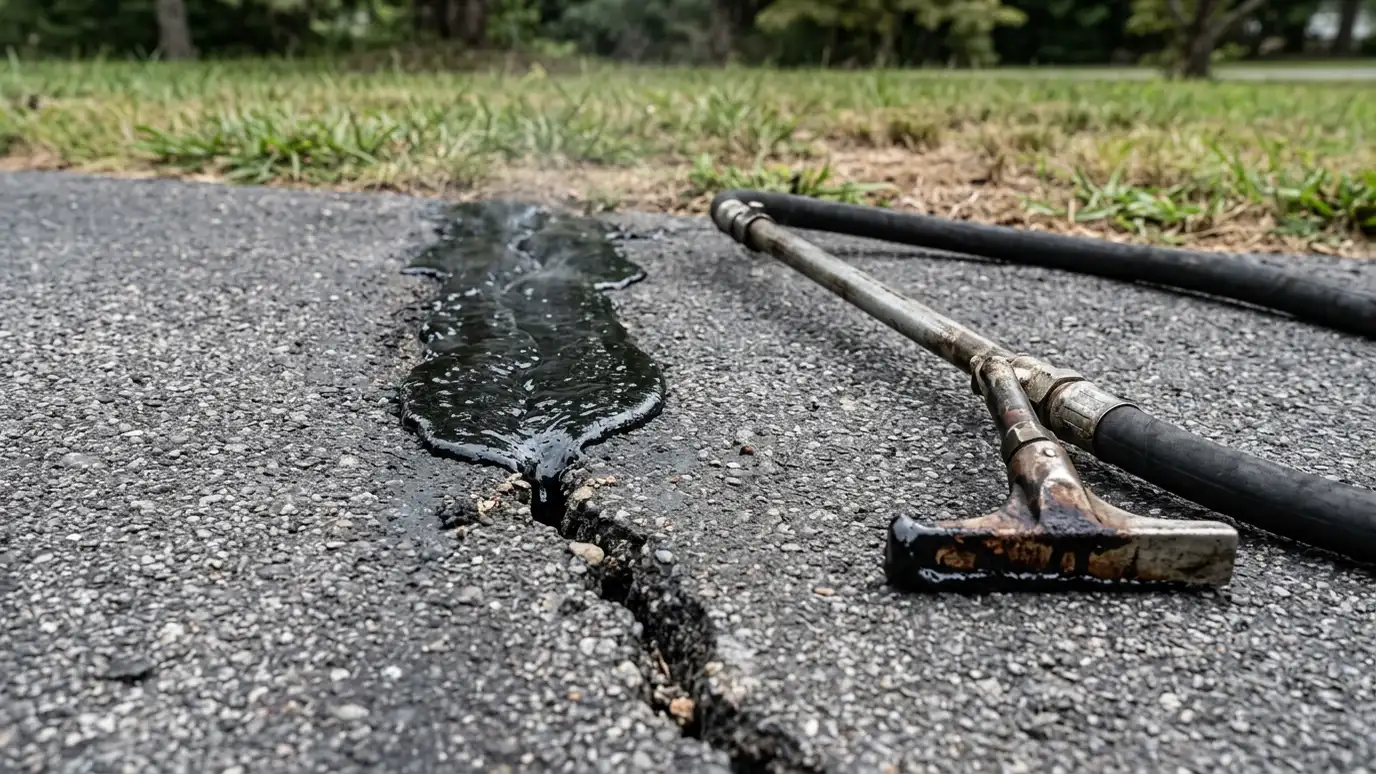
Hot rubberized sealant that fills and seals cracks before water gets in and turns a hairline into a pothole.
Asphalt cracks as it ages. Heat expands it, cold shrinks it and traffic flexes it, and eventually hairline cracks appear. They look harmless, but every crack is an open door for water. Water seeps into the base, weakens it and freezes in winter, widening the crack and breaking the surface. Sealing cracks early is one of the most affordable and effective ways to extend pavement life, especially in Middle Tennessee’s wet climate.
We clean cracks with a hot-air lance or compressed air to remove dirt and moisture, then fill them with hot rubberized sealant that stays flexible as the pavement moves. We tool the sealant flush or in a neat band and dust it so it does not track. We tell you which cracks to seal and which need a different repair, since very wide or patterned cracking points to base problems that sealant alone cannot fix.
Cracks about a quarter inch or wider benefit from sealing. Treating them early keeps water out of the base.
Dirt and moisture prevent a good bond. We clean and heat the crack so the sealant sticks.
Rubberized sealant stretches and shrinks with the pavement, so it keeps working as the seasons change.
Alligator cracking and wide, sunken cracks mean base failure. We recommend patching or replacement instead.
Drag the handle to compare.
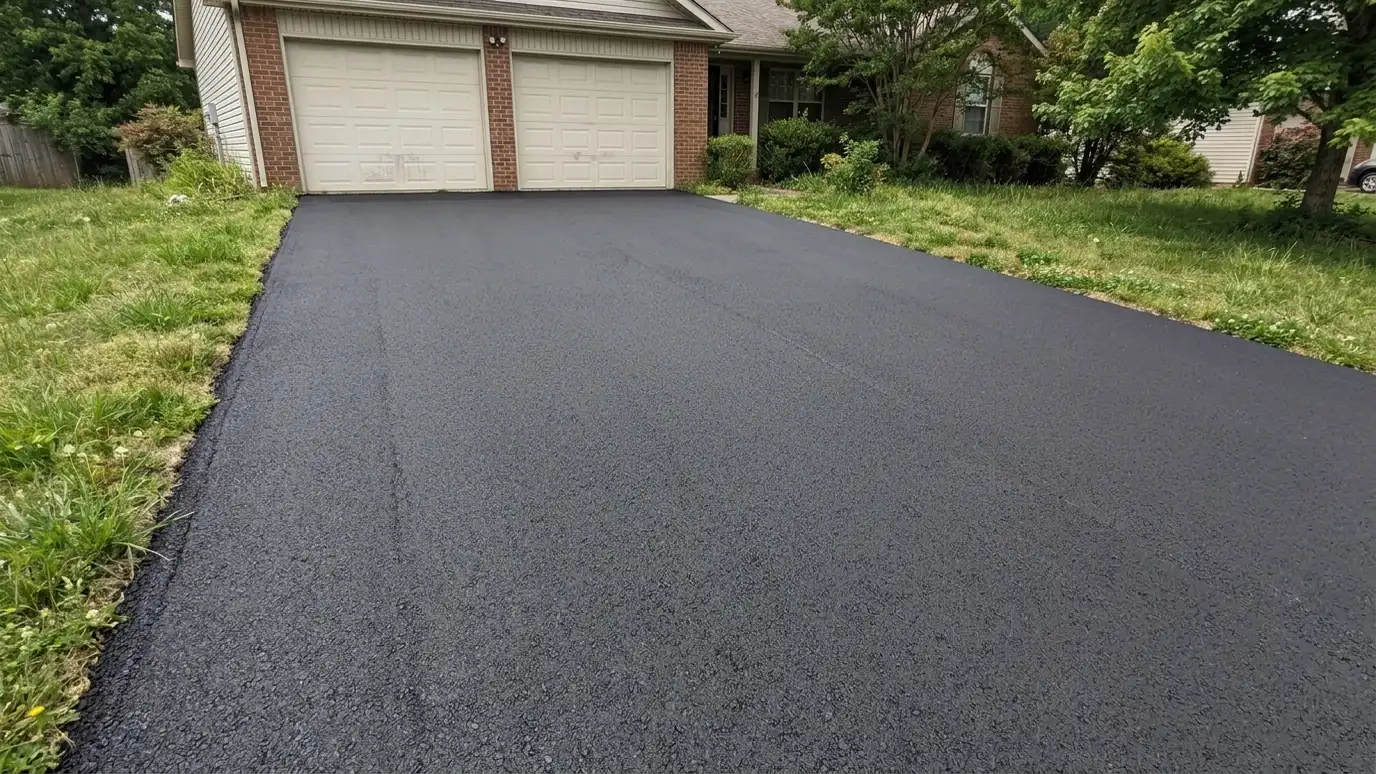
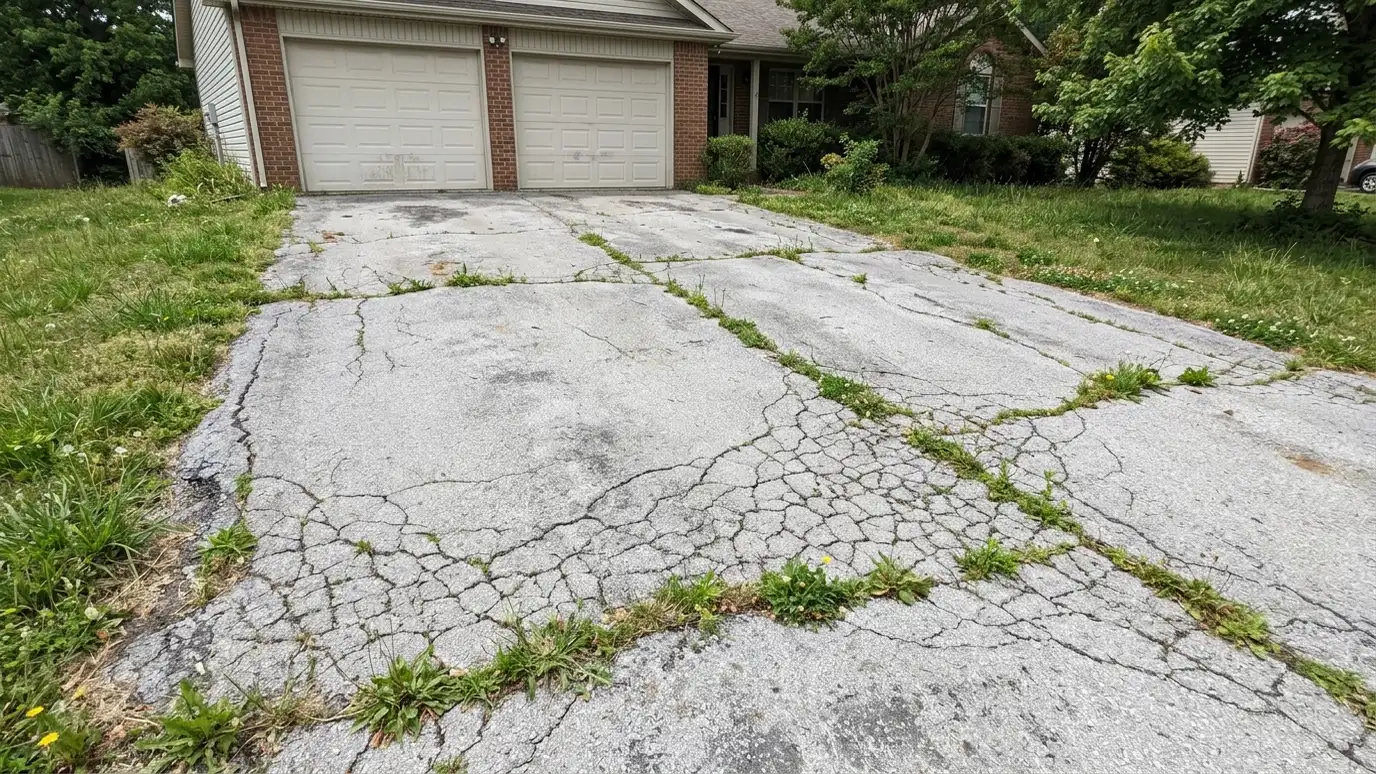 BeforeAfter
Seals the entry.
Big savings later.
Moves with pavement.
Seal or repair.
Done in a visit.
Years more.
Every topic has its own page with what to expect and how we approach it.
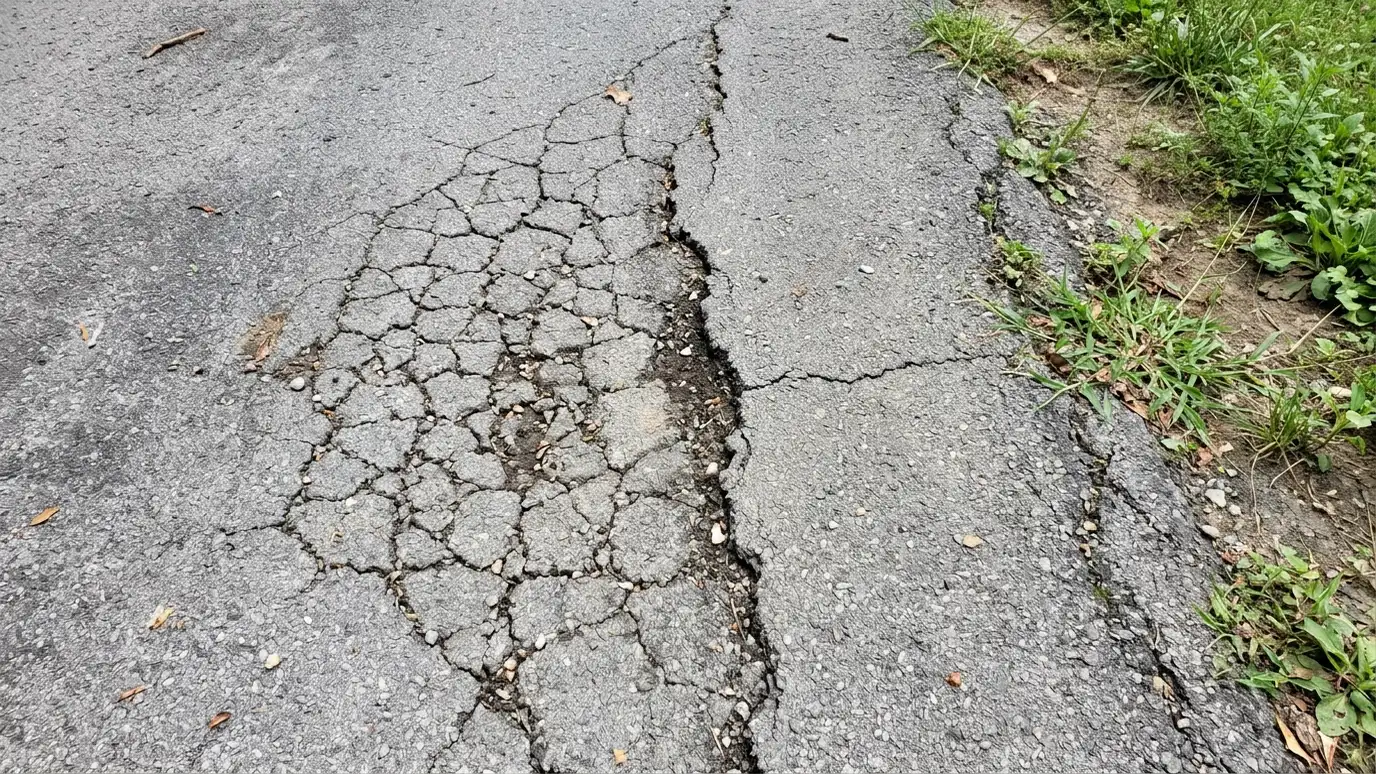 Topic guideCrack Types GuideHairline, linear, alligator, block, edge and slippage cracks explained: what causes each, how serious it is and how…Learn more
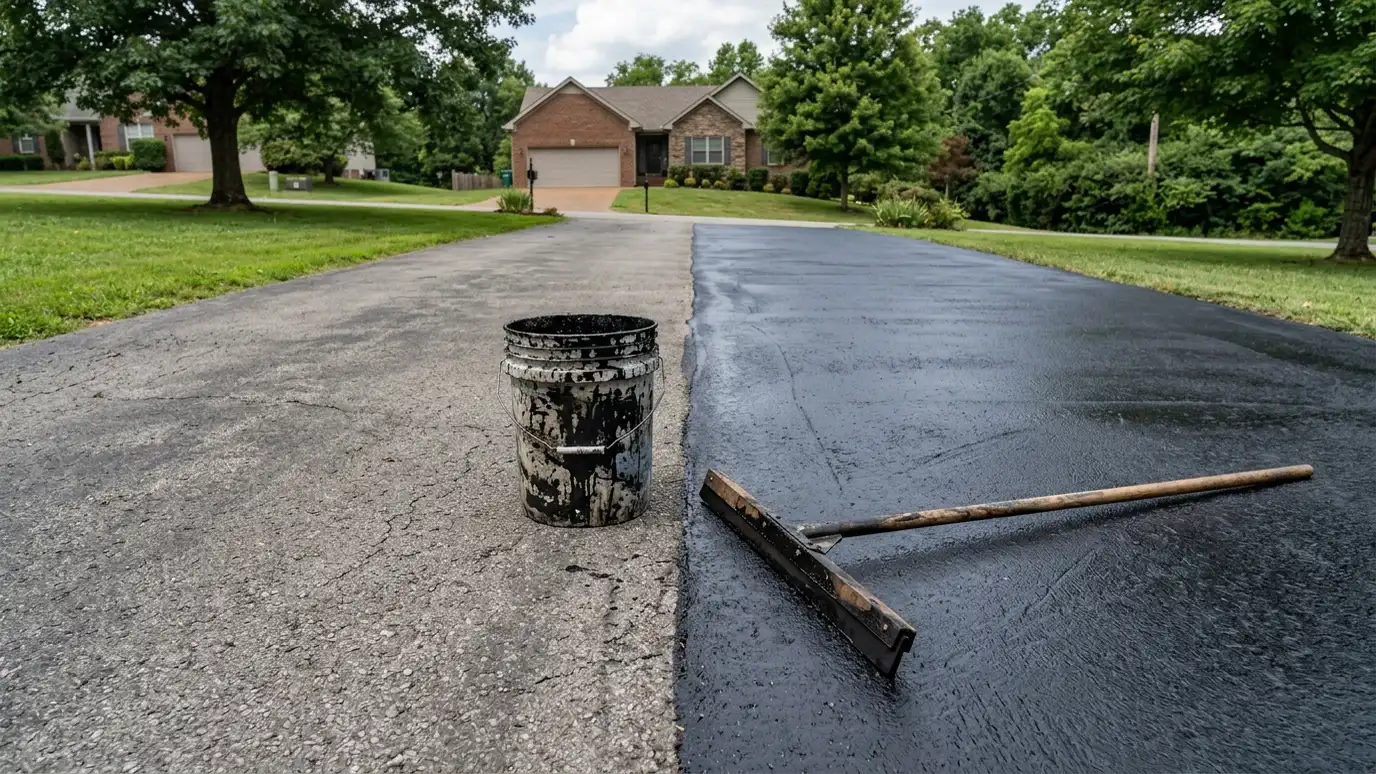 Topic guideSealcoating GuideWhat sealcoat does, when to apply the first coat, how often to repeat and when to skip it…Learn more
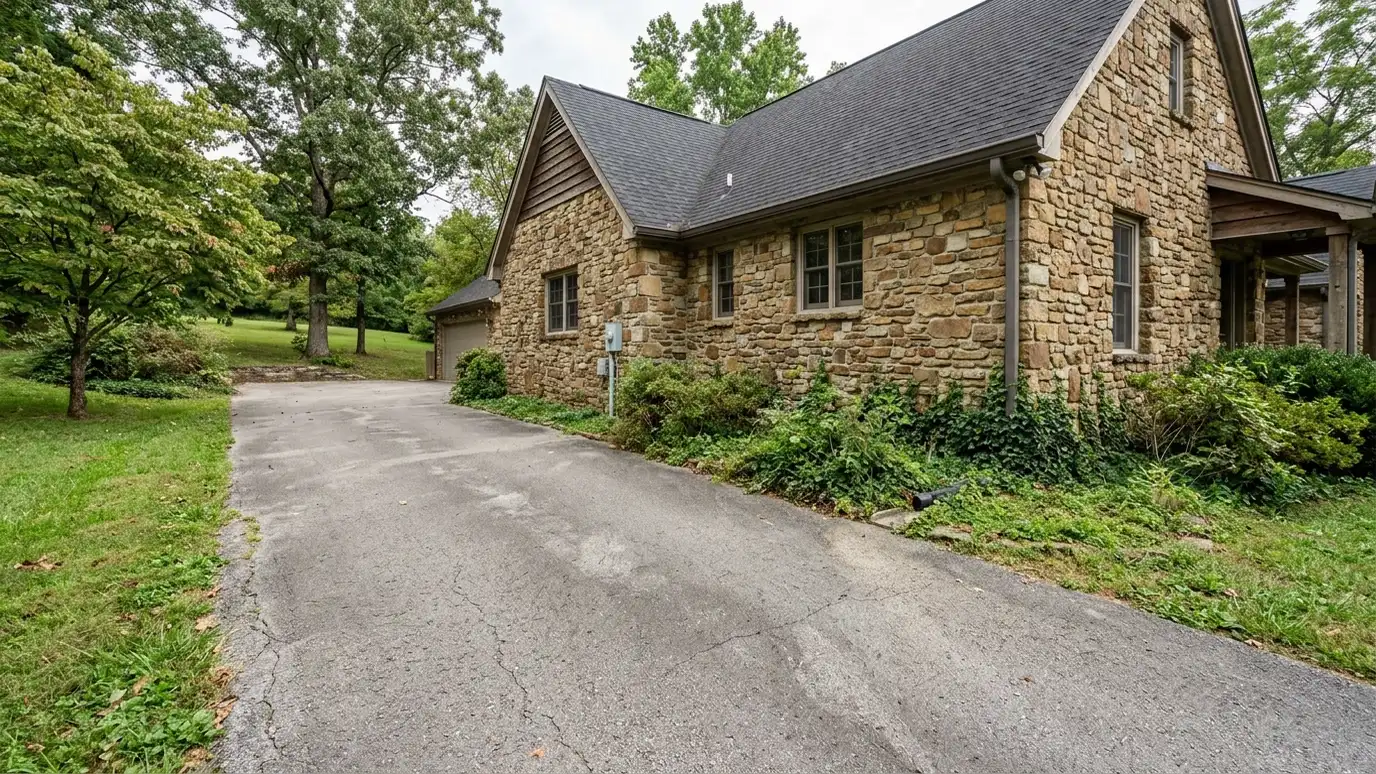 Asphalt finishAged Gray AsphaltWhat sun-faded gray asphalt tells you about its age, and what to do about it: sealcoat, repair or…Learn more
Tick what you see on your pavement and get a priority list and a plain recommendation: maintain, repair, resurface or replace.
You tell us about your pavement and what you want to change, from a repair to a whole new lot, and we set a visit that fits your day.
We visit, measure, check slope, drainage and the existing base and talk through thickness, edges, borders and finishes.
We plan the layout and drainage and give you an itemized written estimate with options, so you can compare it with any other bid.
We remove old pavement, grade, correct drainage and build a compacted stone base.
Hot mix is placed and compacted, edges are finished and striping, borders or sealing are completed.
We walk the finished pavement with you, explain curing and care and leave the site clean.
Cracks about a quarter inch or wider are usually worth sealing.
It slows damage by keeping water out, but new cracks can still form.
Small cracks can be filled with a consumer product, but a hot professional seal lasts longer.
Dry, mild weather is best, such as spring and fall.
Often yes, to protect the surface. We time it so the sealant is ready.
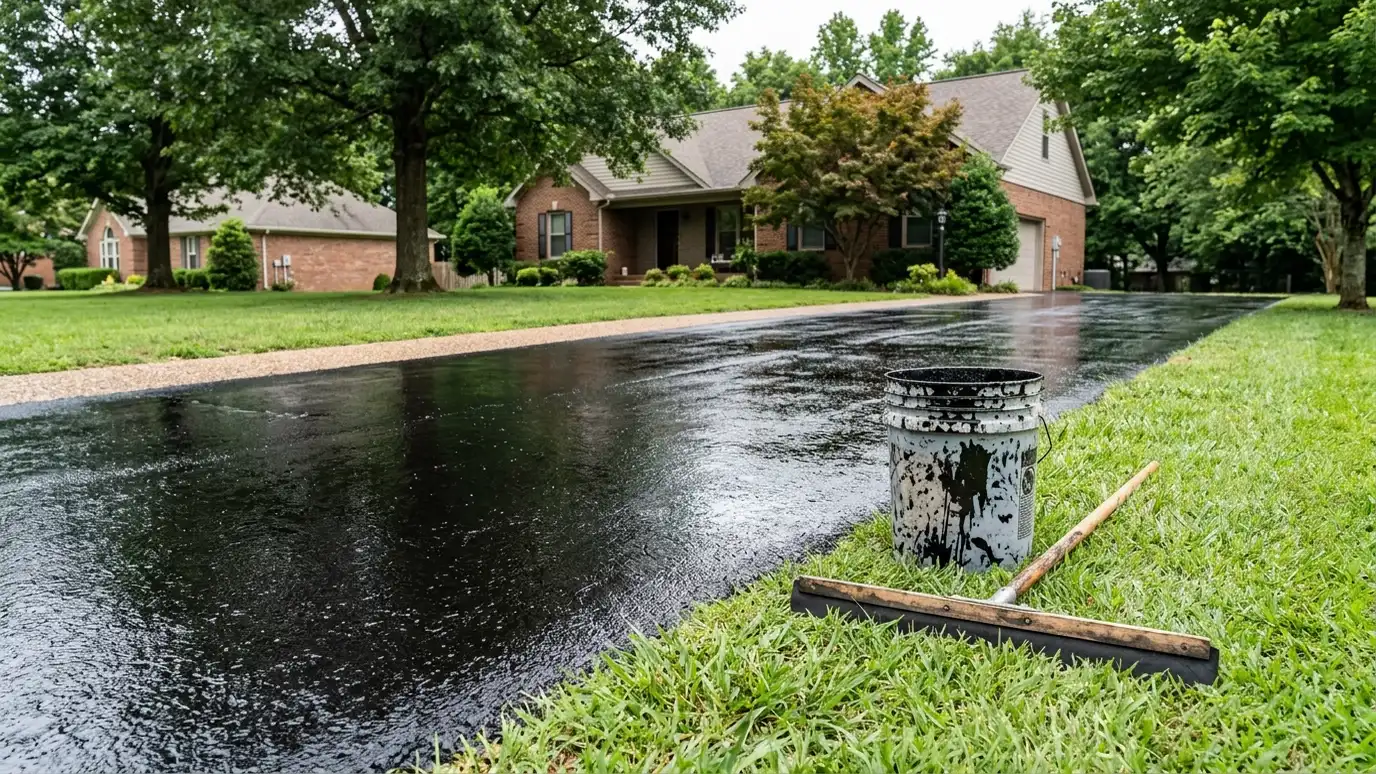 Driveway SealcoatingA protective sealcoat that shields asphalt from sun, water and oil, restoring a deep black finish and slowing…Explore
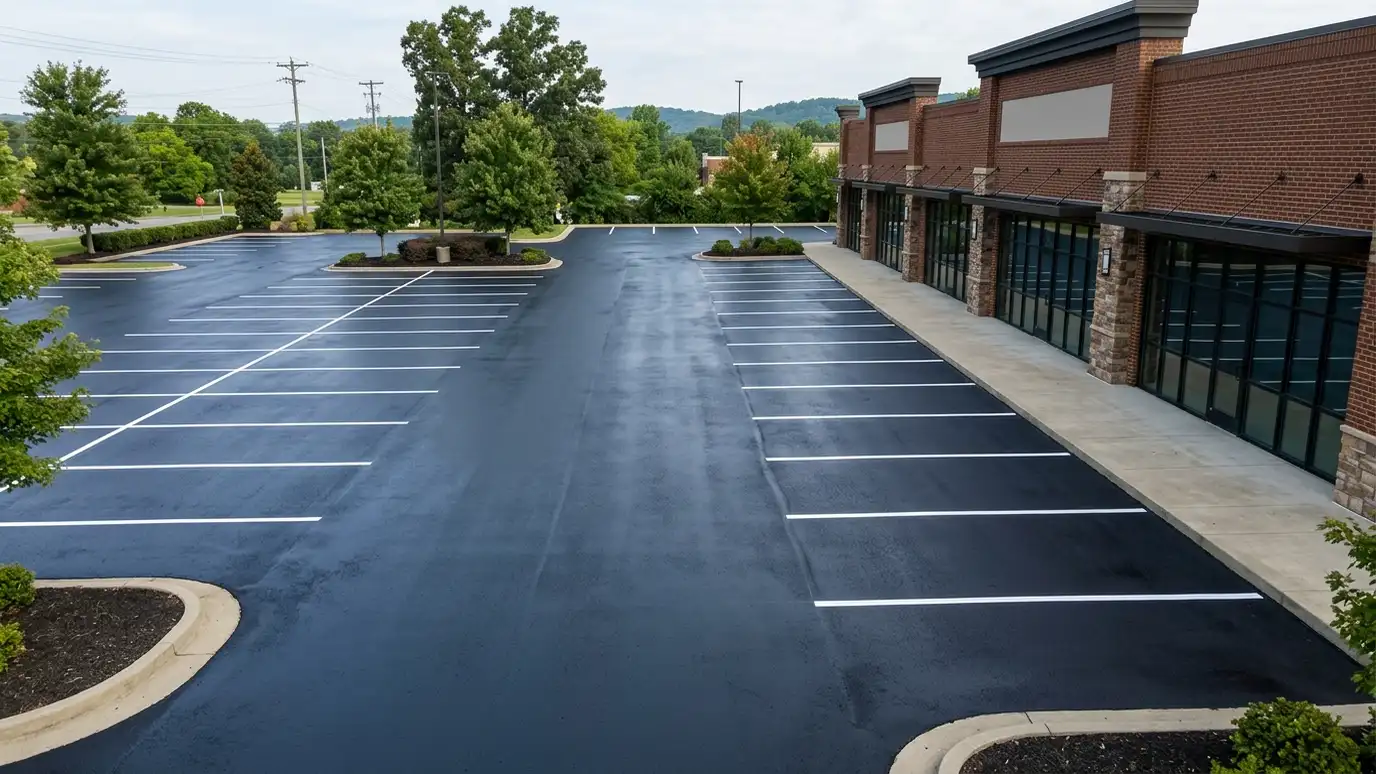 Parking Lot SealcoatingProtective sealcoat for commercial lots that fights sun, water, oil and salt, keeps pavement dark and extends its…Explore
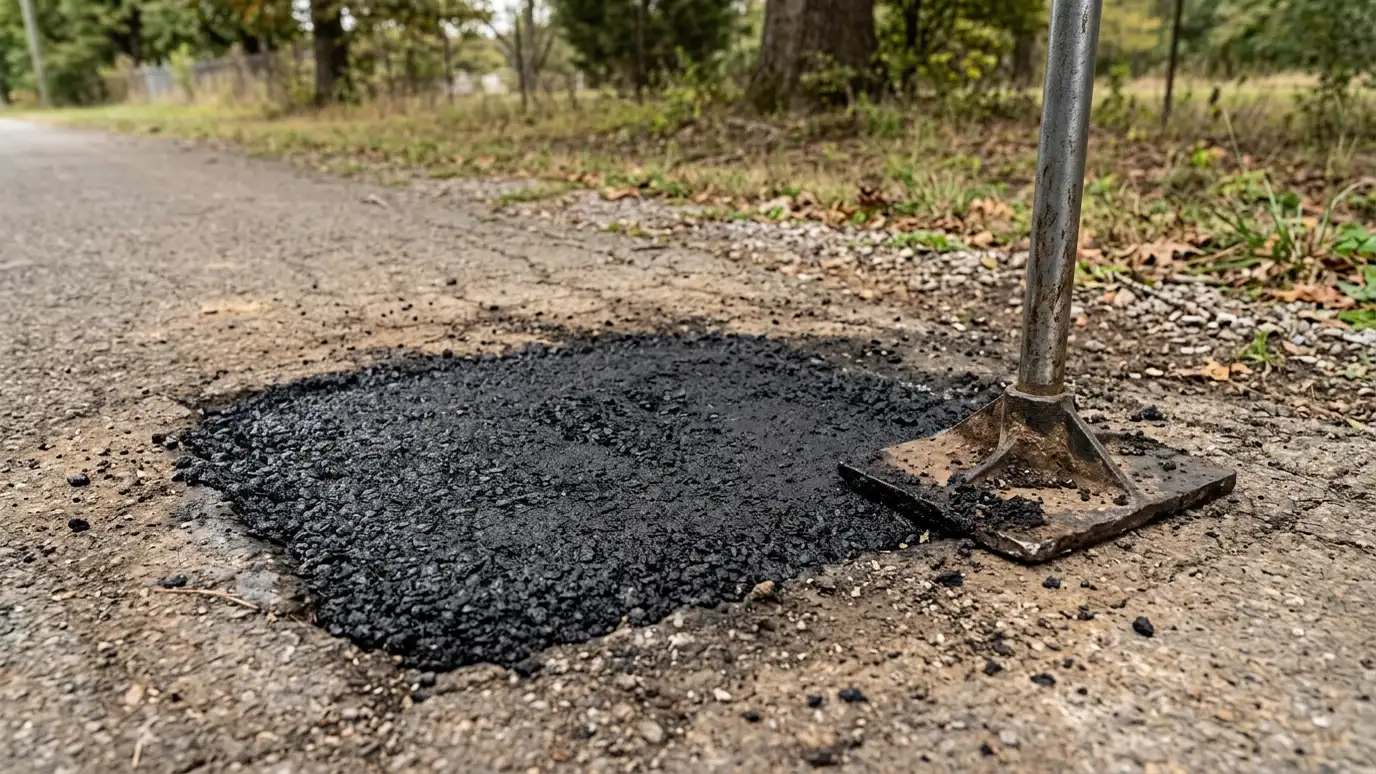 Pothole RepairPermanent pothole repair that cuts out the failed area, rebuilds what is underneath and fills it with compacted…Explore
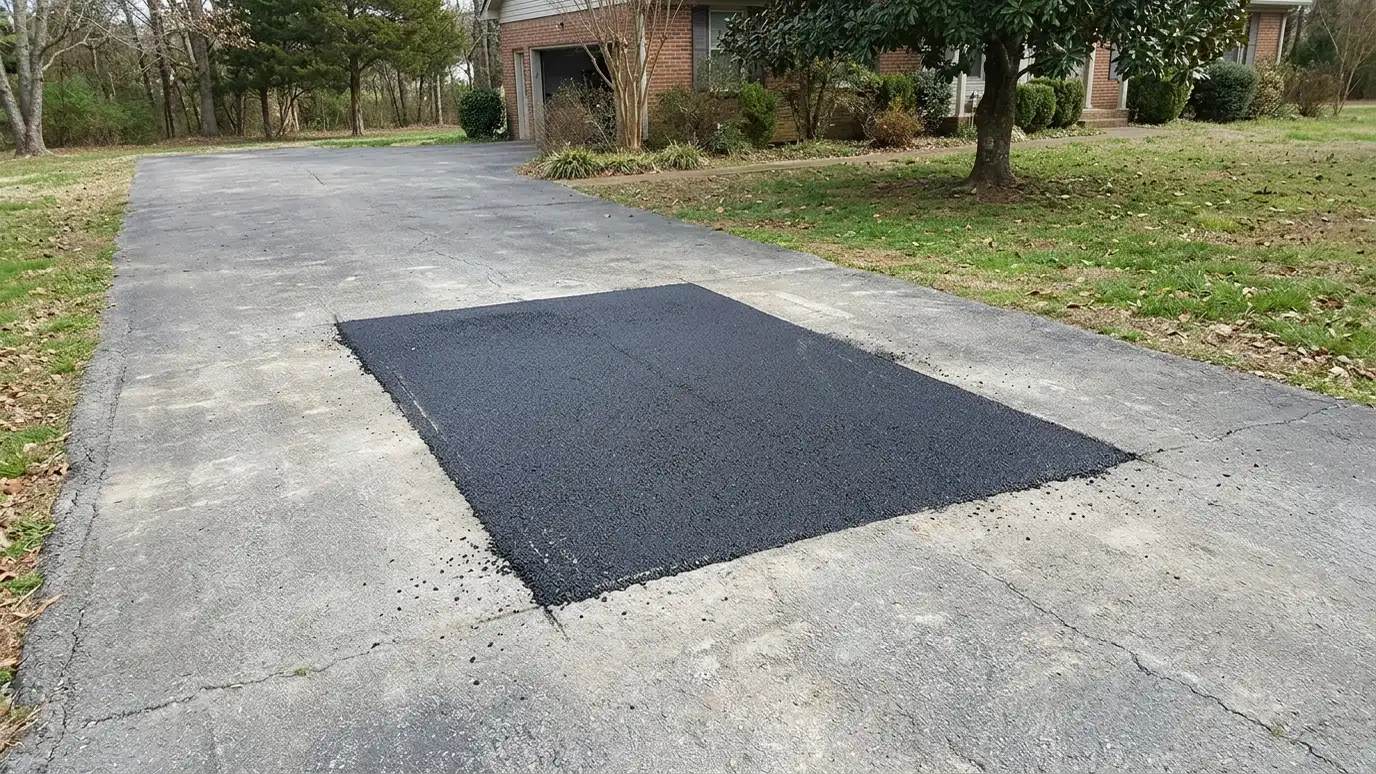 Asphalt PatchingPatches that last: squared-off, base-repaired and compacted, so repaired areas are flush and blend into the surrounding pavement.Explore
Tell us about your project and we will call you back to set up a visit.
Or call (615) 357-7797 to talk now.