The big picture
Both asphalt and concrete make good driveways, and neither is right for every home. Asphalt is flexible, quick to install and easy to repair. Concrete is rigid, lighter in color and can last longer with fewer repairs when it is built well.
The choice depends on budget, climate, appearance, slope and how you use the driveway.
In practice, many owners choose based on a few simple things: budget today, how the surface will look next to the house and how much routine care they are willing to do. There is no wrong answer, only a better fit for your priorities.
Cost up front and over time
Asphalt usually costs less to install than concrete. Over many years, asphalt needs sealcoating and crack sealing every few years, while concrete needs less routine care but costs more to repair when it cracks.
Look at the full picture: the install price, maintenance and the likelihood of repairs.
Remember that the lowest price up front is not always the lowest cost over twenty years. Include sealcoating, crack repair and an eventual overlay for asphalt, and the cost of repairing or replacing cracked panels for concrete, when you compare.
Climate and the ground
Middle Tennessee has freeze-thaw cycles, hot summers and clay soil that moves. Asphalt flexes with the ground and recovers from small movements. Concrete is rigid, so it relies on joints and a stable base, and it can crack if the soil moves.
Road salt and deicers can damage concrete surfaces, while asphalt tolerates them better.
Freeze-thaw cycles and moving clay can crack either material when the base and drainage are poor. A good base and good water control matter more than the surface material, so judge the contractor’s preparation as carefully as the product.
Repair and replacement
Asphalt can be patched, sealed and resurfaced, often at modest cost. Concrete cracks are harder to hide, and replacement is typically needed for larger damage.
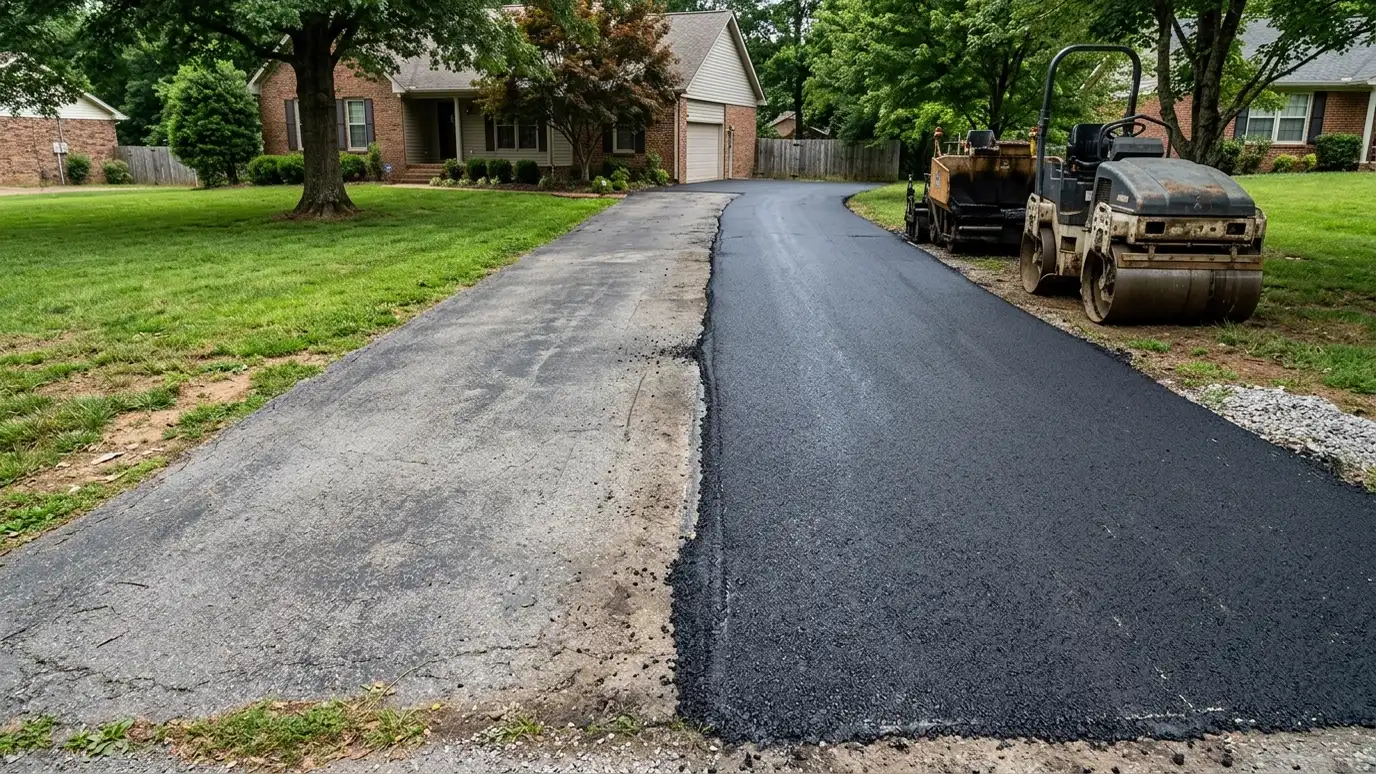
An asphalt driveway can often be overlaid for a second life, which can save a lot over replacement.
Asphalt repairs tend to blend in after sealcoating, while concrete patches usually remain visible. If you value a uniform look and easy touch-ups, that favors asphalt, and if you value a long life with little care, that favors concrete.
Appearance
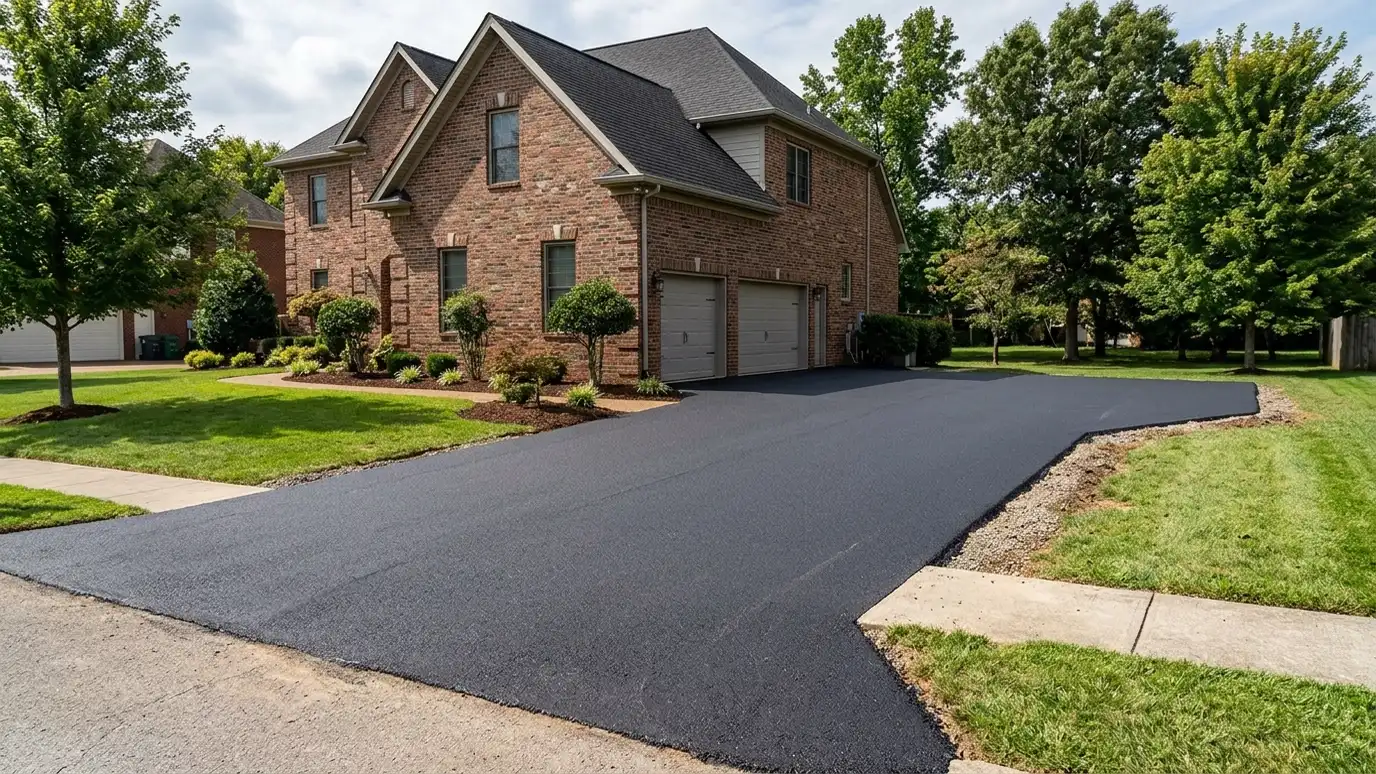
Concrete is light and clean, with options for stamping, color and brushing. Asphalt is dark and uniform, which hides oil and stains and makes landscaping stand out. Asphalt also warms quickly in winter sun, helping melt snow.
Tinted asphalt and borders can add color and detail to an asphalt drive.
Heat is another factor. Dark asphalt can feel hot underfoot on summer afternoons and softens slightly in extreme heat, while light concrete stays cooler but can glare in the sun. Both are comfortable most of the year in Middle Tennessee.
When to combine both
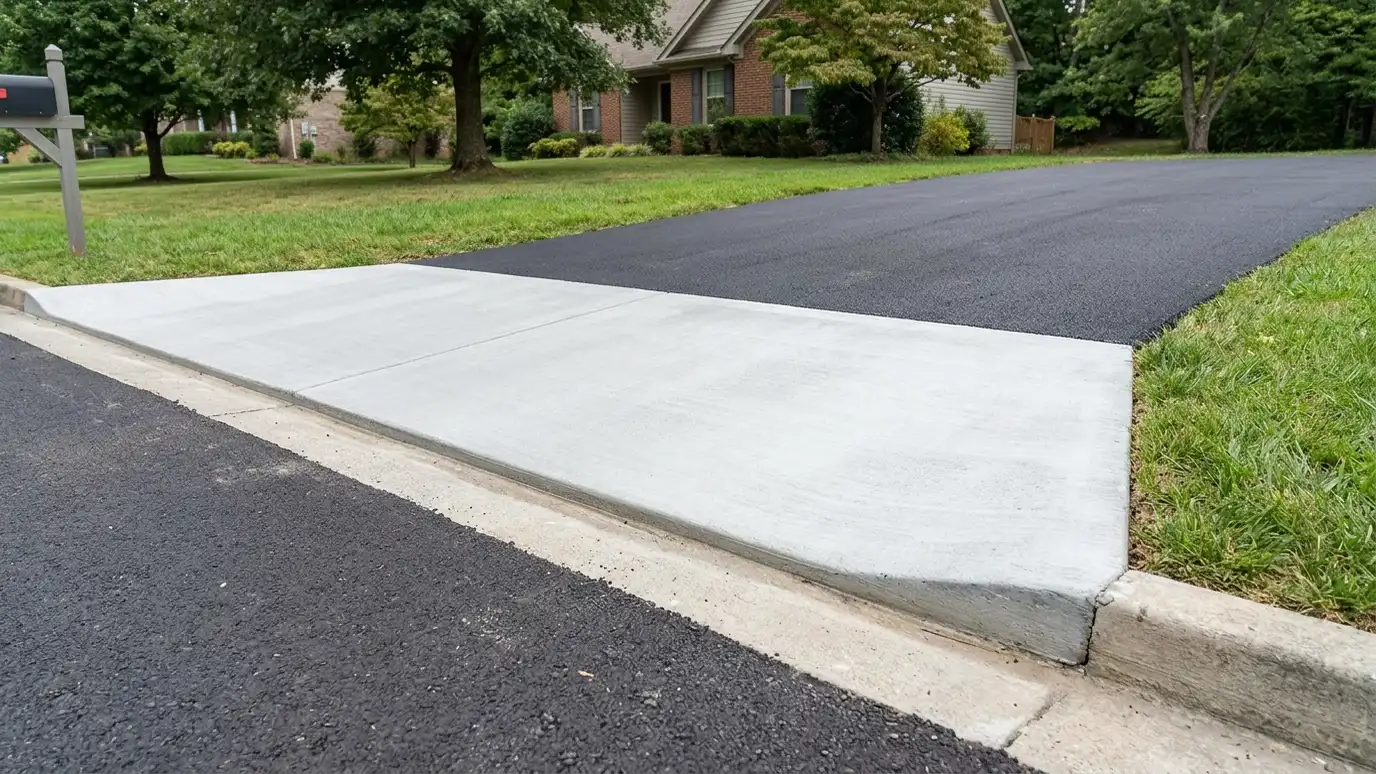
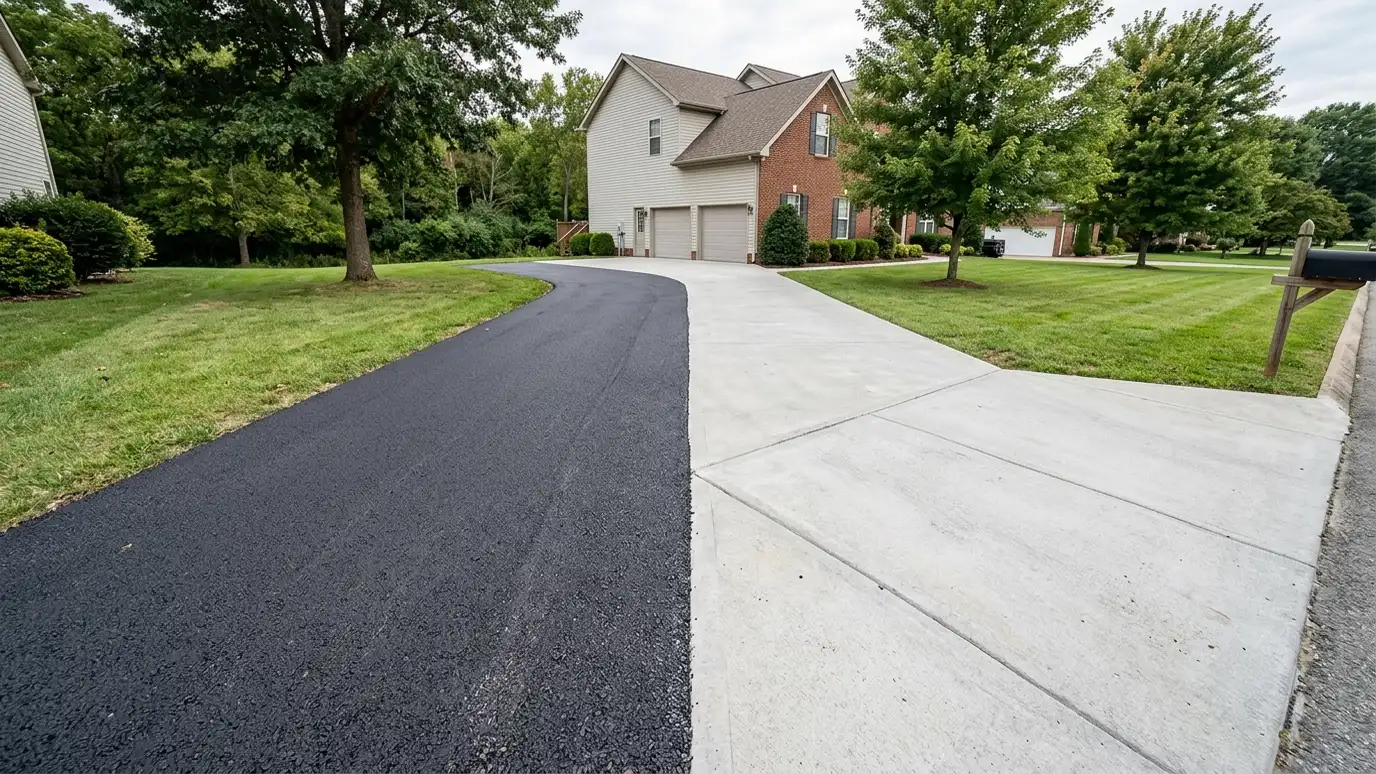
Many homes use concrete aprons, bands or garage pads together with an asphalt main run. This puts the stronger, more rigid material where loads concentrate and the economical material where area is large.
We help you design the transitions so water drains and the joints stay sealed.
A combination can give you strengths of both: a concrete apron where trucks turn or water collects, and asphalt for the long main run. Ask your contractor to sketch where each would go and why.
How to decide
Ask yourself how long you plan to stay, how important a light surface is and how you feel about periodic maintenance. Think about slope, trees and drainage.
A site visit can settle the question. We give an honest recommendation, even when it means recommending concrete for part of the job.
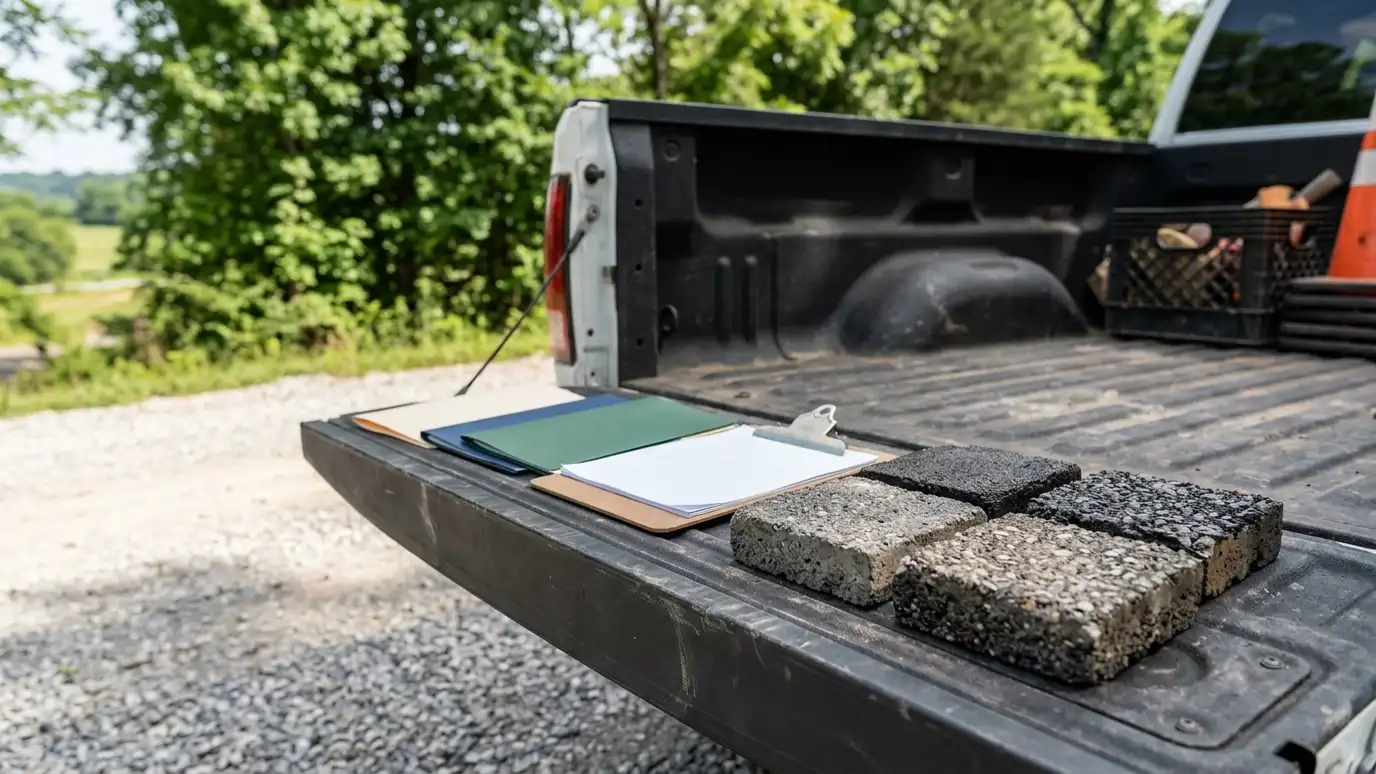
If you are still unsure, ask for a written quote for each material, with the same dimensions and base work. Seeing both side by side usually makes the decision much easier.
Choose asphalt for flexibility, speed and easy repair, concrete for a lighter look and fewer repairs, and consider combining them where each performs best.