How winter harms pavement
Water gets into cracks, freezes and expands, then thaws and leaves a void. Repeating this cycle widens cracks, loosens stones and creates potholes. Nashville’s winters, which swing above and below freezing many times, are tough on pavement.
Pavement that has been sealed and drained well suffers less.
Tennessee winters swing above and below freezing many times, which is harder on pavement than a steady cold. Every cycle gives water another chance to expand inside a crack and pry the surface apart.
Before winter
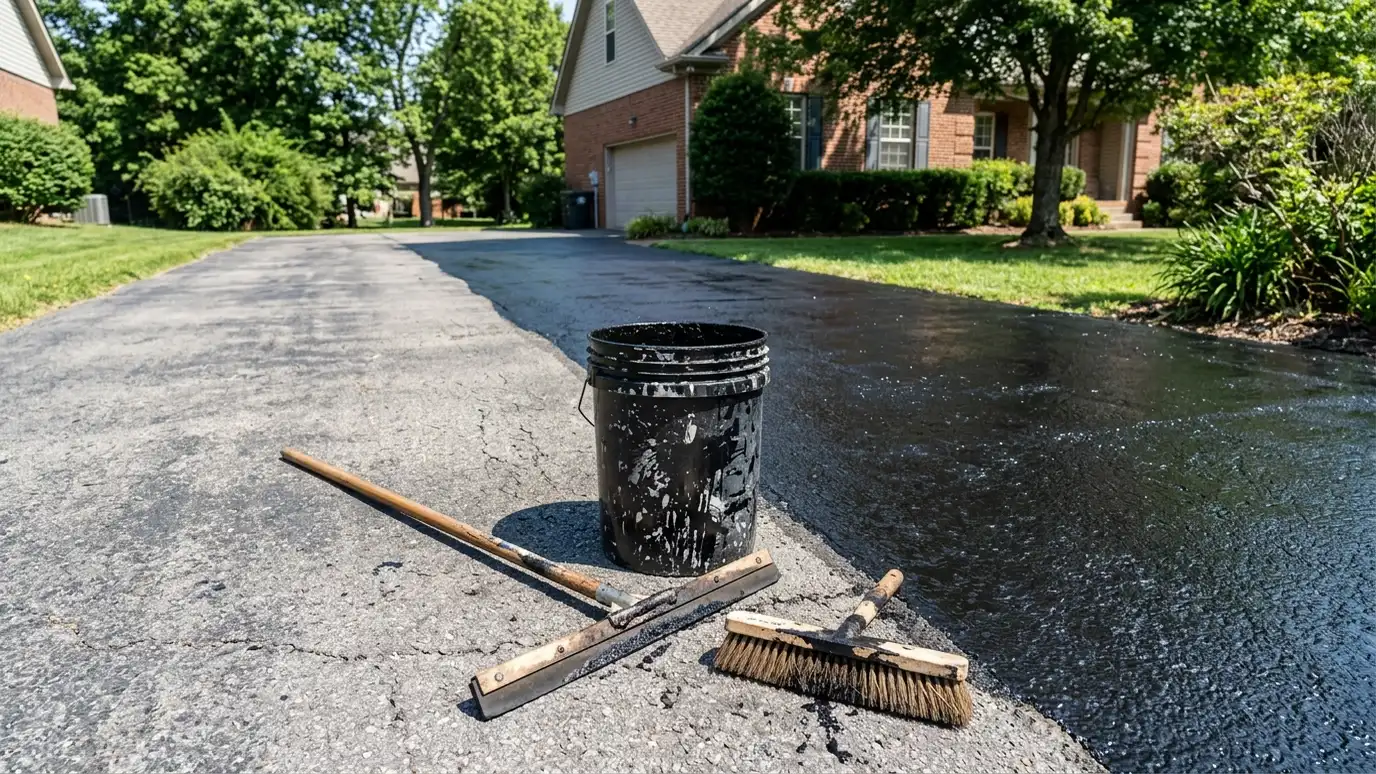
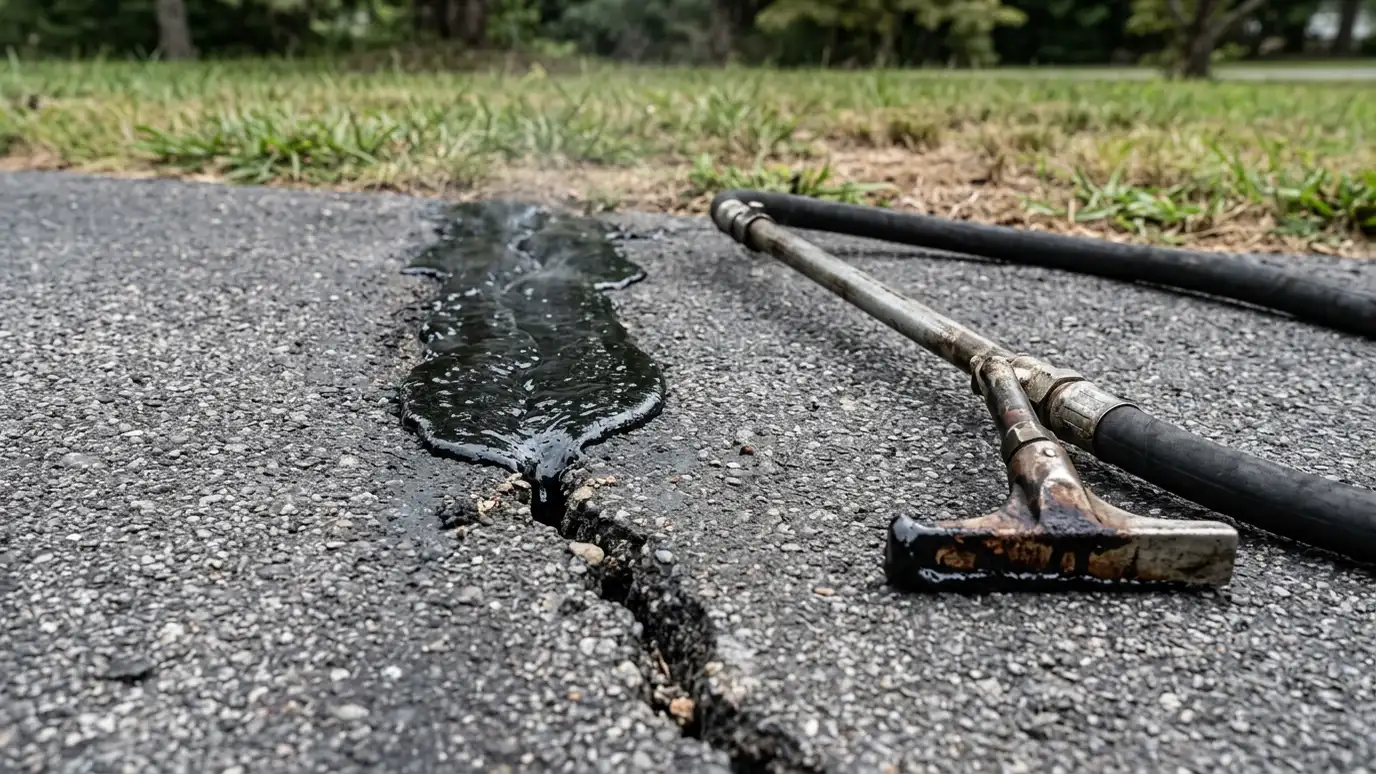
Fall is the time to seal cracks, patch weak spots and fix drainage. Clear leaves and debris so water drains. Sealcoating in early fall, when days are still warm and dry, protects the surface.
Do not wait until the first freeze.
Fall is the best time to walk your pavement and note what needs attention. Crack sealing and drainage fixes made before the first freeze cost much less than pothole repair in February. Keep gutters and downspouts clear as well, so roof water does not spill onto pavement and freeze in sheets across the driveway.
Snow and plowing
Asphalt handles plowing well, but blade damage can occur. Use a plow shoe or keep the blade slightly above the surface, and mark the edges so they are not scraped. Avoid piling snow where it will melt onto the pavement and refreeze.
Dark asphalt absorbs heat and helps snow melt on sunny days.
A plow blade set slightly above the pavement or fitted with a shoe protects the surface. Hand shoveling near edges and curbs prevents the chipping that blades can cause. Marking the edges of the driveway with stakes before the first snow helps plow drivers stay on the pavement and off the lawn.
Salt and deicers
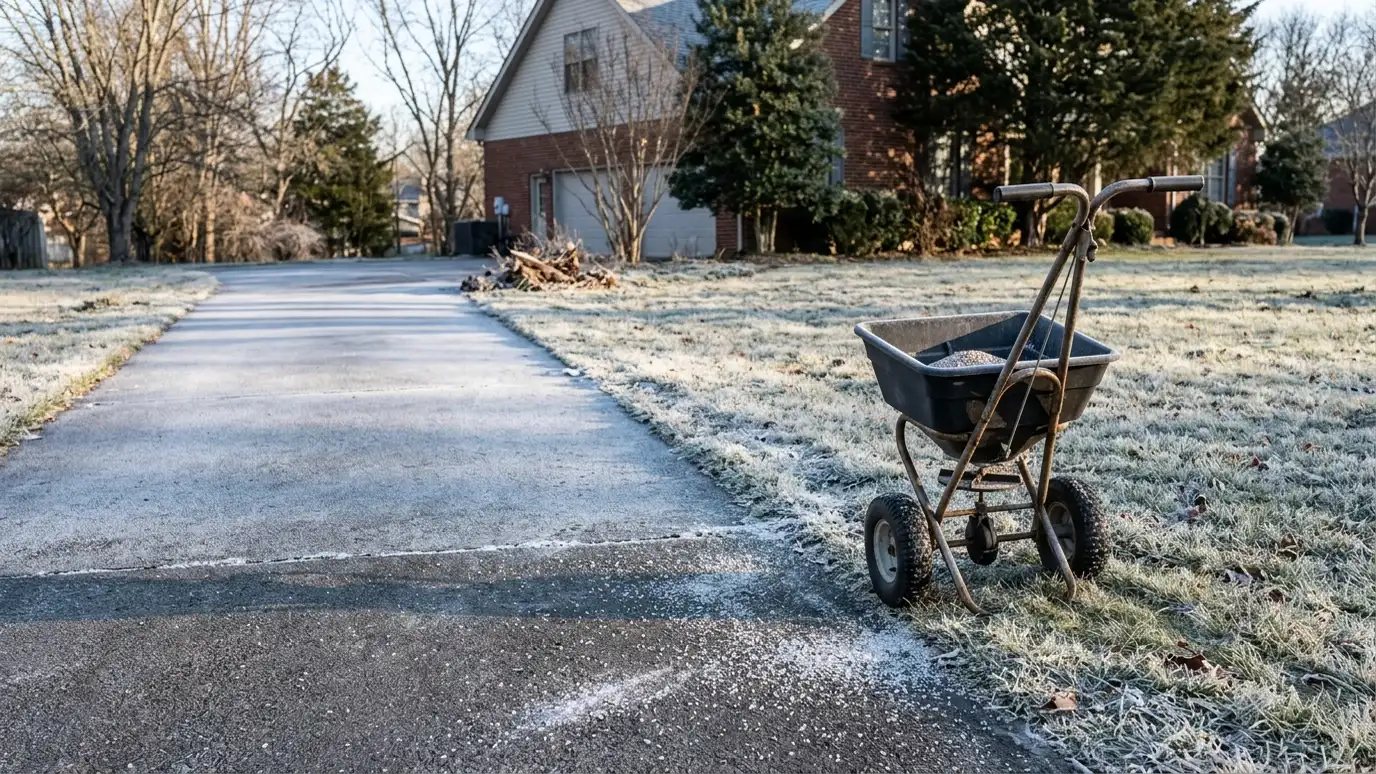
Asphalt tolerates deicers better than concrete, but heavy salt can still harm vegetation and drainage. Use sand for traction where possible, and apply deicers sparingly. Avoid products with harsh chemicals that can damage the binder.
Rinse salt residue in spring.
If you use deicer, choose a product made for pavement and use it sparingly. Sweep up leftovers in spring, and keep salty melt away from lawns and shrubs along the edge.
Cold weather repairs
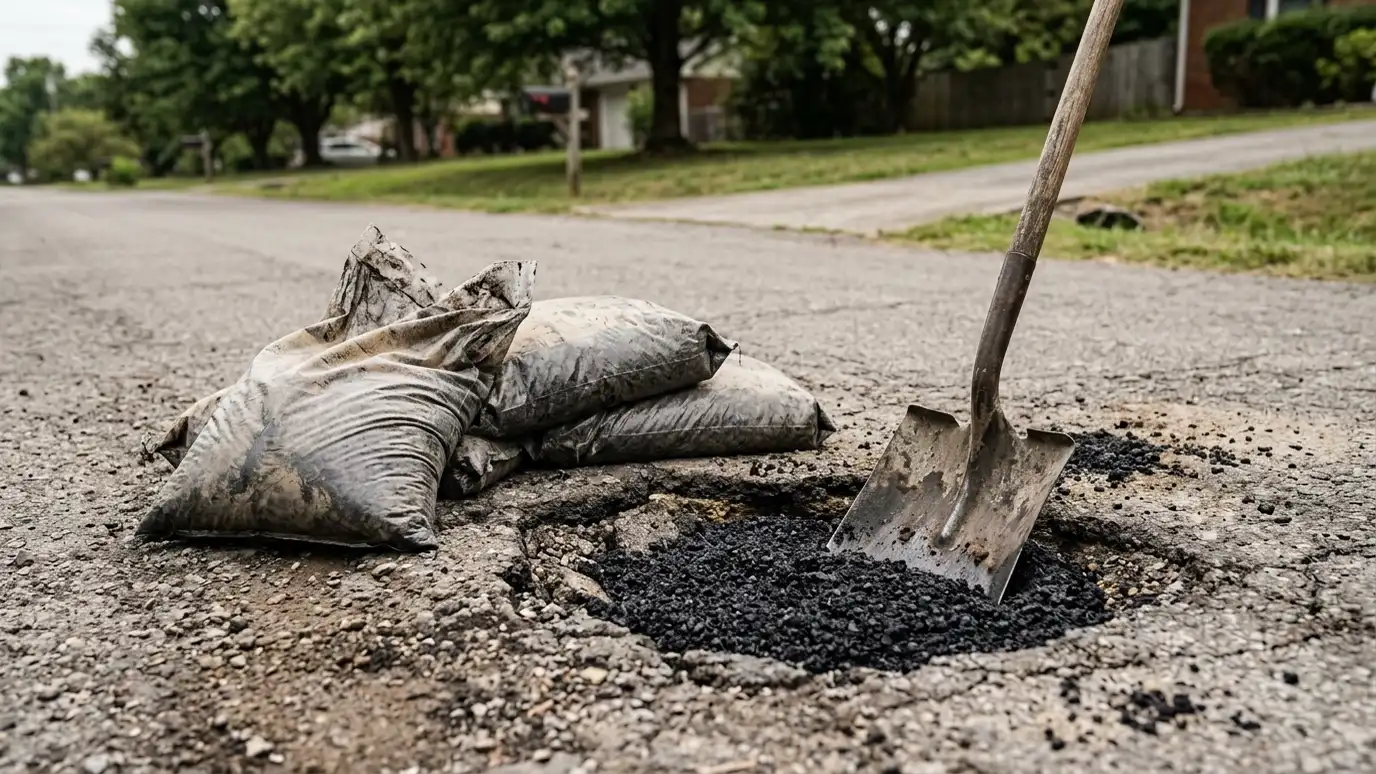
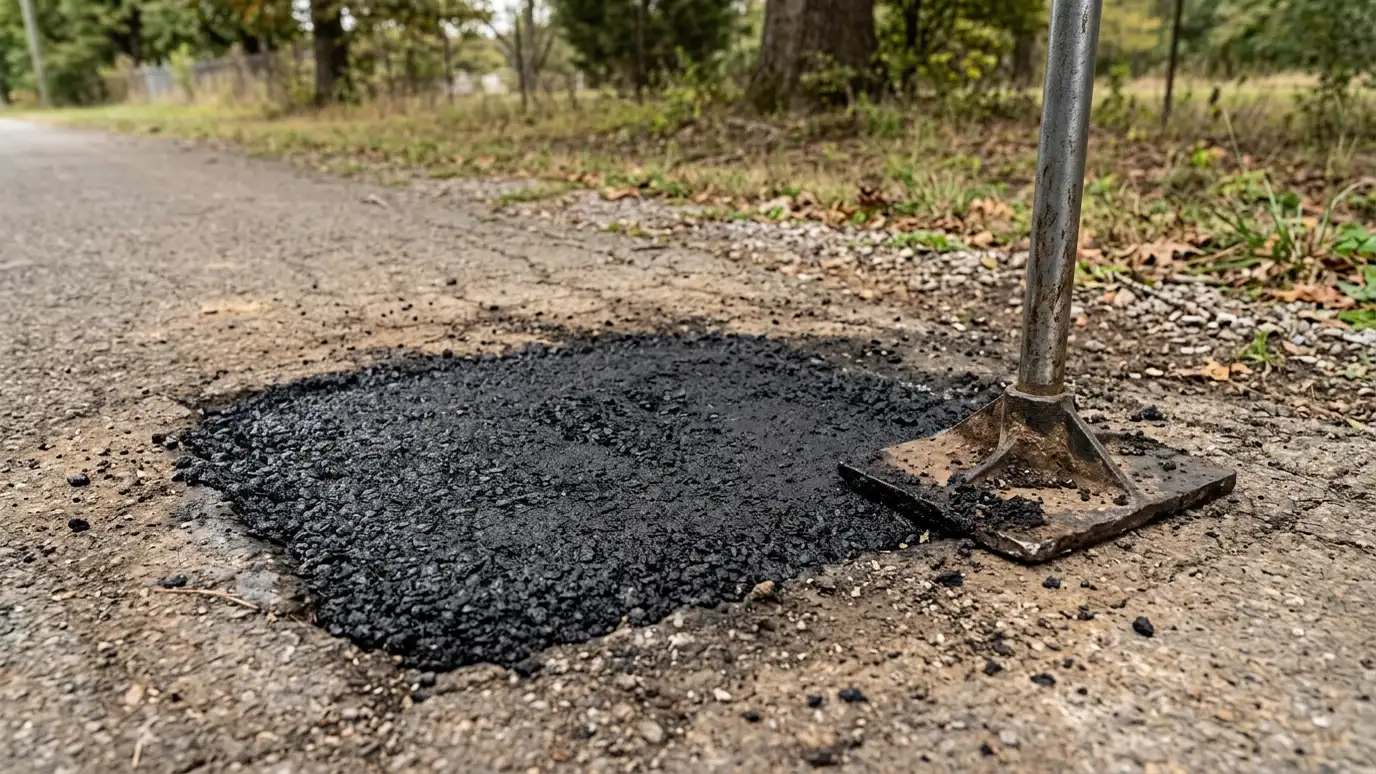
Hot mix is difficult to place in cold weather because it cools before it can be compacted. Cold mix gives a temporary fix for dangerous holes. A permanent hot mix repair follows when temperatures rise.
We tell you which repairs can wait and which cannot.
Cold-weather patches are meant to hold you over until spring, when hot mix can be placed and compacted properly. Plan to revisit any winter patch once temperatures rise. A well-made winter patch is better than a hole, so do not wait for perfect weather when water is already getting under the pavement.
Paving season in Tennessee
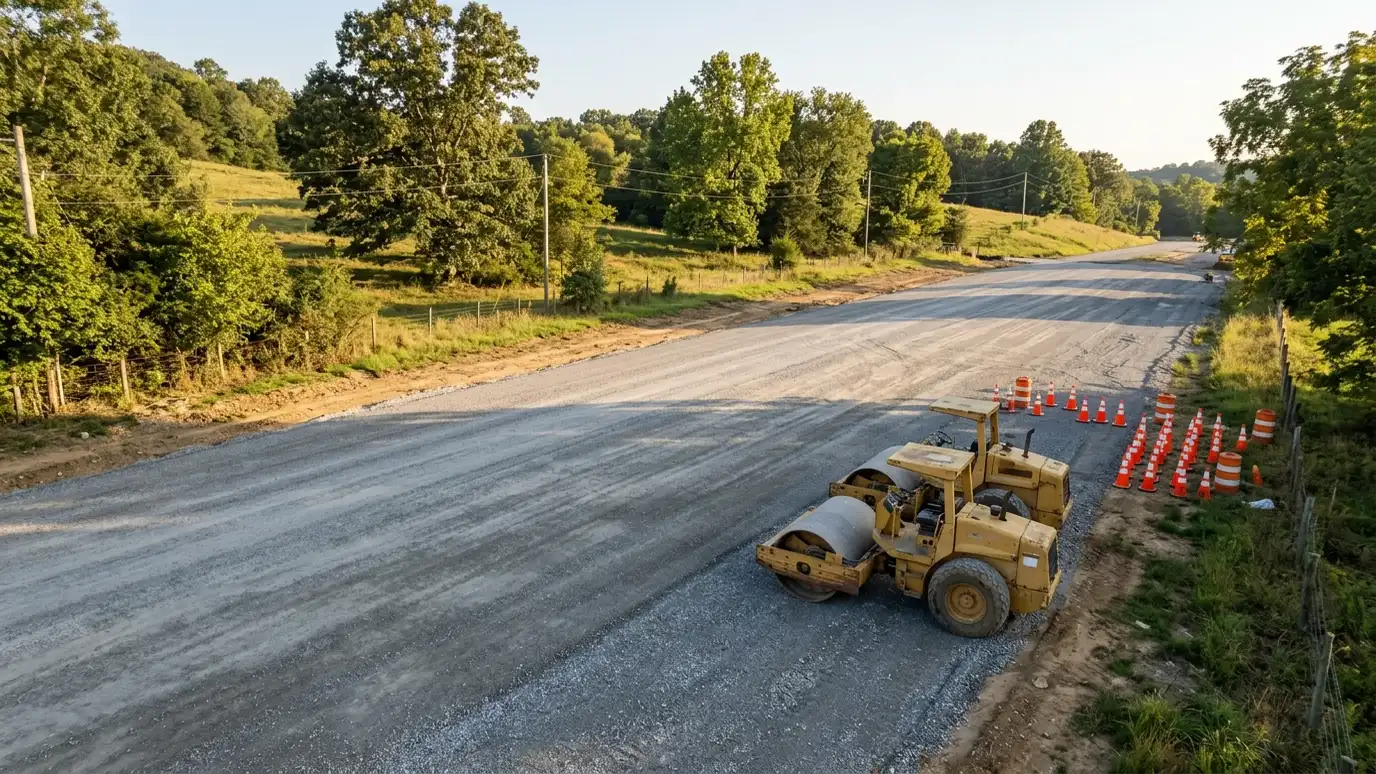
Most paving happens from spring through fall. Plants open and close with the weather, and surface and air temperatures decide whether mix can be compacted well. Late fall and early spring can be hit or miss.
If you want a large project done early in the season, plan and book in winter.
Because plants open and close with the weather, scheduling early in the season often works best. Calling in late winter lets you pick a date before spring demand fills the calendar. Early bookings also give you the pick of dates when the weather finally turns dry and warm.
Spring check-up
Walk the pavement after the last freeze and note new cracks, potholes and puddles. Schedule repairs early in spring while crews have openings.
A short check-up keeps small winter damage from becoming big summer repairs.
A good spring walk-through looks for new cracks, soft areas, loose edges and puddles. Photograph them, make a short list and schedule repairs while the weather is mild and dry.
Seal cracks and fix drainage in the fall, use temporary patches in winter and schedule permanent repairs as soon as spring weather allows.