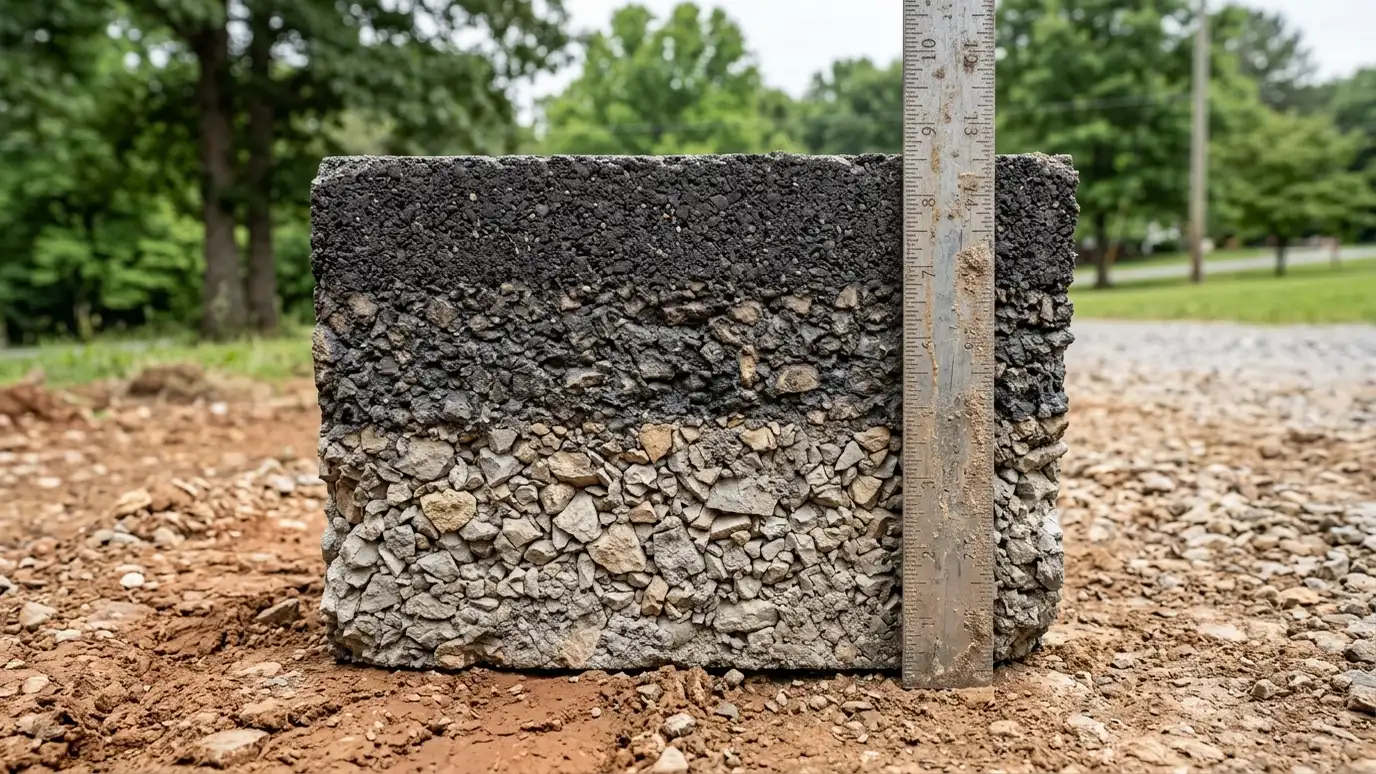
How many inches of asphalt and stone a driveway, lot or truck court really needs, and what each layer does.
Pavement is a layered system. At the bottom is the soil, called the subgrade. Above it sits compacted crushed stone, the base. On top goes the asphalt, sometimes in two lifts: a coarser base course and a finer surface course. Each layer shares the load, so thickness matters at every level. A residential driveway often uses four to six inches of stone and two to three inches of asphalt. A lot with delivery trucks needs more of both. In Nashville’s clay soils, base depth is just as important as asphalt thickness.
Contractors’ quotes vary widely on thickness, and thin pavement is the most common reason new asphalt fails early. We explain what each layer does, recommend thicknesses for your traffic and show you how compaction affects performance. If a quote seems light, we help you ask the right questions. Our tonnage tool helps you see how much material a given thickness requires, so you can compare bids fairly. Ask for the compacted thickness in writing, and confirm it with a depth check during paving.
The soil that carries everything.
Compacted crushed stone.
Base and surface courses.
Two to three inches typical.
More base and asphalt.
Matters as much as depth.
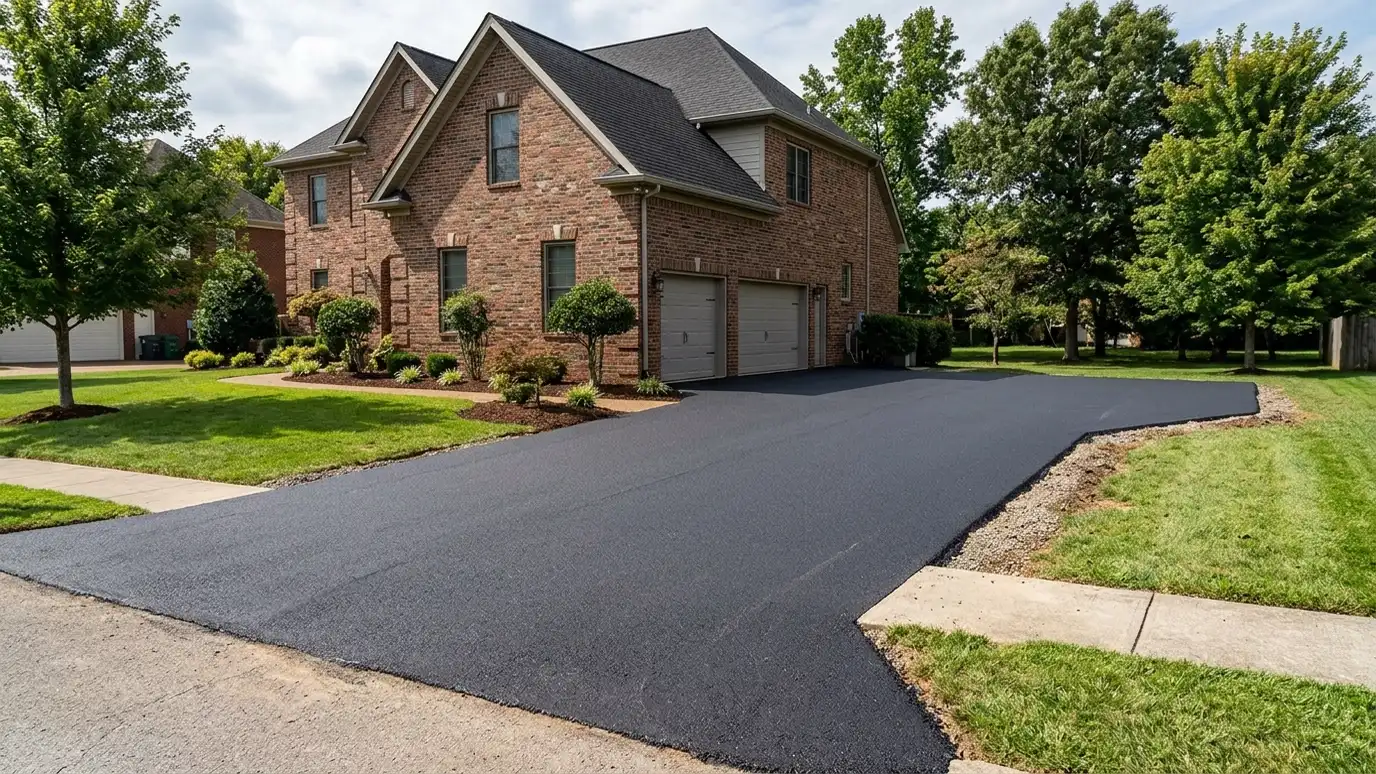 Driveway InstallationNew asphalt driveways built right from the ground up: graded, drained, stone-based and paved in smooth, dense hot…Explore
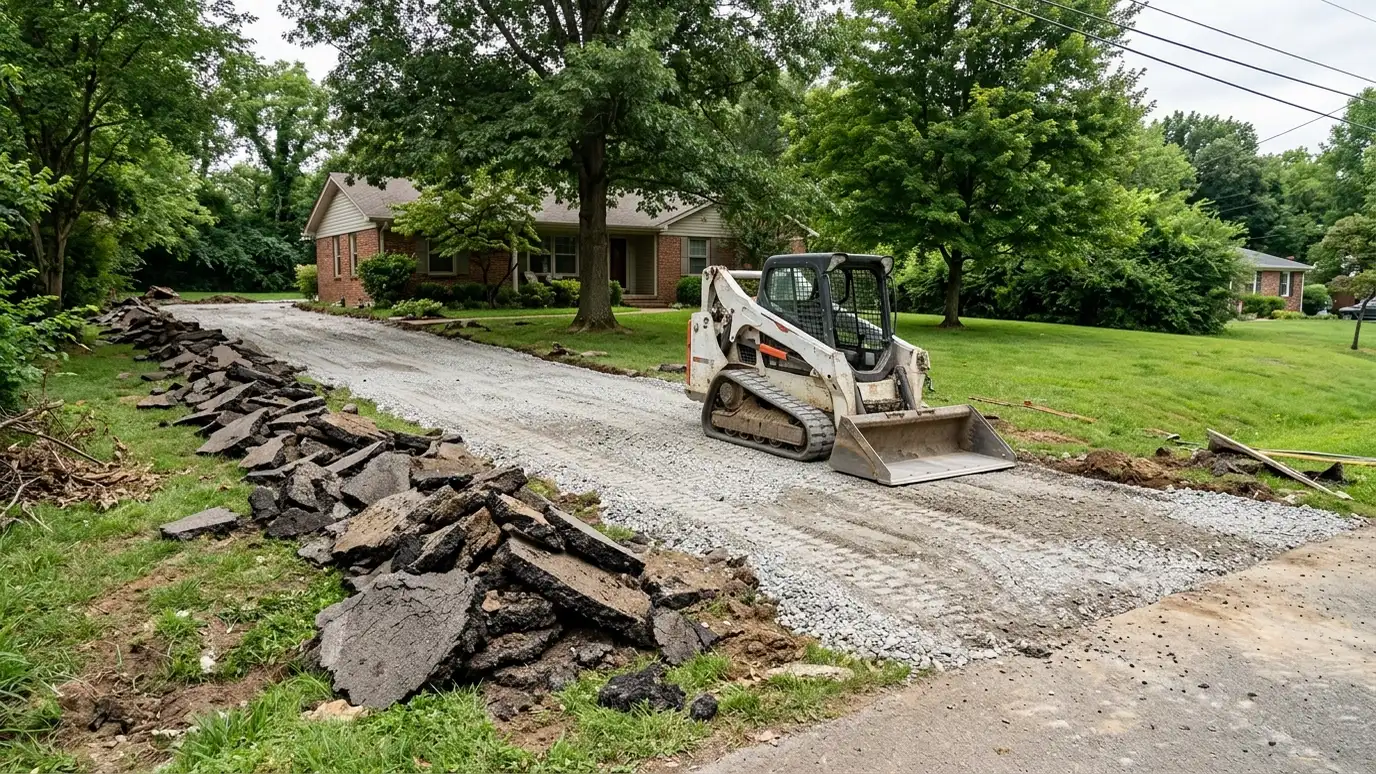 Driveway ReplacementRemoving a failing driveway down to a sound base or to the soil, correcting what went wrong and…Explore
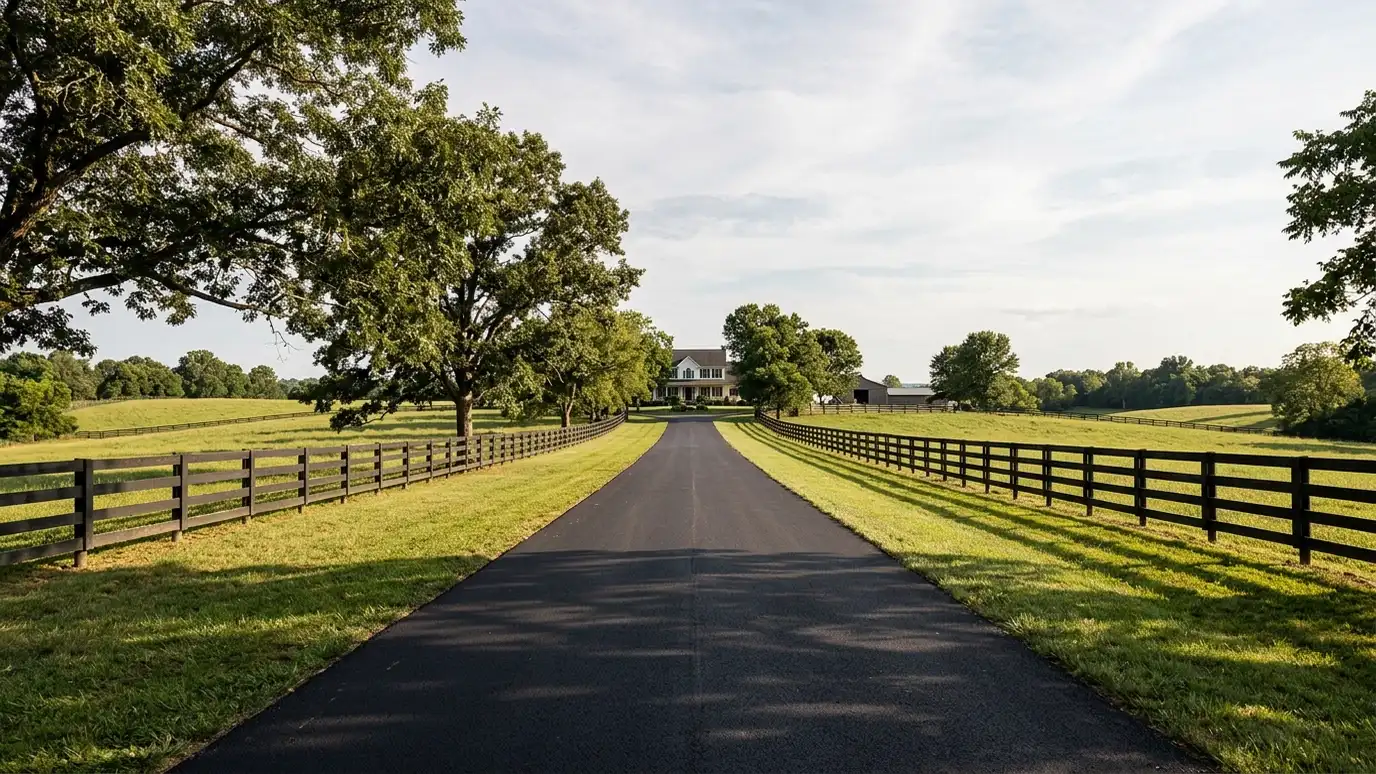 Long and Rural DrivewaysLong driveways and farm entrances built for distance, weight and weather, with culverts, ditches and a base that…Explore
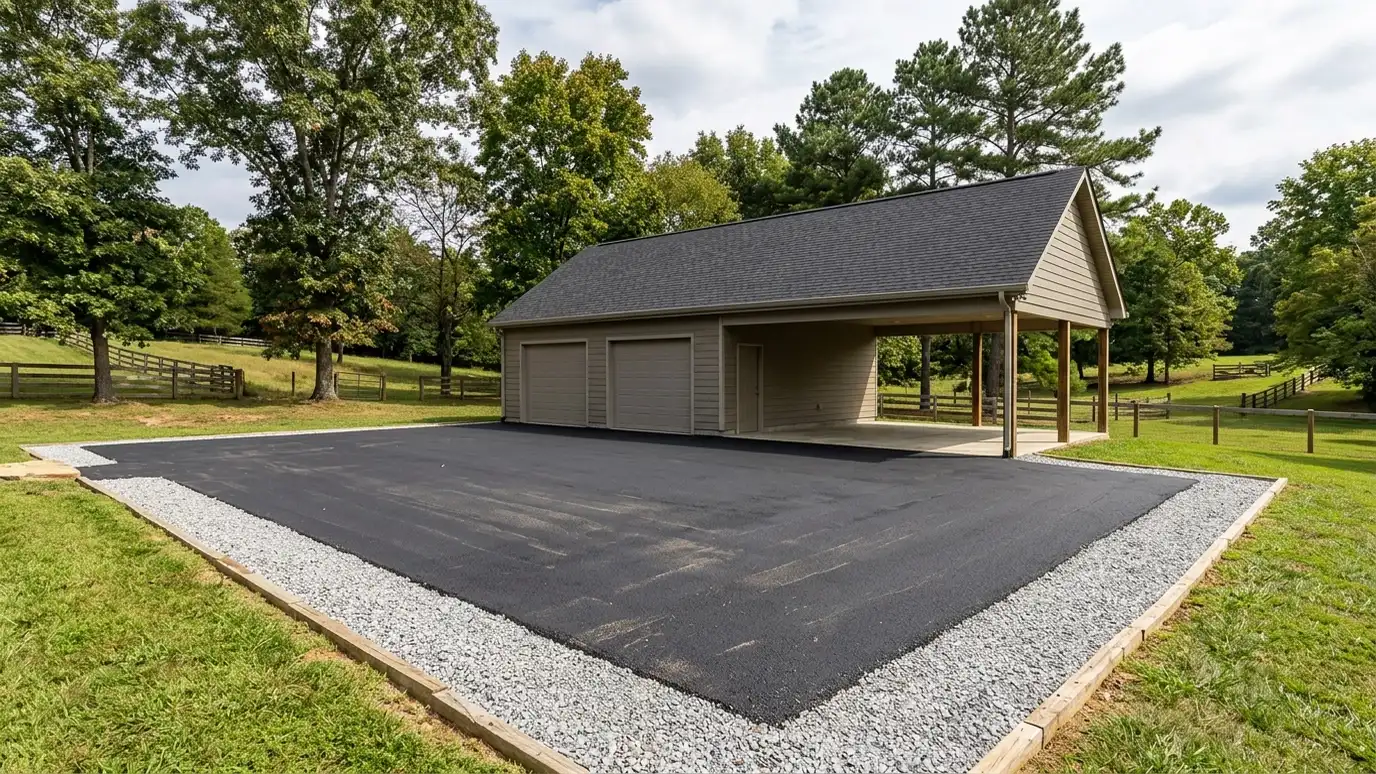 Garage and Carport PadsFlat, well-drained asphalt pads for garages, workshops, carports and storage buildings, built to carry the load and shed…Explore
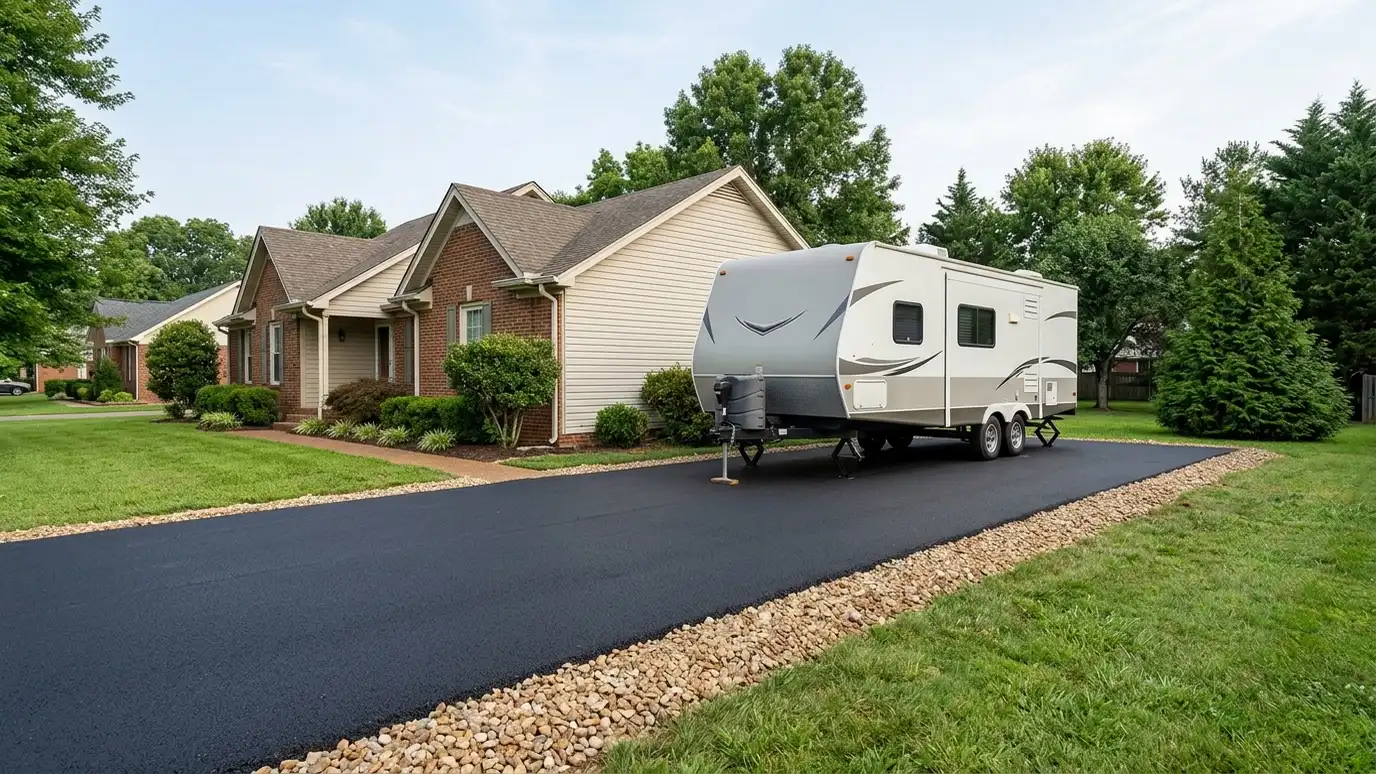 RV, Boat and Trailer PadsHeavy-duty asphalt pads for RVs, campers, boats and trailers, built thick enough to resist the point loads of…Explore
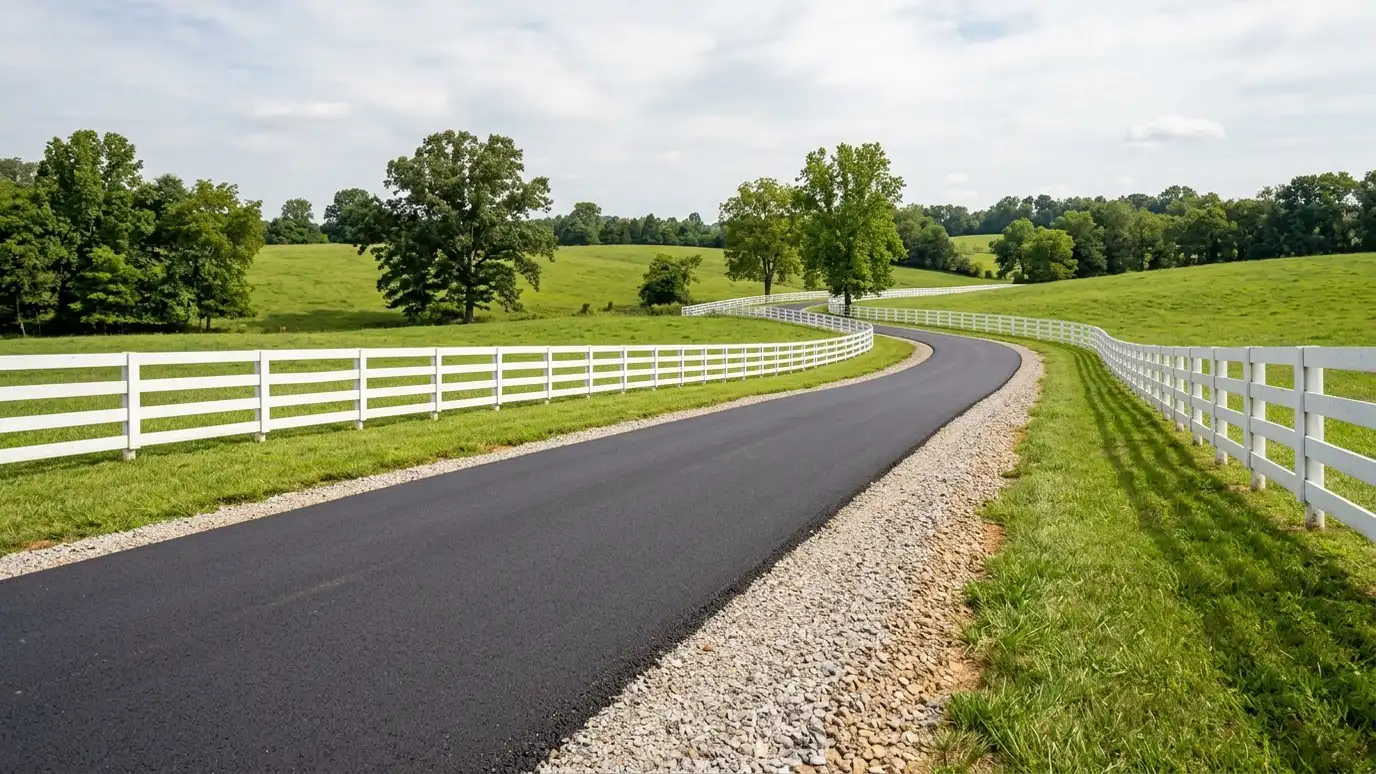 Private Roads and Farm LanesPaved private roads, shared lanes and farm entrances built for traffic and weather, with drainage, shoulders and a…Explore
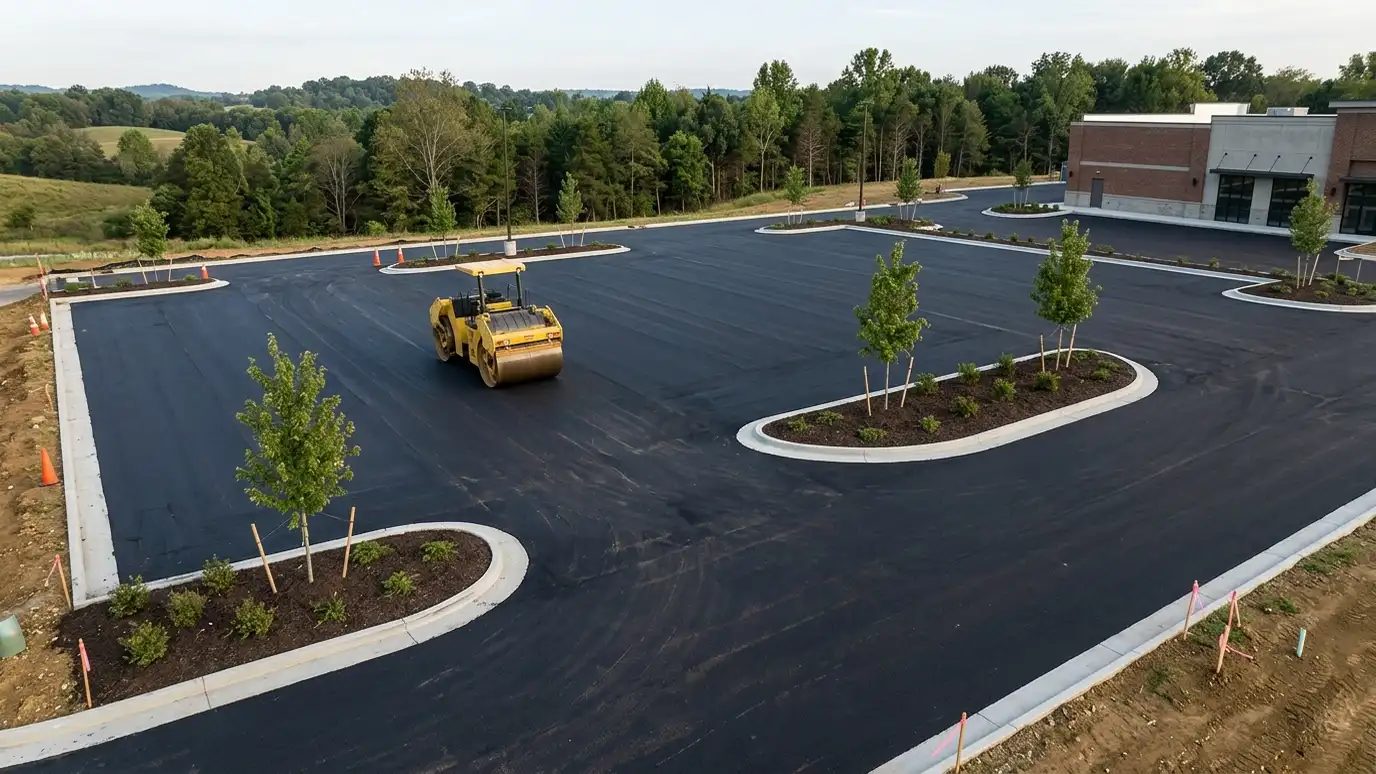 Parking Lot ConstructionNew parking lots built for traffic: engineered base, drainage, curbs, heavy-duty asphalt and layout that works for customers…Explore
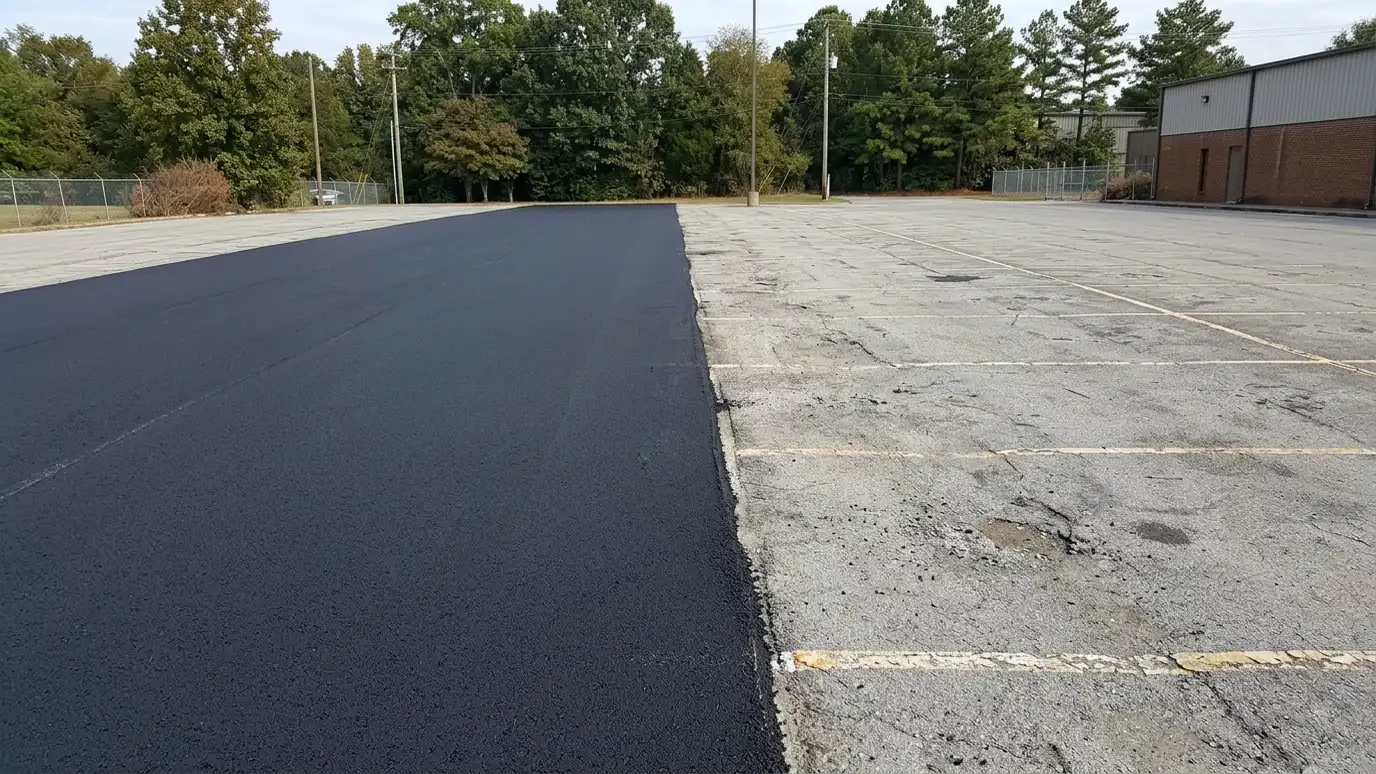 Lot Resurfacing and OverlaysMilling and new asphalt over sound lots: a smooth, uniform surface that looks new and extends the life…Explore
Take the quiz, check your pavement or ballpark a budget.
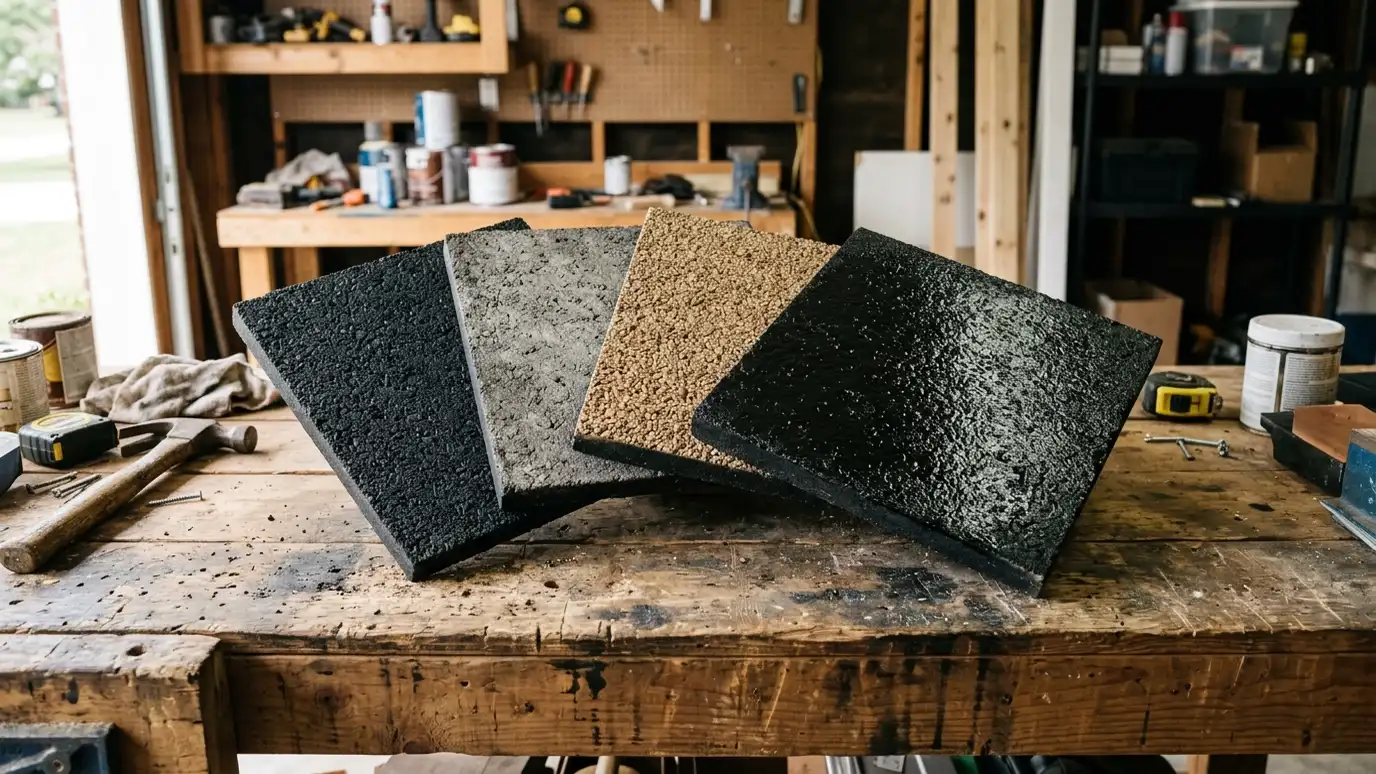 Which Asphalt Service Do I Need? QuizAnswer five questions about your pavement, your goals and your budget to see which services to start with.Try it
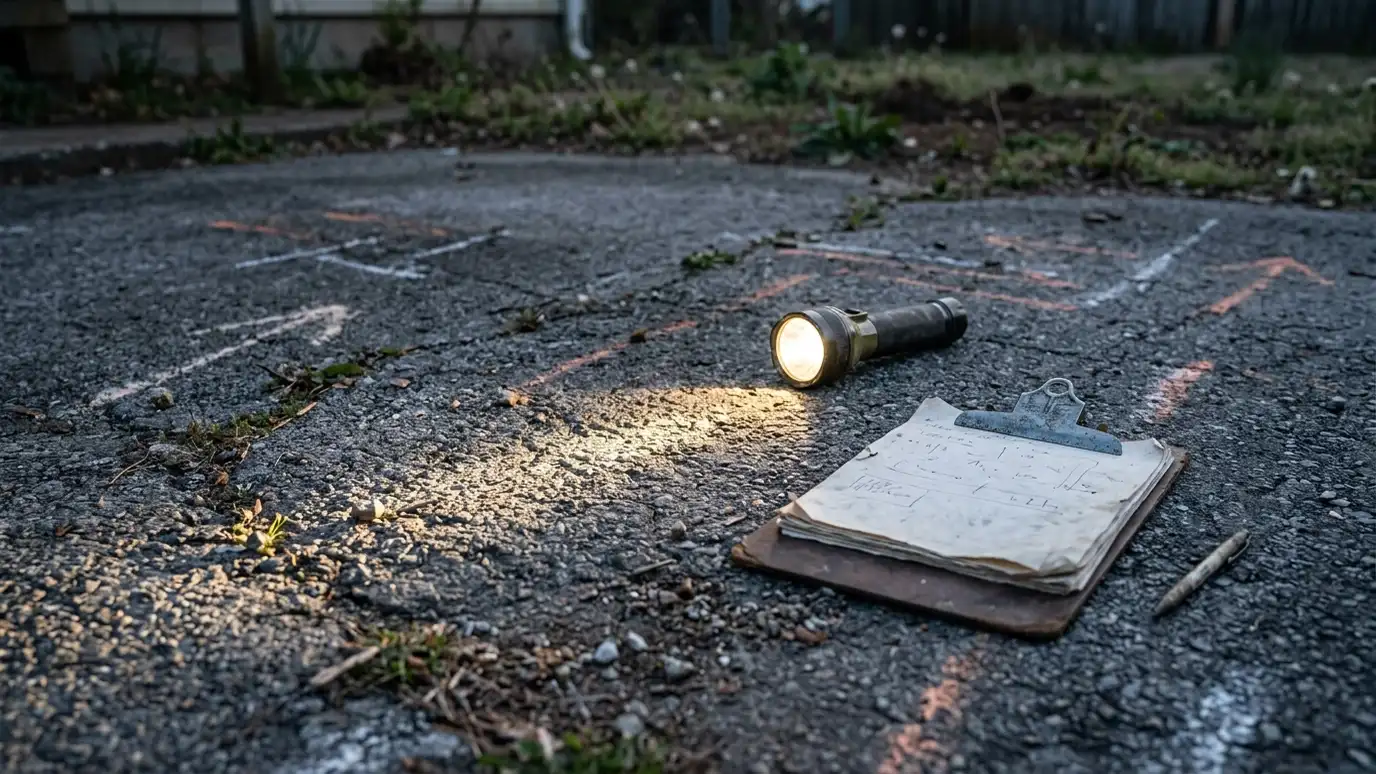 Asphalt Condition Checker: Repair or Replace?Tick what you see on your pavement and get a priority list and a plain recommendation: maintain, repair, resurface or replace.Try it
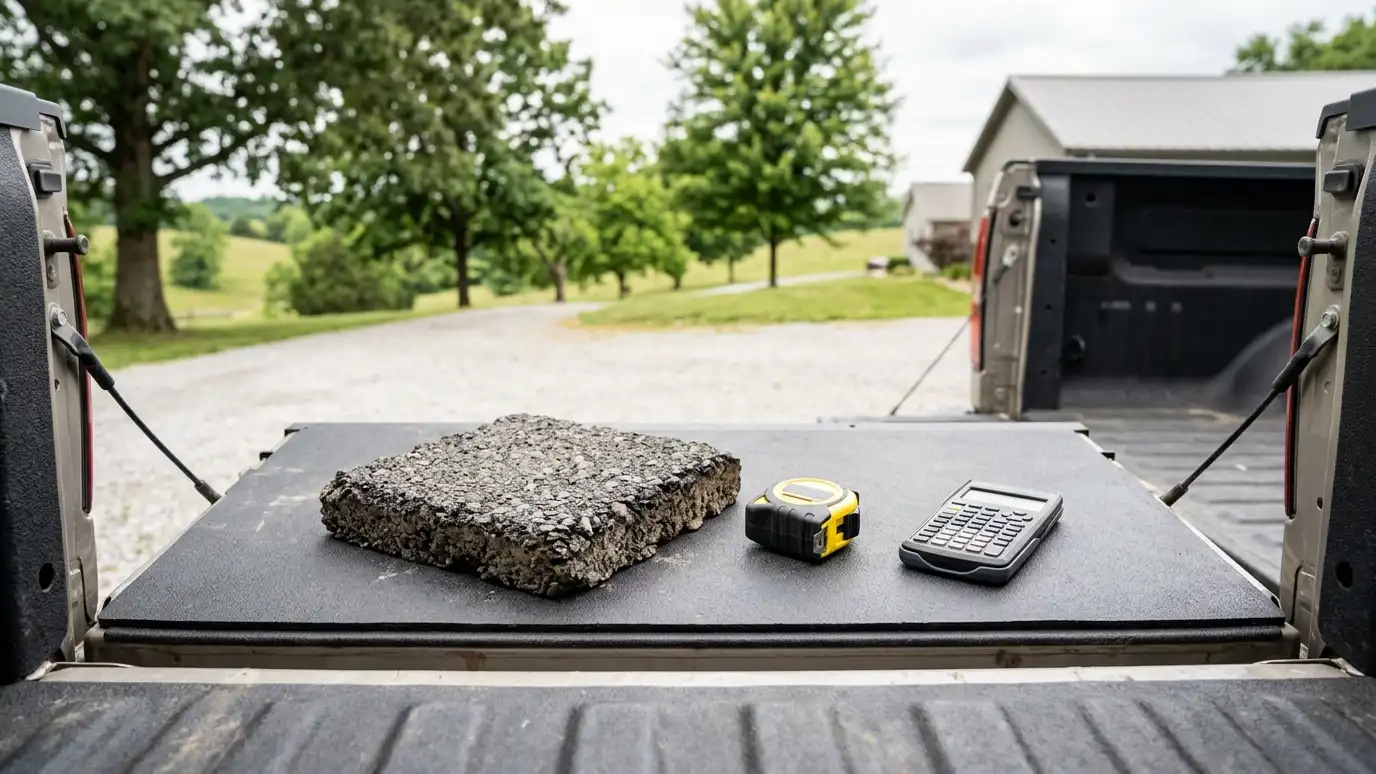 Asphalt Paving Budget PlannerPick a job, set the size and add extras to see a ballpark planning range for your asphalt project.Try it
Usually two to three inches of asphalt over four to six inches of compacted stone, depending on use.
Thin pavement or little base lowers the price, and the risk of early failure rises.
Only with a well-compacted base underneath. We help you spend where it counts.
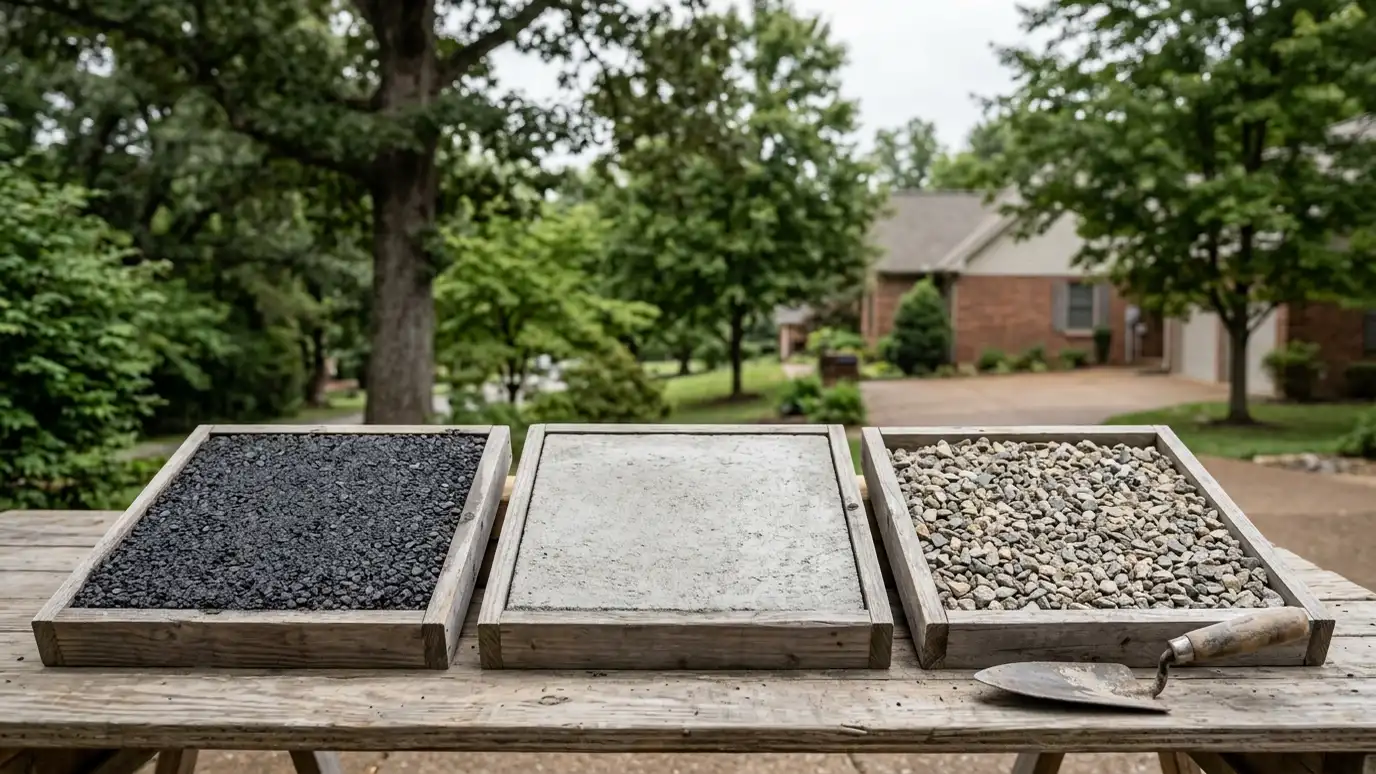 Topic guideAsphalt vs Concrete vs GravelHow the three common driveway and lot surfaces compare on cost, durability, care, look and repair, with honest…Learn more
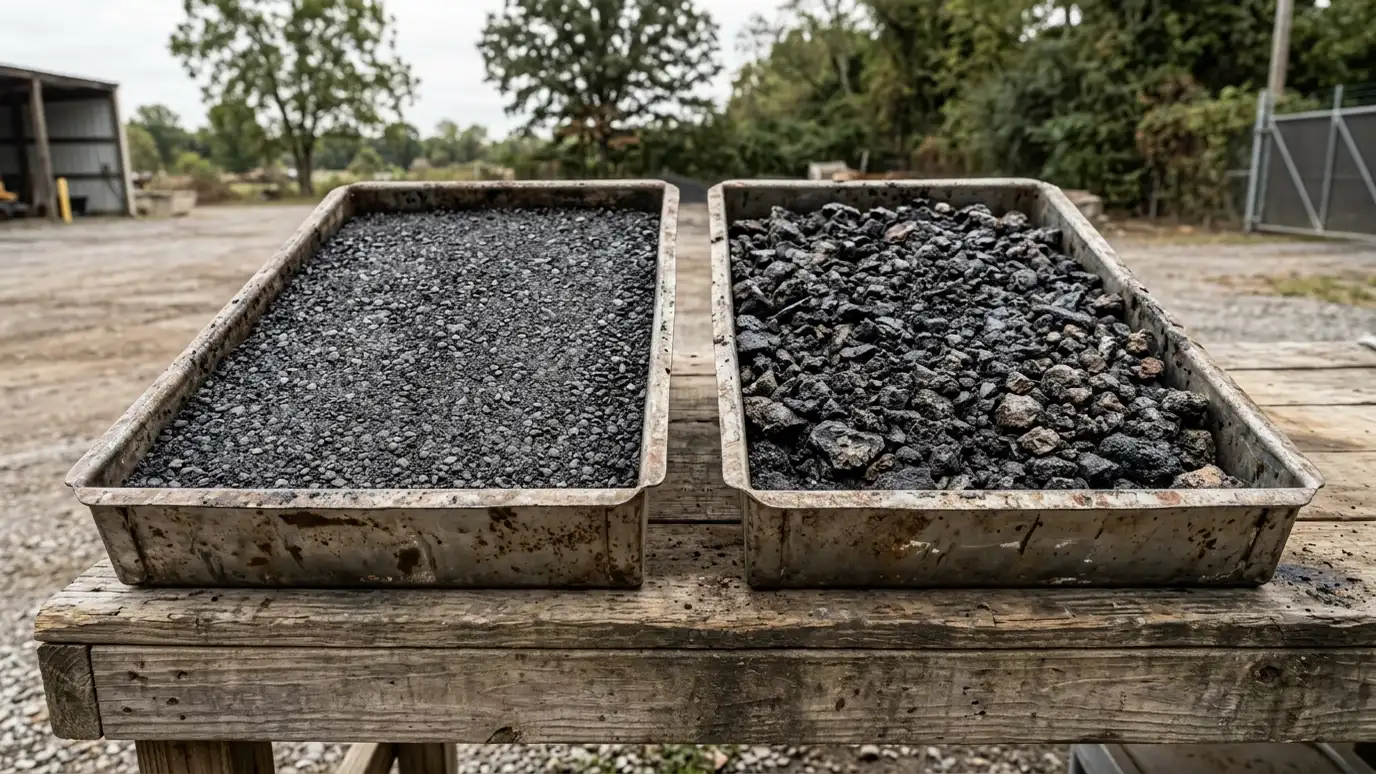 Topic guideHot Mix Asphalt TypesBase course, binder and surface mixes explained, plus recycled content, stone sizes and what each does in a…Learn more
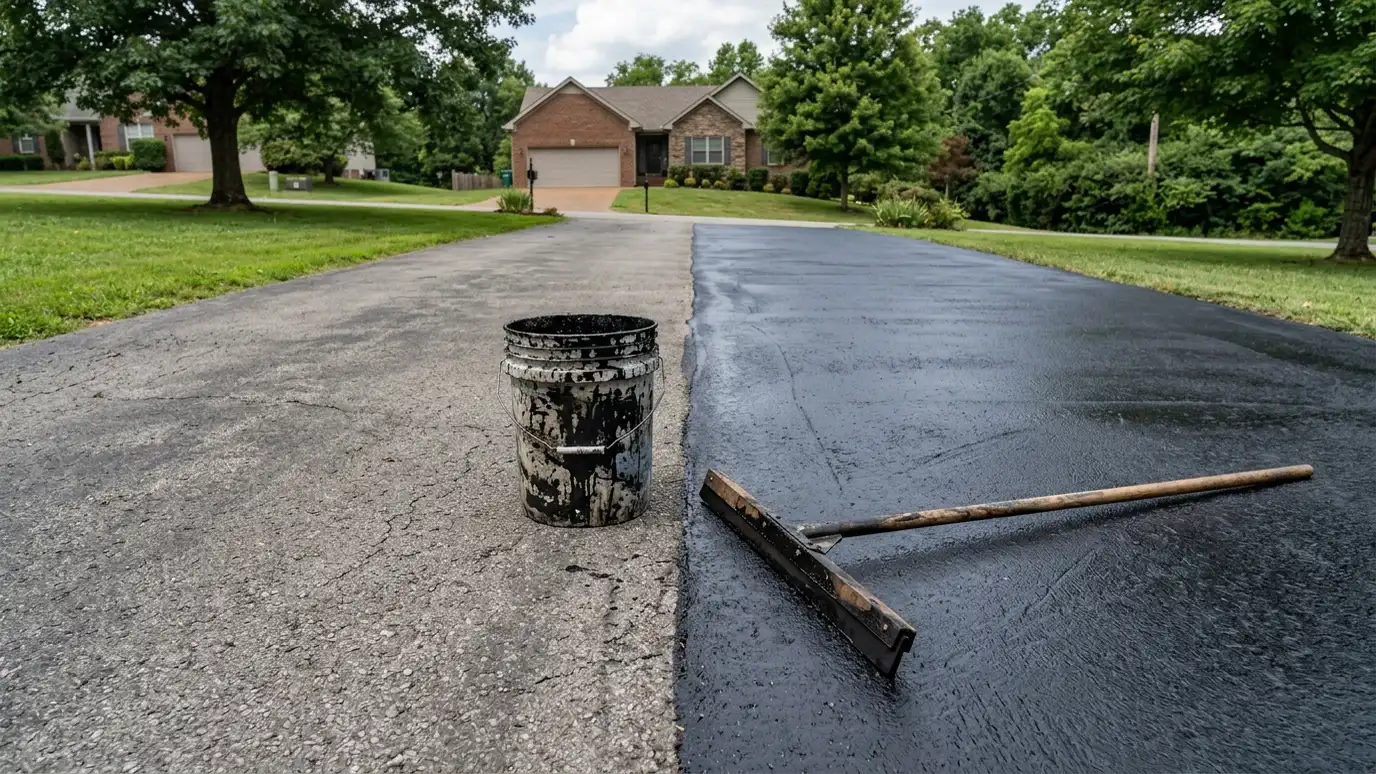 Topic guideSealcoating GuideWhat sealcoat does, when to apply the first coat, how often to repeat and when to skip it…Learn more
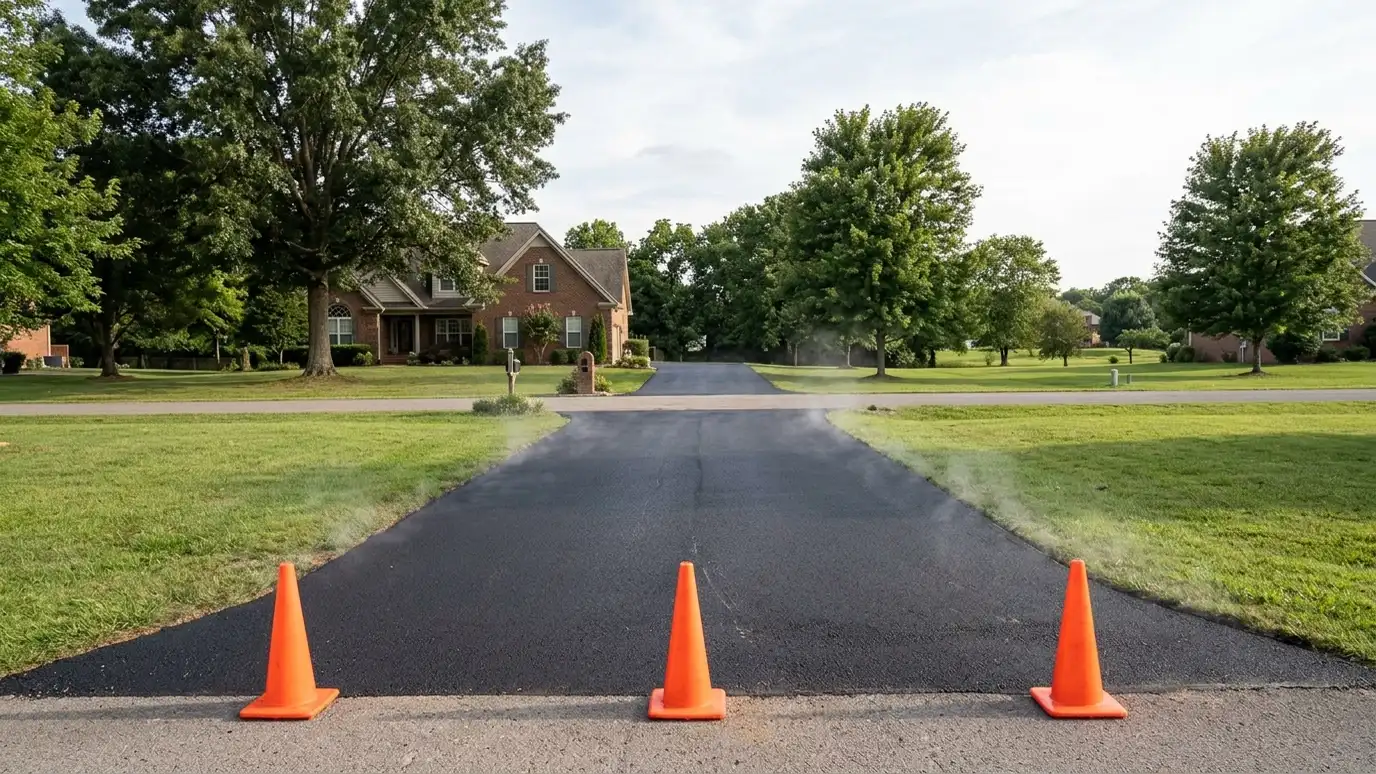 Topic guideCuring and First WeeksWhat to do and avoid in the first days, weeks and months after paving, so new asphalt hardens…Learn more
Call us and we will visit your property, measure, check the base and drainage and give you an itemized written estimate.