Why water matters most
Pavement fails when water gets under it. Water softens the base, freezes in winter and pumps fines out from beneath the surface. A driveway or lot that drains well can last decades, while one that holds water can fail in a few years.
Good drainage costs little when planned before paving and much more to fix afterward.
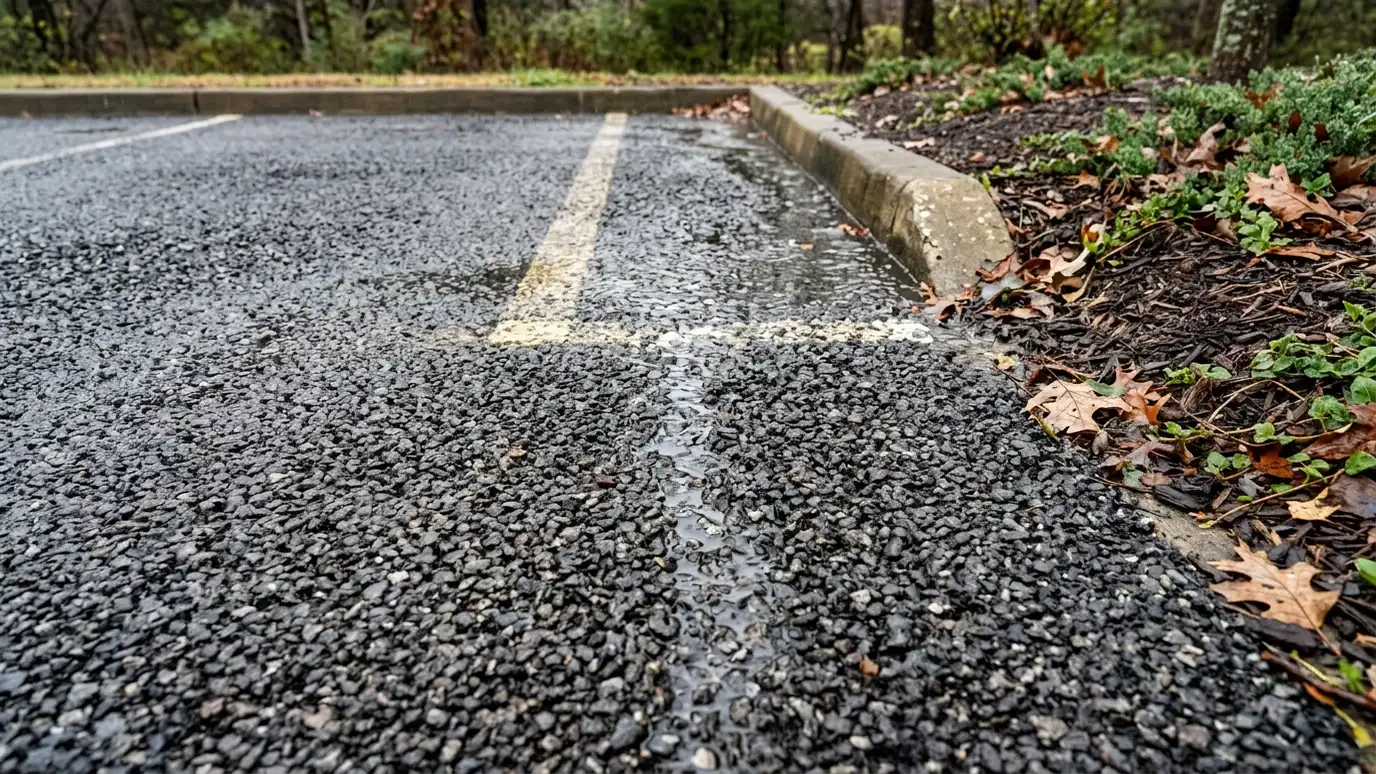
A well-drained driveway can last far longer than one that stays wet. The same asphalt and the same base perform very differently depending on whether water leaves in minutes or lingers for days. The first sign of a drainage problem is often a dark, damp strip or a stain of algae that never dries, even on sunny days.
How much slope
Pavement should slope about one-quarter inch per foot across its width so rain sheds quickly. Along the length, driveways follow the lay of the land within grade limits. A crown or a one-sided slope guides water to the edge.
Flat spots are the enemy. A small dip becomes a permanent puddle.
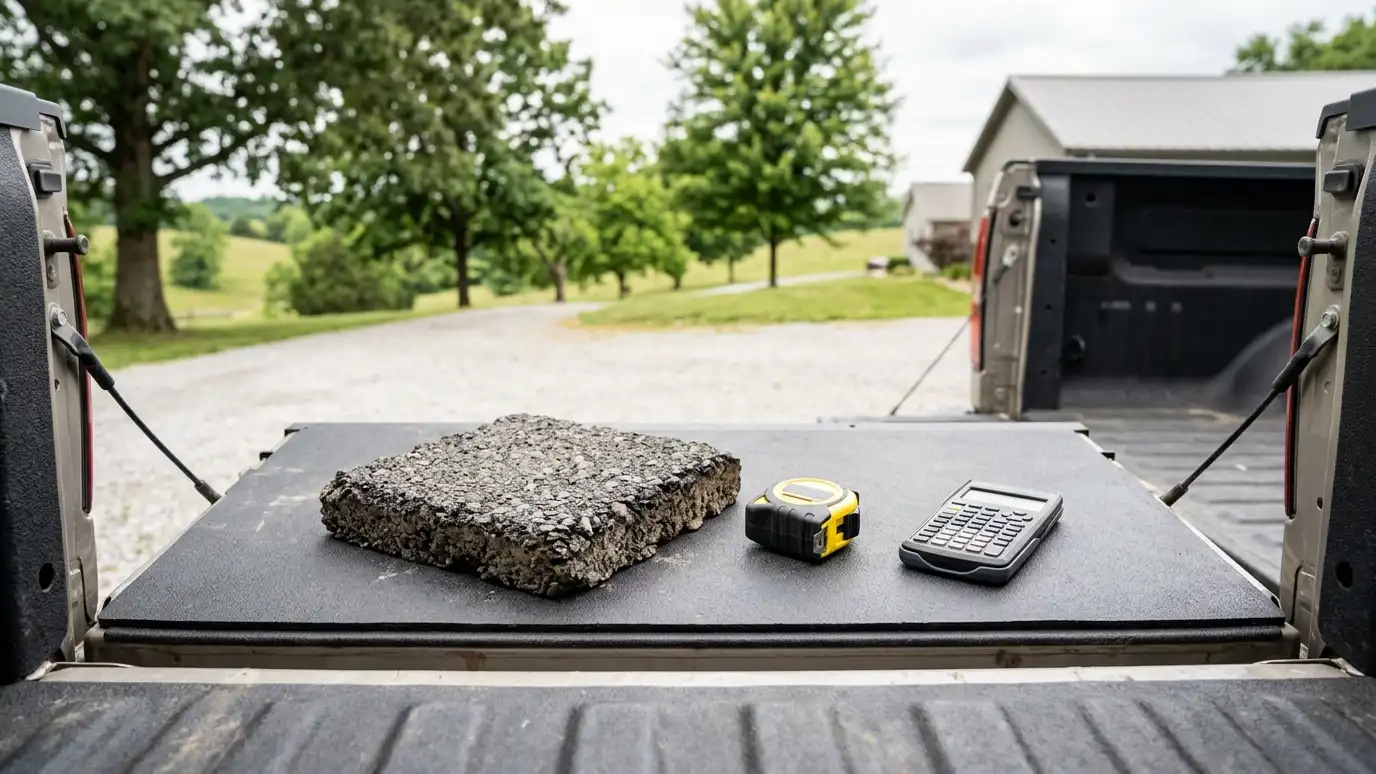
A slope of about one-quarter inch per foot is a common target for sheet flow across pavement. Too flat and water lingers, too steep across a drive and ice or traction becomes an issue in winter. If you are unsure about your slope, a long level and a tape measure, or a quick visit from your contractor, can tell you in minutes.
Where the water goes
Water needs a destination, such as a lawn, swale, inlet or creek bank. It should not run toward the house, a garage or a neighbor’s property. Local rules often limit where runoff can go.
We study the site and recommend a path that works and complies.
Never send water toward a neighbor, a foundation or a crawl space. If the natural low point is a problem, plan a swale, a pipe or a grate that carries water to a safe outlet.
Tools for moving water
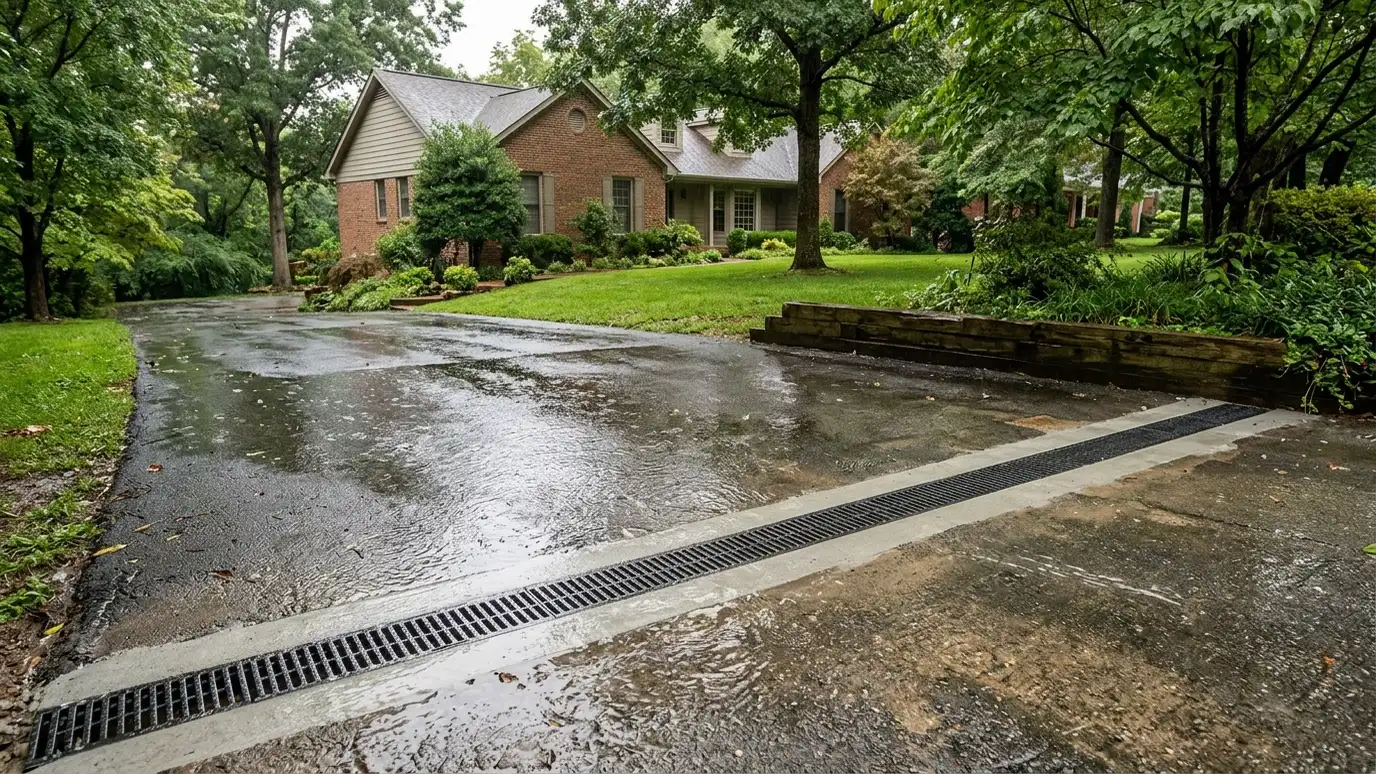
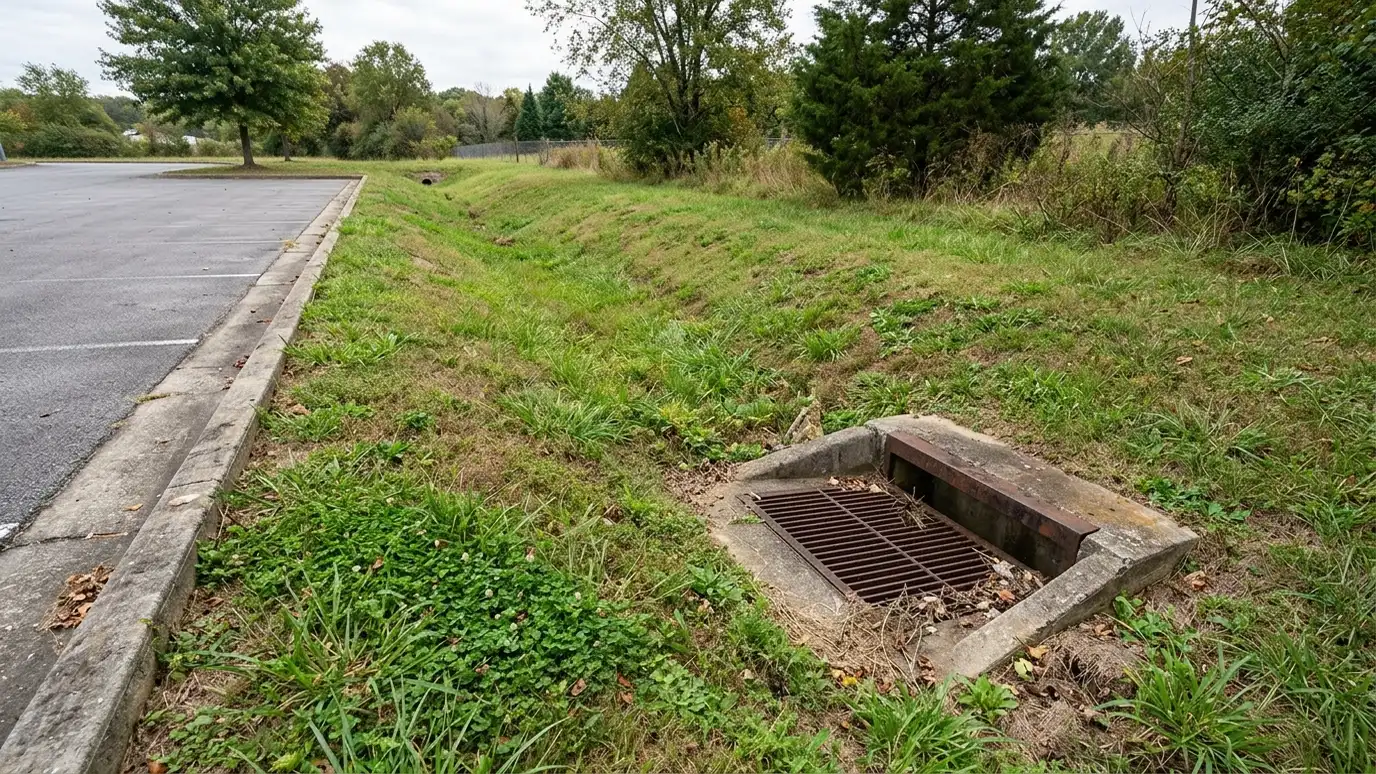
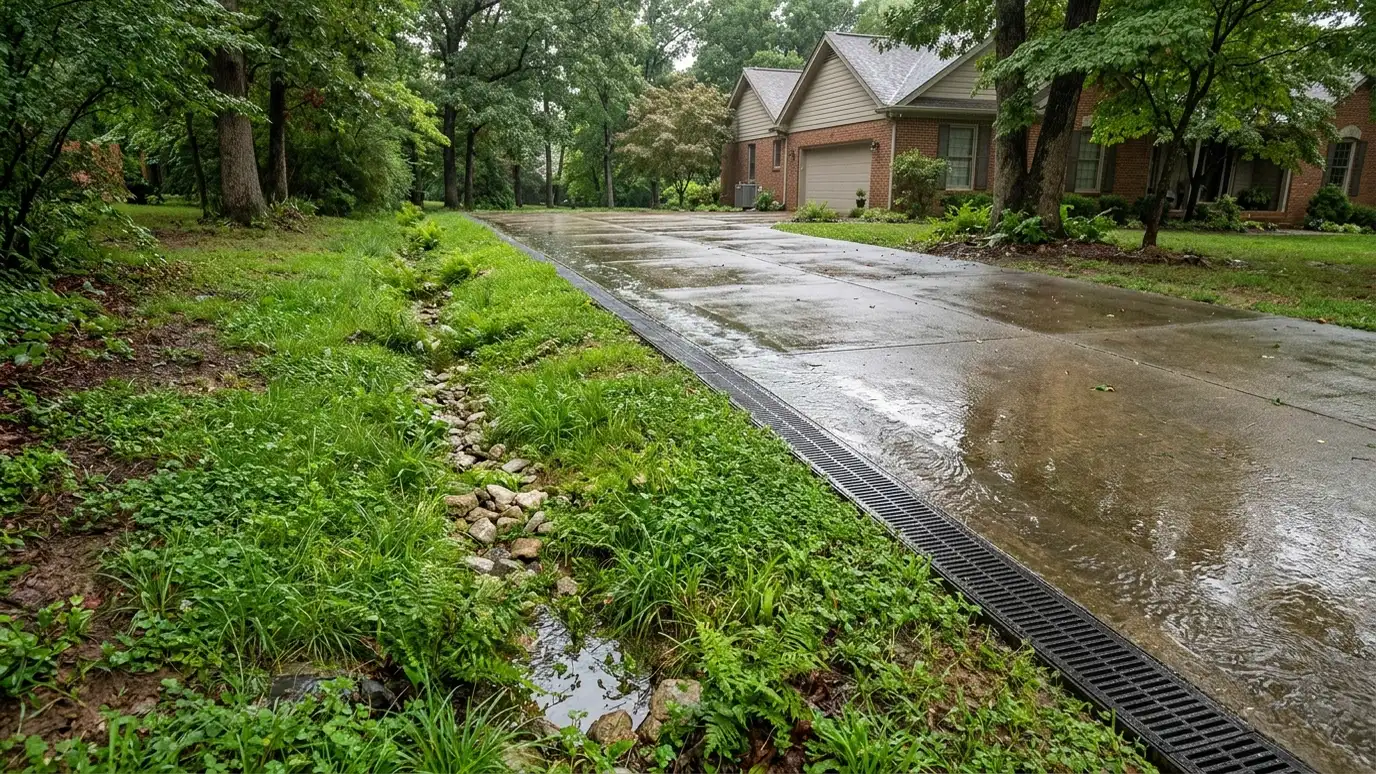
Swales carry gentle flow, catch basins collect from low spots, trench drains cut across driveways and culverts carry water under them. Downspouts can be piped away from pavement. Permeable pavement lets water soak through.
Often the best solution combines two or three of these tools.
Trench drains work well across a garage entry or a ramp where water would otherwise run into a building. They need regular cleaning, since leaves and silt can fill the channel quickly.
Fixing puddles on existing pavement
Small birdbaths can sometimes be filled or milled and overlaid. Larger problems may require regrading a section or adding a drain. Sealing cracks nearby reduces water entry.
We explain the options, from small patches to bigger changes, with approximate costs.
Before filling a birdbath with new asphalt, check why it formed. If the base has settled, the patch may dip again, so repairs sometimes call for cutting out the area and rebuilding the base. When a section must be rebuilt, the best time to fix the slope is while the base is open and easy to shape.
Hillsides and heavy storms
Rolling terrain sends water downhill quickly, and heavy storms can overwhelm a basic design. Erosion control, stone aprons and larger pipes help. Shoulders should be stabilized to prevent washouts.
In some places, a permit or engineered plan is required.
On hillsides, plan for the worst storms, not an average rain. A few well-placed inlets and a stable outlet are much less expensive than repairing a washed-out edge or a flooded garage. A short call to your local public works office can also tell you where storm water is meant to go in your neighborhood.
Keeping drainage working
Keep grates clear, clean swales and trim vegetation that blocks flow. Check after storms and fix small problems early.
A few minutes after each big rain reveals whether the system works.
Walk the property in a heavy rain and look at where water goes. A phone video of the flow gives your contractor valuable information that no measurement can replace.
Plan the slope and the water’s destination before paving, and give every low spot a way out.